How to Prepare an EV for a Long Highway Drive
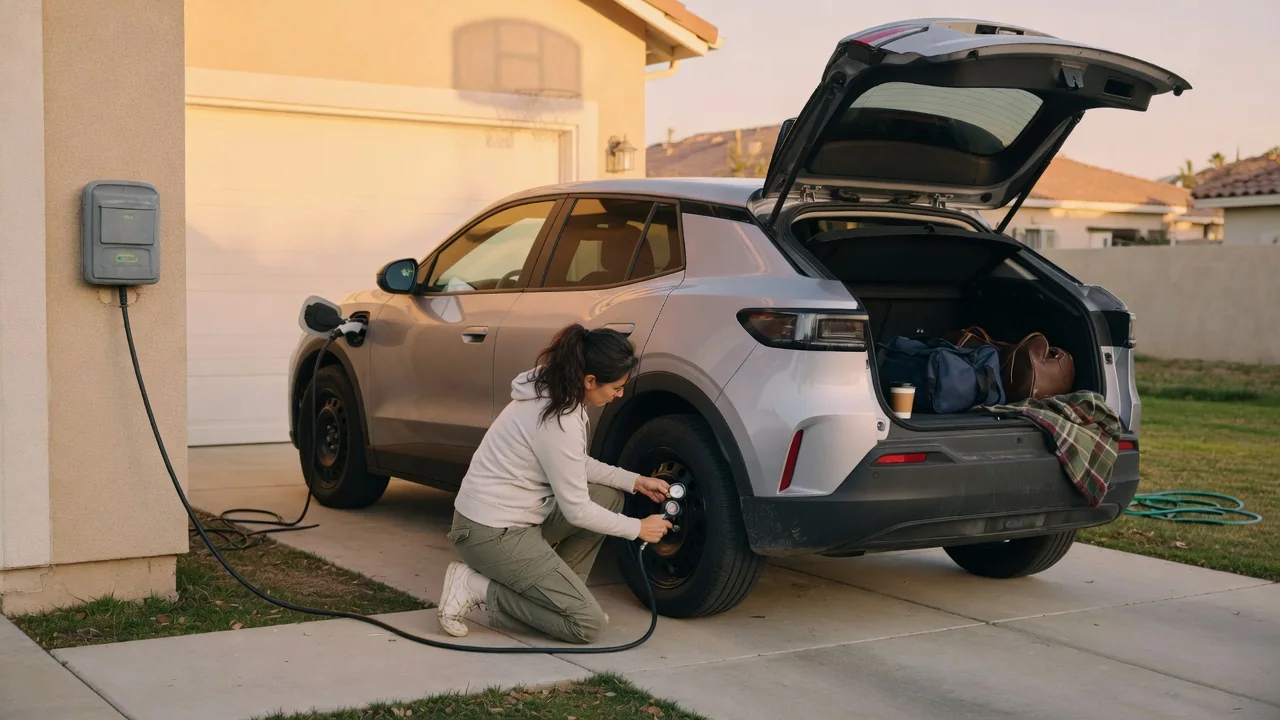
Knowing how to prepare an EV for a long highway drive comes down to three things: a route built around reliable fast chargers, confirmation that your car's charge port matches the plugs along the way, and enough battery margin to absorb surprises. Sustained highway speeds use energy faster than city driving, so planning before departure matters more than it does on a daily commute.
Plan charging stops
Start with the route rather than the destination. Open the vehicle's built-in navigation or a charging app and look at where DC fast chargers sit relative to the highway, not just how many exist. A station two minutes from an exit is worth more than one buried across town. Check each site's connector type against your charge port, since some vehicles use CCS, others use the NACS style, and adapters, where the automaker supports them, need to be in the car before you leave.
Spacing matters as much as location. Most batteries accept power fastest at a lower state of charge and slow down noticeably as they fill, so two shorter stops often cost less time than one long session to nearly full. Plan to arrive at each charger with a comfortable buffer rather than a nearly empty pack, and note the number of stalls at each site. A location with several dispensers gives you a better chance of plugging in right away if one unit is occupied or out of service.
Weather adjustment
Temperature changes the math. In cold conditions the battery holds back some performance, cabin heating draws energy that would otherwise move the car, and fast charging may be slower until the pack warms up. Many EVs can precondition the battery when a charger is set as the navigation destination, though the feature and how it is triggered differ by model. Warming the cabin while still plugged in at home shifts that energy use to the grid instead of the battery.
Heat, wind and rain count too. Air conditioning generally costs less range than heating, but a strong headwind or standing water on the road raises drag and rolling resistance in a way the range estimate may not anticipate at departure. Watch the energy consumption readout during the first half hour and compare it with the trip prediction. If the projected arrival percentage keeps dropping, trimming speed modestly or moving the next charging stop closer restores your margin before it becomes a problem.
Arrival backup
The final leg deserves its own plan. Arriving with a low battery is fine only if charging at the destination is certain, so confirm ahead of time whether the hotel, rental or family driveway actually has a working outlet or Level 2 unit you are allowed to use. Carrying the portable charging cable that came with the car gives you a slow but dependable fallback, provided the available outlet suits it and the circuit is in good condition.
Identify a second charger for every planned stop, especially the last one before your destination. Stations can be full, offline or blocked, and the alternative should be reachable with the charge you expect to have left, not the charge you hope for. Setting up the relevant network accounts and payment methods before the trip avoids fumbling with app downloads in a parking lot with weak signal. Some vehicles support plug-and-charge billing, while others require an app or card reader at the dispenser.
Everyday Use and Observations
Daily driving habits offer a useful baseline before a road trip. Pay attention to how your car's displayed range compares with actual miles covered at highway speed, because the estimate usually reflects recent driving and may be optimistic after a week of gentle commuting. Charging to a higher level than your normal daily limit the night before makes sense for a long drive, and the owner's manual explains what the manufacturer recommends for your battery chemistry.
A few physical checks pay off as well. Tire pressure set to the figure on the door jamb placard keeps rolling resistance in check, and a roof box or bike rack adds drag you will see in consumption figures at speed. Inspect the charge port for debris and make sure the door opens and latches properly. On the road, listen for how the car behaves during a fast-charging session; cooling fans or pumps running loudly are usually normal thermal management at work.
Limits and Next Steps
No plan removes every uncertainty. Charging speed depends on the station's output, the battery's temperature and state of charge, and whether a dispenser is sharing power with a neighboring car, so the session times a route planner predicts are estimates. Range figures also vary with load, elevation and speed. Treat published numbers as starting points and let your own trip data refine expectations, since two vehicles with similar battery sizes can behave quite differently on the same stretch of interstate.
If the car displays a charging fault or a warning message during the trip, treat it as information to interpret rather than proof that a component has failed; trying a different stall often separates a station problem from a vehicle one. Persistent warnings call for the dealer or a qualified EV technician, as high-voltage systems are not a roadside project. After the drive, review which stops worked and how much margin you really used, and your next highway route becomes easier to build.