How to Open a Frozen Car Door Safely Without Damaging It
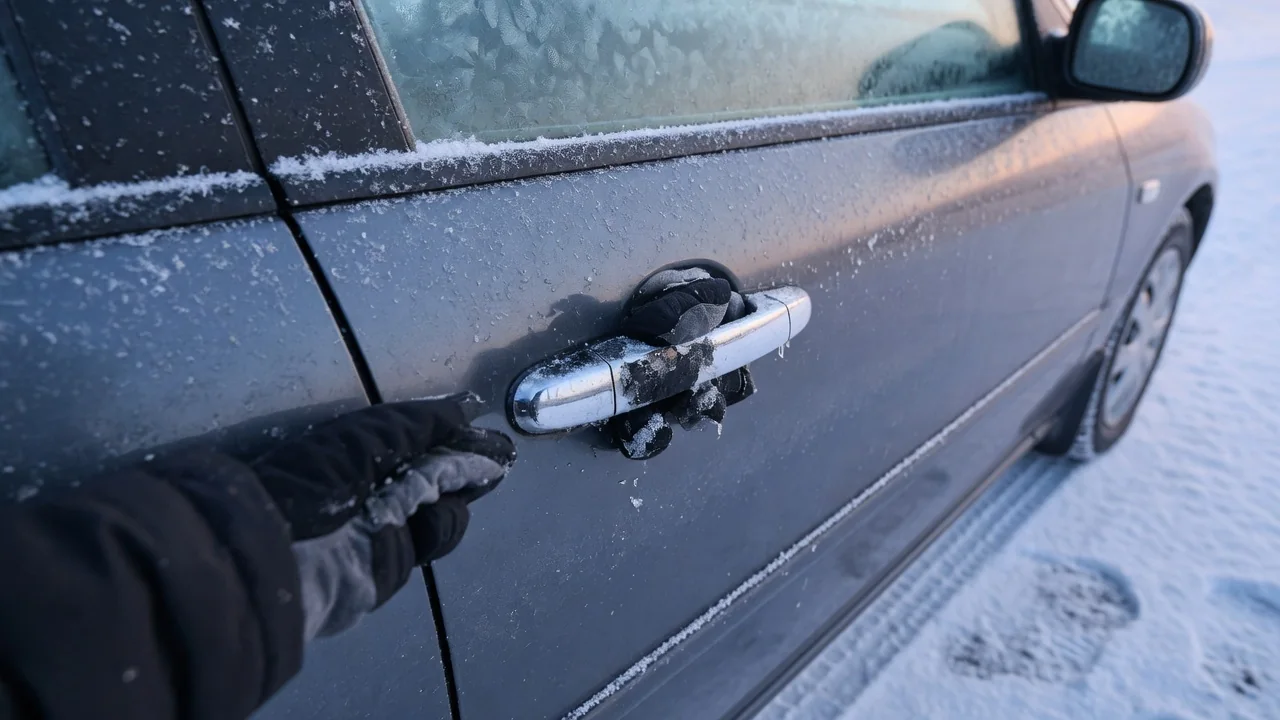
A car door frozen shut that won't open is usually held by ice in one specific place, not by a failed part. Working out whether the seal, latch, lock or handle is frozen lets you free the door gently, protect the paint and weatherstrip, and avoid turning a cold morning inconvenience into a repair bill.
Why a Car Door Freezes Shut: Seal, Latch, Lock or Handle
Four places commonly freeze. The rubber door weatherstrip can bond to the painted body when moisture between them turns to ice. Water can also freeze inside the door latch so it cannot release, inside the lock cylinder so the key cannot turn, or around the exterior handle linkage so the handle feels stiff. Typical triggers include freezing rain, snow that melts during the day and refreezes overnight, a car wash in cold weather, and moisture trapped in the seals after a damp drive.
A few safe observations help tell them apart. If the handle moves through its normal travel and the door seems unlocked yet stays put, a frozen door seal is the likely culprit. A handle that moves but feels disconnected, with no click from the door, points more toward the latch. A handle that barely moves at all suggests ice in the handle or its linkage. Repeatedly yanking it can snap the handle or linkage, so identify the frozen part before applying any force.
Gentle Ways to Free a Door That Won't Open Because It's Frozen
When a car door won't open because it is frozen at the seal, pushing works better than pulling. Lean your body weight firmly against the door and press inward at several spots around its edge. That compresses the weatherstrip and cracks the ice bond, often with an audible crunch. Then try the handle with normal effort. Visible ice bridging the door gaps can be cleared with a plastic ice scraper or a gloved hand; metal tools scratch paint and can cut the rubber.
If that fails, try every other door, including the rear hatch or trunk, since the side facing away from the wind or toward the sun often freezes less. Once inside, start the engine and run the heater and cabin defroster so warmth reaches the seals and latches from within. Then be patient. Give the cabin several minutes to warm before testing the stuck door again, and push gently outward from inside rather than forcing it, because the ice gives up gradually.
What to Do When the Key Won't Turn in a Frozen Door Lock
When the key won't open a frozen car door, the lock cylinder itself usually contains ice that blocks the key from seating fully or turning. Forcing or twisting it harder is the main risk, because a cold key can bend or snap and leave a fragment lodged in the lock. Safer options are warming the key in a gloved hand or an inside pocket before inserting it, and using a commercial lock de-icer exactly as its label directs, then allowing it time to work.
A remote or keyless entry fob can often unlock the door electrically even while the frozen lock cylinder refuses the key, so try it before working on the cylinder. Keep in mind that an unlocked door may still be held by a frozen latch or seal, which calls for the gentle pressing approach instead. If the remote produces no response at all, from no lights to no lock sounds, that may be a separate issue such as a weak fob battery rather than ice.
Methods to Avoid When a Car Door Is Frozen
Pouring hot or boiling water over the door, glass or lock is the most tempting shortcut and one of the riskiest. A sudden temperature change can crack cold glass, and the water does not disappear afterward. It runs into the lock cylinder, the latch and the seals, where it can refreeze and leave the door more firmly stuck than before. Open flames are worse: lighters or torches aimed at keys or locks can scorch paint, melt plastic trim, ruin the electronics inside a key and create a fire hazard.
Prying is equally costly. A screwdriver or other metal tool wedged into the gap can bend the door edge, tear the weatherstrip and chip paint, which then exposes bare metal to road salt. Mains-powered heaters and hair dryers bring a different hazard, because extension cords and household appliances do not mix well with snow, meltwater and wet ground. If you use one at all, it calls for an outdoor-rated cord, a protected outlet and real caution about standing water.
After the Door Opens: Checking the Seal, Latch and Window
Once the door releases, check that it closes and latches properly before going anywhere. A latch that still has ice inside may let the door bounce back or catch only partly, and a door that will not stay securely shut is not safe to drive with. Let the warm cabin thaw the mechanism and try again. Then run your eyes and fingers along the weatherstrip, looking for tears or sections pulled out of their channel while the door was stuck.
Cars with frameless windows deserve extra attention, because the glass often drops slightly when the door opens and rises again to seal when it closes. If the glass is frozen in place, wait until it moves normally before shutting the door, and do not force a window that refuses to move. Finally, wipe the melted water out of the door jamb and off the seals with a dry cloth, since any moisture left behind can refreeze the door right away.
How to Keep Car Doors and Locks From Freezing Again
Prevention starts with the rubber. A rubber seal conditioner or other product made for weatherstripping helps keep water from clinging to the seals and bonding them to the body; apply it to clean, dry rubber according to the product directions. Locks and latches benefit from protection as well, but lubricants vary and some are unsuitable for certain mechanisms, so check the owner's manual for guidance on what suits your vehicle before spraying anything into a cylinder or latch.
Parking habits matter just as much in winter car care. A garage or carport keeps freezing rain off the doors entirely, and a windshield cover or full car cover reduces the ice that forms around door gaps. After a winter car wash, dry the door jambs, seals and handle areas before the car sits in the cold. Keep a lock de-icer and plastic scraper in a coat pocket, bag or at home, because tools locked inside a frozen car are no help.
When a Frozen Door Points to a Bigger Problem
A single frozen door after an ice storm is normal. A door that freezes again and again, especially when the others stay free, can indicate water getting where it should not. Worn or flattened seals may let moisture past, and blocked door drain holes along the bottom edge can leave water sitting inside the door shell, where it freezes around the latch and linkage. Damp carpets or water sloshing inside the door are further signs worth mentioning to a shop.
Ice is also not the only explanation. A door that stays stuck after the cabin is fully warm, a handle that feels loose or broken, or power locks that behave erratically may involve the latch, a power lock actuator or the handle mechanism. Which one cannot be reliably determined from the driveway, and guessing leads to wasted parts. See a qualified technician if the door will not latch, the handle feels damaged or the lock still fails once everything has thawed.