Car Door Won't Open From Outside When Cold: Causes and Safe Fixes
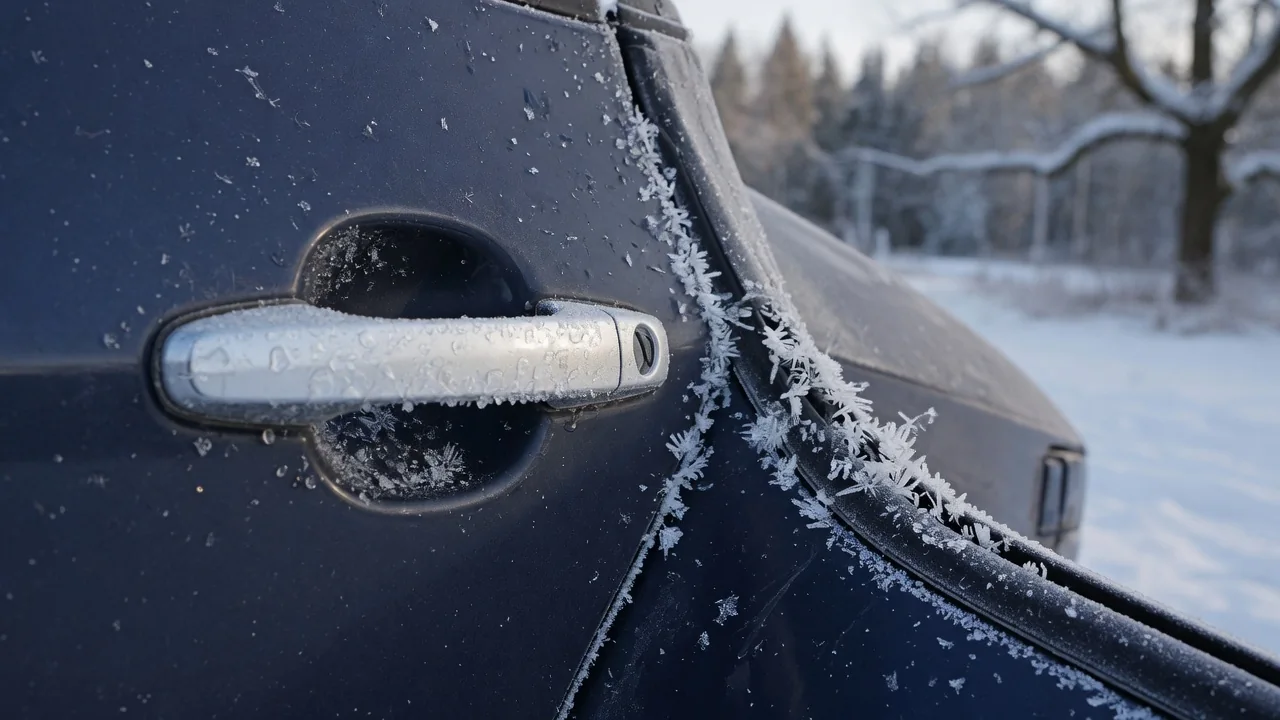
When a car door won't open from outside when cold, the cause is usually ice rather than a broken part. Moisture freezes in the door weatherstrip, the exterior door handle, or the latch, and the door stays shut until it thaws. Knowing which area is frozen helps you free the door without damaging the handle, the seal, or the glass.
Why Cold Weather Stops a Door Opening From the Outside
Three cold-related problems account for most stuck doors. A frozen door seal happens when a thin film of water turns to ice and bonds the rubber weatherstrip to the painted body. A frozen door latch or handle occurs when moisture inside the mechanism solidifies and blocks moving parts. Grease that was fine in summer can also thicken in low temperatures, slowing springs and levers. Water arrives from car washes, melting snow, or freezing rain, seeps into seals, handle cavities, and latch housings, then refreezes overnight as the temperature drops.
The outside handle does not open the door directly. It pulls a handle cable or rod that tells the latch to release, so ice anywhere along that path can stop the door from opening even when the handle itself looks clear. Door, handle, and latch designs also vary considerably between makes, models, and years. Some use exposed pull handles, others use flush or electronically triggered ones, and each collects moisture differently. A cause that explains one vehicle's stuck door may not apply to another, so treat any single explanation as a starting point.
Frozen Seal or Frozen Latch? Simple Checks You Can Do Safely
Pay attention to how the handle feels and sounds. If it moves through its normal travel and you hear the latch click, yet the door stays put, the latch is probably releasing and ice is most likely holding the seal to the body. A handle that feels stiff or will not move at all suggests ice inside the handle mechanism or the latch. A handle that swings loosely with no resistance and no click may point to a door latch linkage problem, which cold weather can reveal but did not necessarily create.
Trying the other doors adds useful context. If every door is stuck, widespread icing after rain or a wash is the likely explanation. If only one refuses, the problem is more local to that door. Once inside through a working door, try the inside handle on the stuck one. If it releases the latch but the door still resists, the seal is the probable culprit. These checks narrow the possibilities, but they cannot confirm what is happening inside the door. Only an inspection of the mechanism can do that.
Safe Ways to Free a Door That Is Frozen Shut
Start with the gentlest method. Press firmly inward on the door around its edges with the flat of your hand or your hip, working along the frame, to crack the ice bonding the seal before trying the handle again. Clear visible ice from the handle and door edges with a plastic scraper. A commercial lock de-icer or seal de-icer made for vehicles can help, used as the product label directs. If another door opens, climb in, start the engine outdoors in a well-ventilated area, and run the heater and defroster so cabin warmth loosens the stuck door from inside.
Several common shortcuts cause more harm than the ice. Hot or boiling water can crack cold glass, and the runoff refreezes in the same seals and latches, often worse than before. Open flames threaten paint, rubber, and plastic trim. Prying with metal tools tears weatherstripping and chips paint, while yanking the handle hard can snap it or its linkage. Never warm the car by idling it in a garage or any enclosed space, because carbon monoxide builds up quickly and is dangerous even with the garage door partly open.
When the Inside Handle Works but the Outside Handle Doesn't
A door that opens from inside but not from outside tells you the seal is free and the latch can release. That shifts attention to the exterior door handle or its connection to the latch. Ice in the handle cavity is one possibility, but cold can also expose a linkage that was already worn, loose, or out of adjustment. Stiffened lubricant and contracted parts add just enough resistance that a marginal connection stops working. In that case the fault may persist, or return, after the vehicle thaws.
Vehicles with electronic or flush-mounted handles and keyless entry behave differently, and the cause may not be mechanical at all. Check the owner's manual for cold-weather or ice-related handle guidance, since some manufacturers describe specific ways to free or operate these handles in freezing conditions. Resist the urge to remove the door trim panel to reach the linkage yourself. Door panels are held by clips that turn brittle in the cold, and some doors contain wiring and airbag-related components, so that work is best left to a professional.
Preventing Doors From Freezing Shut in Winter
Prevention starts with keeping water out of the places where it freezes. After washing the car or driving through slush, wipe the door seals and jambs dry before parking in freezing weather. Applying a rubber seal conditioner or protectant made for automotive weatherstripping helps the rubber shed water and makes it less likely to bond to the body. Avoid products not intended for rubber, since some can cause it to swell, dry out, or crack over time, which lets in more moisture and worsens the problem next winter.
Locks and latches benefit from lubrication, but use only the products named in the owner's manual or recommended by a dealer or shop, because the wrong lubricant can thicken in the cold or attract dirt. Parking habits matter as well. A garage or covered spot keeps freezing rain and snow off the doors when one is available. When parking outside, brush snow buildup away from door edges and handle areas before it melts and refreezes. These small winter car care steps reduce the chance of finding a door frozen shut.
When to Have the Door Professionally Inspected
Ice-related problems should disappear once the vehicle has fully warmed up or thawed. If the door still won't open from outside afterward, cold was probably not the only cause, and a professional diagnosis is the sensible next step. Other signs worth a shop visit include a handle that feels disconnected from anything, a door that won't latch closed securely, or a problem that returns with each cold snap. A door that fails to latch properly deserves particular urgency, since it may not stay closed while driving.
A door that won't open is more than an inconvenience. Passengers may need that door to exit quickly in an emergency, and rescuers may need to open it from outside, so the fault should be repaired promptly rather than tolerated. Handle, latch, and electronic faults are specific to each vehicle, and identifying the failed component requires testing on that particular model. Guessing at parts or repair costs beforehand tends to mislead, so let a technician inspect the door and explain what they find before any work is approved.