Broken Outside Car Door Handle: How to Get the Door Open and What to Fix
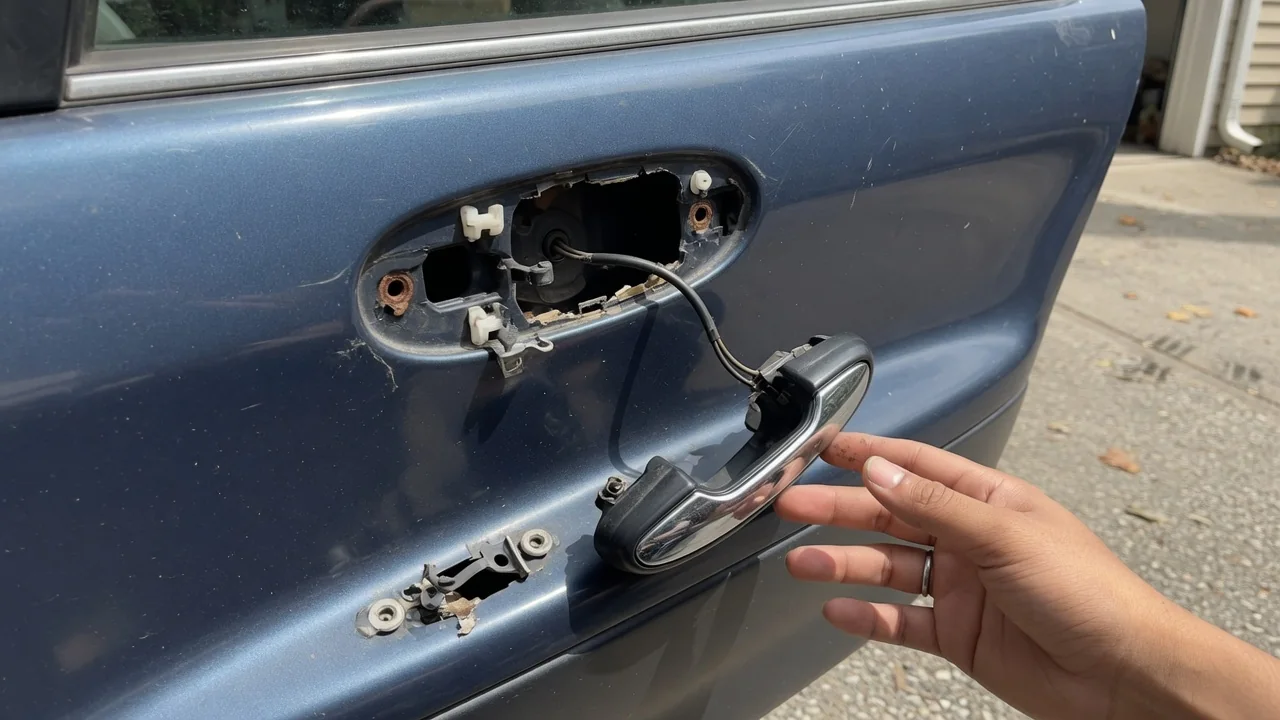
A broken exterior door handle rarely leaves a door permanently sealed, but it does change how you get in. Knowing how to open a car door with a broken handle from outside, without damaging paint or glass, buys time until a proper repair. This guide explains what usually fails, the safe ways to get the door open, and how to fix a broken exterior car door handle properly.
What Fails When an Outside Door Handle Stops Working
Pulling an exterior door handle does not open the door directly. The handle moves a linkage rod or a door handle cable, which in turn trips a release lever on the door latch assembly, letting the latch let go of the striker on the body. The layout varies by vehicle, but the principle is the same: any break in that chain, from a cracked handle pivot to a detached rod clip or a worn latch, leaves the door closed when the handle is pulled.
How the handle feels offers clues. A handle that flops loosely with no resistance often suggests a broken pivot or a disconnected rod or cable. A stiff or stuck handle may point to corrosion or binding, and a handle that moves normally while the latch never releases can indicate a fault further down, since handle and latch fail separately. Trying the inside door handle helps narrow it down: if it still opens the door, the latch itself is probably working. These remain educated guesses until the door trim panel comes off.
Safe Ways to Open a Car Door With a Broken Outside Handle
When the car door will not open from outside because the handle is broken, the simplest approach is to work from inside. Unlock the vehicle, enter through another door or the rear hatch, and pull the inside handle on the affected door. First confirm the door is truly unlocked using the key fob, interior switch, or key cylinder, because a lock fault can imitate a broken outside handle. On rear doors, remember that an engaged child safety lock disables the inside handle, so a helper inside may accomplish nothing.
On some doors it helps to have a passenger pull the inside handle while someone outside operates what remains of the exterior handle, which can coax a partially connected mechanism to release. Avoid prying the door edge, driving in wedges, or fishing tools past the window seal; those methods risk chipped paint, scratched or shattered glass, torn weatherstripping, and damaged wiring inside the door. These suggestions are for owners who can already get into their own vehicle. Anyone locked out entirely should call a locksmith or roadside assistance.
When the Door Won't Open From the Outside or the Inside
A door that refuses both handles is a different problem. When neither side releases it, the fault usually lies in the latch, the linkage, or the door lock actuator rather than the outside handle alone. Safe checks are simple: cycle the lock several times, try both the power locks and the manual lock, and listen at the door for the actuator. A healthy click or whir suggests the lock is trying to work; silence or a weak buzz hints the latch may be staying locked.
A binding latch sometimes frees when the load on it is relieved. Pressing the door gently inward toward its seal while pulling the handle can help, but never with force or impact. If the door stays stuck shut, the trim panel must come off from inside with the door closed, an awkward job with limited access that is best left to a technician. Treat it as more than an annoyance: a door that cannot be opened may slow the exit of whoever sits in that seat during an emergency.
Getting By Until the Outside Handle Is Repaired
Until the repair is made, settle into a routine. For a passenger door, reach across and open it from inside before others arrive. For the driver's door, that usually means entering through the passenger side and sliding over, then pushing the door open for the next stop, so allow extra time for every trip. After each closing, confirm the door fully latched by pushing on it from outside and checking that any door ajar warning on the dash has gone out before driving.
Never tie, tape, or wire a door shut, or brace it in any way that would stop it from opening in an emergency; a door that will not stay latched means the vehicle should not be driven. A dangling handle deserves attention too, because it can snag clothing and the opening behind it can admit water and dirt into the door. Secure the loose piece or remove it with care, without tugging on anything attached behind it. Do not let the workaround become permanent, since a door that opens from only one side is an inconvenience and a potential safety risk.
How a Broken Exterior Door Handle Is Fixed
Fixing a broken exterior car door handle generally starts inside the door. The trim panel comes off, the vapor barrier is peeled back carefully so it can be resealed, and the handle and its linkage are inspected. Sometimes the cure is minor: a rod clip that popped off or a cable that has stretched or slipped from its seat. Other times the handle itself is cracked or the latch assembly is worn, and the part must be replaced. Access to handle fasteners differs widely between vehicles.
The door cavity is crowded. Window glass and its regulator, wiring, speakers, and on some vehicles side-impact sensors or keyless entry handle components share the space, so careless work can create new faults. Before ordering, confirm the exact part through the VIN or a parts department, because handles can differ by trim, color, and keyless-entry equipment. Afterward, test both handles, the lock in every mode, and the window through its full travel, then make sure the door closes firmly and stays shut.
When to Hand the Door Handle Repair to a Professional
Some situations belong in a shop from the start: a door stuck shut, a damaged latch, faults in an electrical or keyless-entry handle, or warning lights that appear after a repair attempt. Body shops, dealers, and independent mechanics all handle door handle and latch work. A painted handle may arrive unpainted or primed and need color matching, which is where a body shop is particularly useful, while electronic handle problems may call for vehicle-specific diagnostic equipment.
A precise description speeds diagnosis. Tell the technician whether the inside handle opens the door, whether the lock responds to the fob, switch, and key, how the outside handle feels, and whether the problem appeared suddenly or grew gradually worse. Mention any earlier work on that door as well. Cost depends on the vehicle, the part involved, and whether the latch needs replacing along with the handle, so ask for a written quote based on an inspection instead of relying on general estimates.