How to Fix a Broken Car Door Handle: Repair, Replacement and Cost Factors
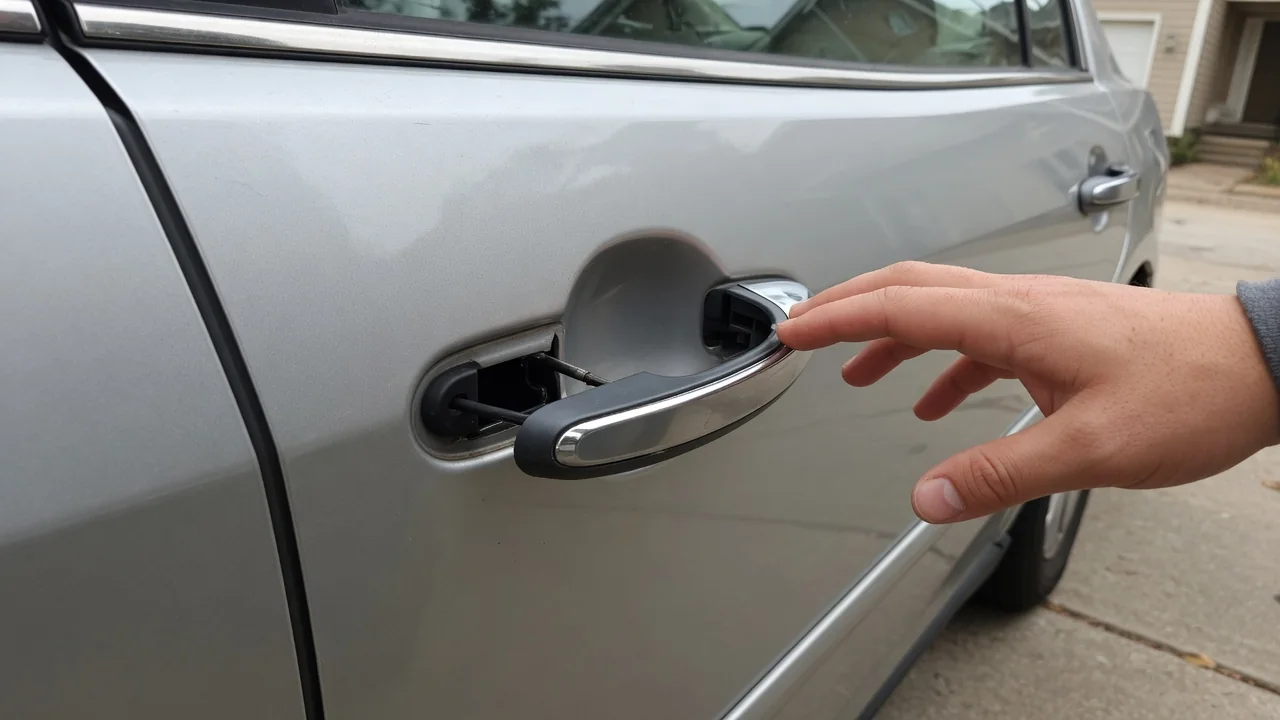
A broken car door handle is more than an annoyance, because it can leave a door that won't open from outside or trap a passenger inside. Learning how to fix a broken car door handle starts with identifying which part has failed, then deciding between repair and replacement. This guide also covers how much the work may cost and where to have it done.
Working Out Which Part of the Door Handle Has Failed
Every door has two handles working one latch. The exterior door handle and the interior door handle are separate parts, and each connects to the door latch assembly through a linkage rod or a door handle cable held by a small retaining clip. Symptoms point in different directions. A loose door handle that flaps without resistance suggests something has disconnected, a stiff one hints at binding or corrosion, a handle that moves normally but doesn't release the door points deeper into the mechanism, and a cracked or snapped handle is visibly broken.
Comparing both handles narrows things down. If the door opens from inside but not outside, the exterior handle or its linkage is the likely suspect; the reverse points to the interior side, though a child safety lock on a rear door produces the same effect and is worth checking first. If neither handle works, or the result changes with the lock state, the latch or lock becomes more likely. From outside you can see cracks, missing pieces and abnormal free play, but hidden linkage problems stay a guess until the door trim panel comes off.
Repair or Replace: Deciding What a Broken Handle Needs
Whether to repair a broken car door handle or replace it depends on what actually gave way. A rod or cable that has simply popped off its clip can sometimes be reconnected, often with a new clip, and the original handle goes on working. A cracked or snapped handle body usually has to be replaced, because the handle carries the full force of every pull. Glue, epoxy and tape rarely survive that load for long, and a temporary fix that fails can leave pieces jammed in the mechanism and the door harder to open than before.
A fault in the latch or lock actuator is a different problem from a broken handle. If the handle and linkage move as they should but the door still stays shut, or the lock doesn't respond properly, a new handle won't cure it, and the latch side needs its own diagnosis. Before buying anything, confirm the part against the exact make, model, year, trim level and door position. Handles differ between front and rear, left and right, and between versions with and without a key cylinder or keyless entry, so similar-looking parts aren't necessarily interchangeable.
What Replacing a Car Door Handle Generally Involves
Learning how to replace a broken car door handle begins with access. On most vehicles that means removing the interior door trim panel, while some designs allow the exterior handle to be reached through an access opening in the door edge. The panel can hide wiring for the windows, locks and mirrors, and on some vehicles side airbag or impact sensor components, so the vehicle's own service information should come before any tools. Airbag-related parts and wiring are not for untrained hands; if they sit in the way, that work belongs with a professional.
Once the new handle is fitted, every rod or cable has to be reattached exactly as it was, with its clip fully seated, since a linkage that is slightly out of position may leave the handle with too little travel to release the latch. Test the door from inside and outside, locked and unlocked, before closing it fully; a door shut on a misconnected linkage can be very difficult to reopen. Seized fasteners, a broken latch, or electrical faults in a keyless entry handle or powered handle are signs the job has moved beyond a DIY repair.
What Affects the Cost of Fixing a Broken Door Handle
How much it costs to fix a broken car door handle depends first on which part is replaced. Reattaching a linkage with a new clip sits at the low end, a new handle falls in the middle, and a latch assembly or lock actuator generally adds more in both parts and time. The handle itself varies widely too. A plain black handle is usually the simplest, while a paint-matched handle, a chrome finish, or a keyless entry handle with touch sensors or lighting tends to cost more, and painting may be billed separately.
Labor is the other half of the broken car door handle repair cost. Some doors give up their trim panel quickly, while others need more disassembly, such as moving a window guide or peeling back a moisture barrier, to reach the handle fasteners. Because of that, the same job can take noticeably longer on one vehicle than on another, and shop rates differ by region and by type of shop. Ask for a written estimate that separates parts, paint and labor, so quotes can be compared fairly and nothing is added later without explanation.
Where to Get a Broken Car Door Handle Fixed
For anyone wondering where to fix a broken car door handle, three kinds of shops commonly do the work. Dealership service departments have access to the manufacturer's parts and service information for that specific vehicle. Independent repair shops handle handle, linkage and latch replacement as routine mechanical work. Body shops deal with doors daily and have painting facilities, which makes them a sensible choice when a new handle arrives unpainted and needs color matching, or when the door itself is dented, bent or damaged after a collision or attempted break-in.
A few questions make any shop easier to judge. Ask which part they will use, whether original equipment or aftermarket, whether paint is included in the price, and what warranty covers both the part and the workmanship. It is also worth checking existing coverage before paying. A handle that fails from a defect may fall under a vehicle warranty that is still in effect, while damage from an accident, vandalism or theft attempt may be an insurance matter, depending on the policy and deductible. The cause of the damage decides which, if either, applies.
Staying Safe Until the Handle Is Fixed
A door that opens from only one side is a safety issue as well as an inconvenience. In a collision, fire or other emergency, occupants need to get out quickly, and rescuers may need to get in; a dead handle slows both. Children and passengers unfamiliar with the car are especially at risk of being confused. Until the repair is done, tell everyone which door to use and how it opens, and keep the affected seat empty where practical. Don't force a stuck handle or pry at the door, since that can damage the latch.
Tying or strapping a door shut is never a substitute for a working latch. A door that won't latch securely, rattles on its striker, or pops open while driving needs professional inspection before the car is used normally, because it could open in motion. For the same reason, a door that won't open from inside or outside deserves prompt attention instead of being put off. Small faults tend to worsen with use, a second handle on the same door can fail, and a door that is completely stuck closed is harder to repair.