Car Door Handle Broken? How to Open the Door and What to Do Next
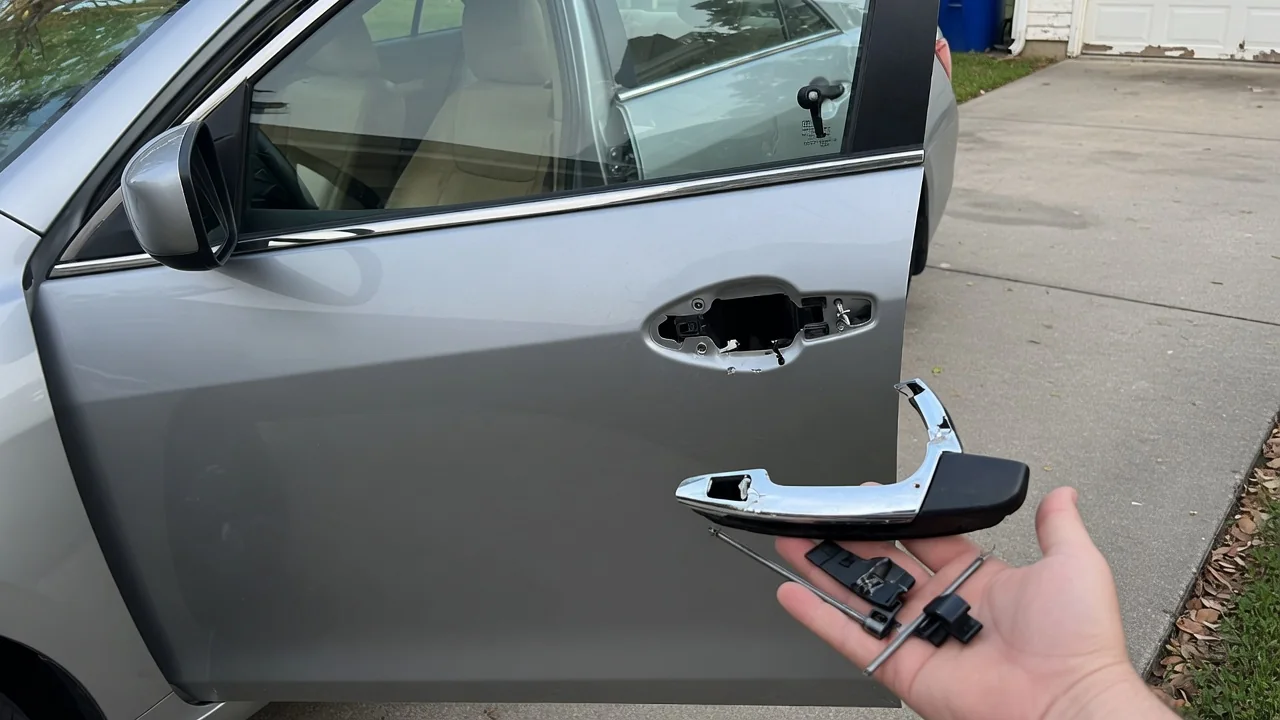
A car door handle broken off in your hand is frustrating, but it rarely means the whole door is ruined. Whether the exterior door handle snapped, the interior door handle went limp, or the handle is broken and you can't open the door at all, the fix starts with understanding what failed. This guide covers getting in, staying safe, and choosing a repair.
Figuring Out What Actually Broke on Your Car Door Handle
Handle failures tend to fall into a few patterns. The handle may have snapped off the outside of the door, leaving a stub or an empty recess. It may still move through its normal travel but do nothing. The inside handle may have quit while the outside one works, or the handle may feel loose, sticky, or slow to return. A limp, floppy handle often points to a handle linkage rod, retaining clip, or cable that has come adrift behind the door trim panel, although that is a possibility, not a certainty.
Test both sides of the door before drawing conclusions. If only the exterior door handle fails, the fault probably sits in that handle or its connection to the door latch; if only the interior handle fails, look toward its cable or rod. When neither works, the latch itself becomes a stronger suspect. Vehicles with a keyless entry handle, power latches, or touch sensors can have electrical causes, so check how your own model operates. Keep any broken pieces and take photos, since they help when describing the problem or matching a replacement.
How to Get the Door Open When the Handle Won't Work
Begin with the simple checks. Unlock the car with the key fob, then the power lock switch, then the key cylinder if the door has one, because a door that is still locked can mimic a failed handle. On rear doors, confirm the child safety lock has not been switched on, since it disables the inside handle by design. If the outside handle is broken, reach the interior handle through another door or an open window. If the inside handle has failed, unlock the door and use the outside handle, or ask someone to open it.
Resist the urge to pry at the door edge, window seal, or latch area. Leverage there can chip paint, tear weatherstripping, crack glass, and bend the latch, turning a small repair into a bigger one. When the handle is broken and you can't open the door from either side, the latch usually has to be reached by removing the inside trim panel with the door still closed. That is awkward work, and with side airbags and wiring inside many doors, it is often better left to a shop or locksmith.
Safe Temporary Workarounds Until You Can Fix the Handle
Anyone searching for how to rig a broken car door handle should know that the safest stopgap is also the least dramatic: keep using whichever handle still works. Tell every regular driver and passenger which one that is, so nobody yanks on a damaged part or gets confused in a hurry. Sometimes a clip or connector that popped loose can be properly reattached or replaced and function returns, but that only makes sense if the part is easy to reach and you are comfortable removing trim without forcing it.
Avoid improvised fixes that bypass or jam the latch. Tying the door shut, wedging objects into the latch, or running an exposed pull cord may seem clever, yet each can let go while driving or trap someone inside when they need to get out quickly. Treat even a sensible workaround as short term, because loose linkage parts can shift further and the one remaining handle now carries all the use. Plan a proper repair soon, before a minor inconvenience becomes a door that will not open at all.
Safety Checks Before Driving With a Broken Door Handle
Before driving, confirm the door closes fully and latches securely. It should sit flush with the surrounding panels, stay put when pushed firmly from inside, and remain quiet over bumps instead of rattling. Do not drive if the door won't latch, pops open, or the door ajar warning stays lit on the dash. That light suggests the car does not see a fully closed door, and a door that swings open in motion endangers occupants and other road users.
Every occupant needs their own way out. After a collision or fire, the nearest door may be the only practical exit, so a passenger should not ride in a seat whose door cannot be opened from inside. That matters especially for children and anyone who would struggle to climb across the cabin. Think about parked security too: a door that locks from only one side, or not at all, leaves the vehicle and its contents exposed, so avoid leaving valuables inside until it is fixed.
Repair Options: Replacing the Handle, Linkage, or Latch
Each repair addresses a different part of the chain. An outside handle replacement swaps the part you grip, sometimes along with its mounting frame. An inside handle replacement deals with the lever in the door trim panel. A linkage or clip repair reconnects the rod or cable between a handle and the latch. A latch replacement renews the mechanism that grips the striker, which on many vehicles is combined with the door lock actuator. Parts vary by make, model, year, trim, and door position, so confirm fit by VIN or part number, not a general listing.
Exterior handles may be sold painted, unpainted, or textured, and some include a key cylinder or sensor, so match those details to your car. When the thought is simply "my car door handle is broken, now what," the answer depends on how much of the door must come apart. Doing the job yourself saves labor but calls for trim tools, patience with brittle panel clips, and care around wiring and airbag-equipped doors. A professional brings familiarity with hidden fasteners and can verify the latch and locks afterward.
When to Call a Mechanic, Body Shop, or Locksmith
Get professional help when the door won't open from either side, when it won't latch, when keyless entry or power lock faults appear, or when the door or latch area shows visible damage. Mechanics and dealers generally handle latch and electrical work. Body shops are the natural choice for painted handles and panel damage. Locksmiths suit key cylinder trouble and lockouts. Any stored fault code is evidence for a technician to interpret, not proof that a particular part has failed, and meanings can vary by manufacturer.
A clear description speeds things up. Tell the shop which door is affected, whether the inside or outside handle is at fault, and how it feels: loose, stiff, or moving freely with no effect. Mention any warning lights and share your photos of the broken parts. Warranty or insurance coverage may apply in some situations, such as a defect on a newer vehicle or damage from a break-in, but terms differ widely. Read your own policy or warranty documents before assuming the repair is covered.