How to Inspect a Car After Long-Term Storage
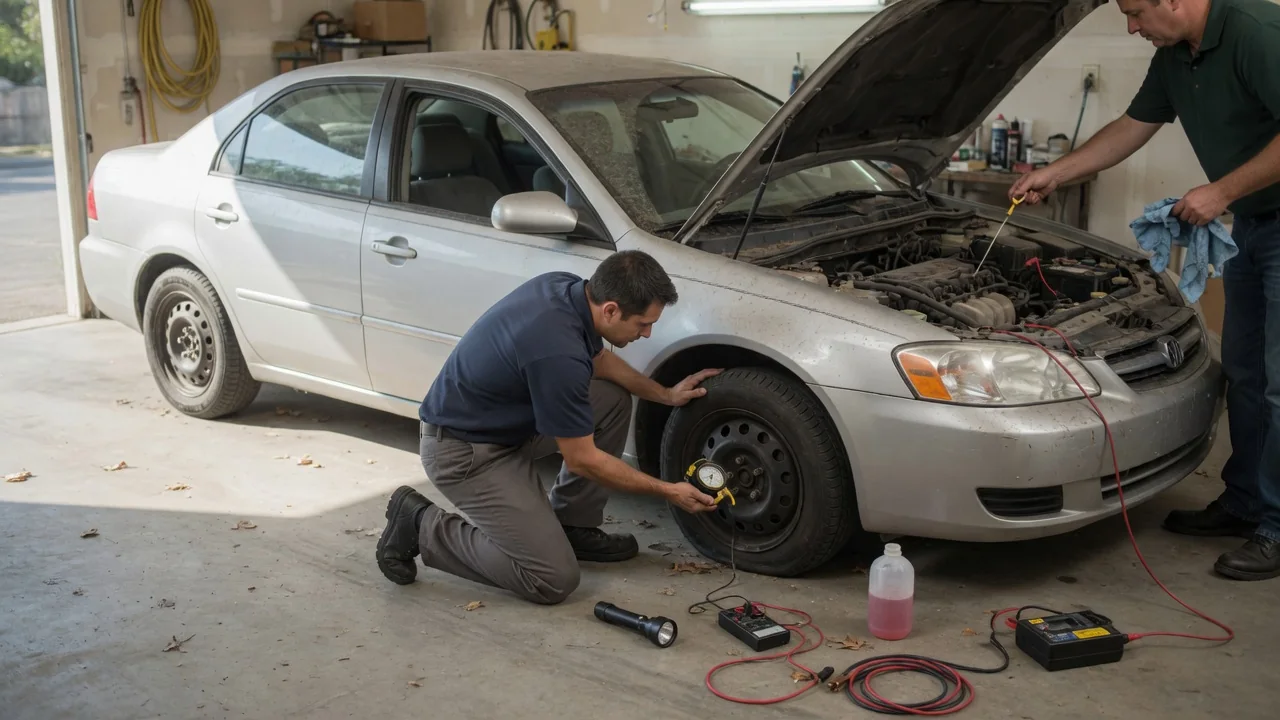
Knowing how to inspect a car after long-term storage matters because a vehicle that sat for months changes in ways that are easy to miss. Fluids settle, rubber stiffens, the battery drains, and small animals may move in. A patient walkaround before the first start, followed by a short, careful drive, catches most trouble before it becomes expensive.
Leaks and tires
Begin on the ground before touching the key. Look under the engine, transmission, and each wheel for spots or stains on the floor, since a parked car gives leaks months to mark their position. Color and feel offer clues: dark brown or black usually points to engine oil, reddish fluid often suggests transmission or power steering fluid, and a bright green, orange, or pink puddle is typically coolant. Clear, slippery fluid near a wheel deserves special caution because it may be brake fluid. Fluid colors vary by manufacturer, so treat them as hints.
Tires lose pressure slowly while sitting, so check all four and the spare with a gauge and compare the readings against the placard on the driver's door jamb or the owner's manual instead of the number molded into the sidewall. Inspect the sidewalls for fine cracking, bulges, and any flattened area where the tire rested on the floor. Mild flat spots often round out after a few miles of warm driving, but cracks or deformities that persist call for a tire shop's opinion before highway speeds.
Battery and lights
A battery self-discharges in storage, and modern vehicles add a small constant draw from alarms, control modules, and memory circuits. Before trying to crank, open the hood and look at the terminals for white or bluish-green crust, loose clamps, or a swollen case. A slow, labored crank or rapid clicking suggests low charge, not necessarily a ruined battery, and a slow recharge with a suitable charger often recovers it. Deeply discharged batteries may never return to full capacity, so a load test at a shop settles the question.
With the battery sound, switch the ignition on and watch the instrument cluster. Warning lamps should illuminate briefly as a bulb check and then go out once the engine starts; any that remain lit deserve attention before driving. Walk around the car with the headlights, high beams, turn signals, hazards, and reverse lights operating, and use a wall reflection or a helper to confirm the brake lights. Some vehicles lose clock, window, or radio settings after a power loss, and the relearn steps differ by make, so check the owner's manual.
Gentle road test
Let the engine idle for a minute or so and listen before moving. Then pick a quiet street or empty lot and test the brake pedal at walking pace first. Surface rust forms on brake rotors during storage and commonly causes a scraping or grinding sound that fades after several gentle stops. A pedal that feels soft or sinks toward the floor, or a car that pulls sharply to one side, is a different matter and justifies ending the drive and arranging an inspection.
Keep speeds modest for the first few miles and pay attention to what the car tells you. A rhythmic thump that eases as the tires warm usually traces to flat spotting, while a vibration that grows with speed may point elsewhere. Watch the temperature gauge climb to its normal position and stay there, note whether the transmission shifts smoothly, and listen for squealing belts at startup. Gasoline, hybrid, and electric drivetrains behave differently, so judge against how your own vehicle normally feels.
Everyday Use and Observations
The first week back in regular service reveals problems a single walkaround cannot. Gasoline ages in the tank, and stale fuel can cause rough idling, hesitation, or hard starting; topping up with fresh fuel often helps dilute what remains, though heavily degraded fuel may need professional attention. Look over the parking spot again after each overnight stop, because seals that dried out during storage sometimes begin seeping only after the engine has reached full temperature a few times.
Use your senses during ordinary errands. A musty smell from the vents may indicate moisture or a dirty cabin filter, while chewed insulation, droppings, or nesting material under the hood or in the air filter housing signals rodents and possible wiring damage. Test the air conditioning, heater, wipers, and washer spray, since wiper blades harden and washer nozzles clog. Measure tire pressure and fluid levels again after a few days; a level that keeps dropping tells you more than a single reading.
Limits and Next Steps
A visual inspection has clear limits. It cannot measure moisture in brake fluid, the condition of oil that has aged in the sump, or the internal state of hoses and belts that look fine from outside. Many manufacturers specify fluid changes by time as well as mileage, so a car stored for a long period may be due for service despite few miles driven. The maintenance schedule in your owner's manual is the reference, because intervals differ between vehicles.
If a check engine light appears, a stored code is a starting point for diagnosis, not proof that a specific part has failed. Low battery voltage during storage can itself set codes, and some are manufacturer-specific and need vehicle-specific interpretation. Have a qualified technician look at anything involving brakes, fuel leaks, steering, or persistent warning lamps instead of driving on in hope. Tire aging also depends on storage conditions, so older rubber is best judged by a professional before the car returns to regular highway use.