How to Do a Five-Minute Car Walkaround
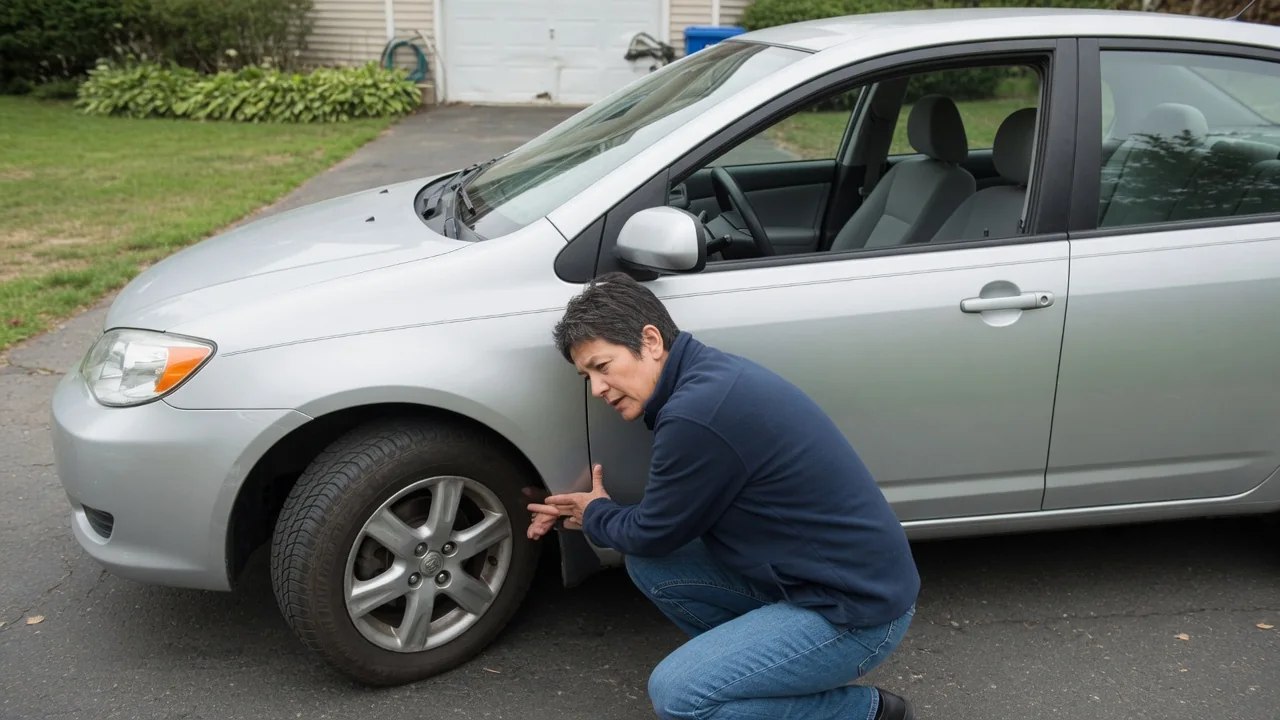
Learning how to do a five minute car walkaround gives you a repeatable habit for catching visible problems before they turn into roadside surprises. The idea is simple: circle the vehicle in the same direction each time, look at the same things in the same order, and note anything that has changed since the last time you looked. No tools are needed, only attention and decent light.
Tires and leaks
Start at the driver-side front tire and work around the car. Look at each tire's stance first: a tire that bulges more at the bottom than its neighbors may be low on pressure, even if it is not flat. Then scan the sidewall for cuts, bubbles, or cracking, and glance across the tread for nails, screws, or wear that is much heavier on one edge. Uneven wear can point toward alignment or inflation issues, though it takes a proper inspection to say which.
While you are crouched near each wheel, look at the ground under the car. Fresh spots tell more than old stains, so note the location and color. Clear water dripping near the front passenger area after running the air conditioning is usually normal condensation. Dark brown or black spots, reddish fluid, or brightly colored coolant deserve attention, as does any wetness on the inside of a wheel, which may involve brake fluid. Fluid colors and locations vary by vehicle, so the owner's manual helps narrow down what you are seeing.
Glass and lights
Windshield damage is easiest to spot from outside with light hitting the glass at an angle. Look for chips, star-shaped breaks, and cracks creeping in from the edges, since small damage can spread with temperature swings and road vibration. Check the wiper blades at the same time: rubber that is torn, hardened, or lifting away from the glass will streak in rain. Side windows and mirrors should be clean, intact, and adjusted, and the mirror housings should feel solid rather than loose.
Lights need a quick functional check as well as a visual one. Switch on the headlights and hazard flashers, then walk around to confirm that each corner is lit and flashing. Brake lights and reverse lights are harder to check alone; backing up near a wall or garage door lets you see the reflection, or a helper can watch. Look at the lenses for cracks, moisture inside, or heavy clouding that dims output. Lamp layouts differ widely, and some vehicles display a dash warning when a bulb fails, while others do not.
Loose items
A walkaround is also the moment to notice anything hanging, flapping, or out of place on the outside. Look low at the front and rear for plastic splash shields or undertrays drooping toward the pavement, often after contact with a curb or parking block. Check that bumper covers and trim sit flush, the license plates are secure, and the fuel door is closed. If the vehicle carries a roof rack, bike carrier, or trailer hitch accessory, give it a firm push by hand to confirm it does not shift.
Loose items inside matter too, because unsecured objects become projectiles in a hard stop. Glance through the windows for water bottles or other objects that could roll into the driver's footwell and lodge under the pedals, and make sure floor mats lie flat and are held by their retainers where fitted. Heavy cargo belongs low and against a seatback or tied down. In a pickup bed, confirm that straps are tight and the tailgate is latched; hatchbacks and SUVs vary in the anchor points they provide.
Everyday Use and Observations
The routine pays off most when it becomes a baseline. Seeing the car in the same condition day after day makes a change stand out: a tire that looks softer than yesterday, a new drip on the driveway, a fresh scrape on a bumper from a parking lot. Parking in the same spot helps, since a clean patch of pavement shows new leaks clearly. Not every trip needs the full five minutes, but a weekly lap and one before any long drive is a practical rhythm.
Finish the lap by getting in and noticing what the car tells you at startup. Warning lights should illuminate briefly and then go out; one that stays on is worth looking up in the manual. Listen for unfamiliar noises in the first few yards and feel whether the brake pedal and steering respond as usual. Conditions change the routine as well. In winter, clear snow and ice from lights and glass, and after heavy rain or a long highway trip, look again at tires and the underside.
Limits and Next Steps
A visual check has real limits. It cannot measure tire pressure, so a gauge reading against the figure on the door-jamb placard remains necessary, and many low tires look normal to the eye. It also cannot reveal brake pad thickness on every wheel design, fluid levels under the hood, suspension wear, or anything electronic. A warning light or stored fault code is likewise only a starting point: it indicates where a system detected a problem, not which part has failed, and meanings can differ between manufacturers.
What you do with a finding depends on its severity. A slightly low tire or a tired wiper blade can be handled at the next convenient stop. A sidewall bulge, a growing fluid puddle, a soft brake pedal, or a part dragging beneath the car are reasons to avoid driving until a qualified technician has looked at it. Taking a phone photo of a leak, a crack, or a wear pattern, along with a note of when you first saw it, gives the shop useful information and helps you judge whether it is getting worse.