What to Check on a Car After It Sits Through a Snowstorm
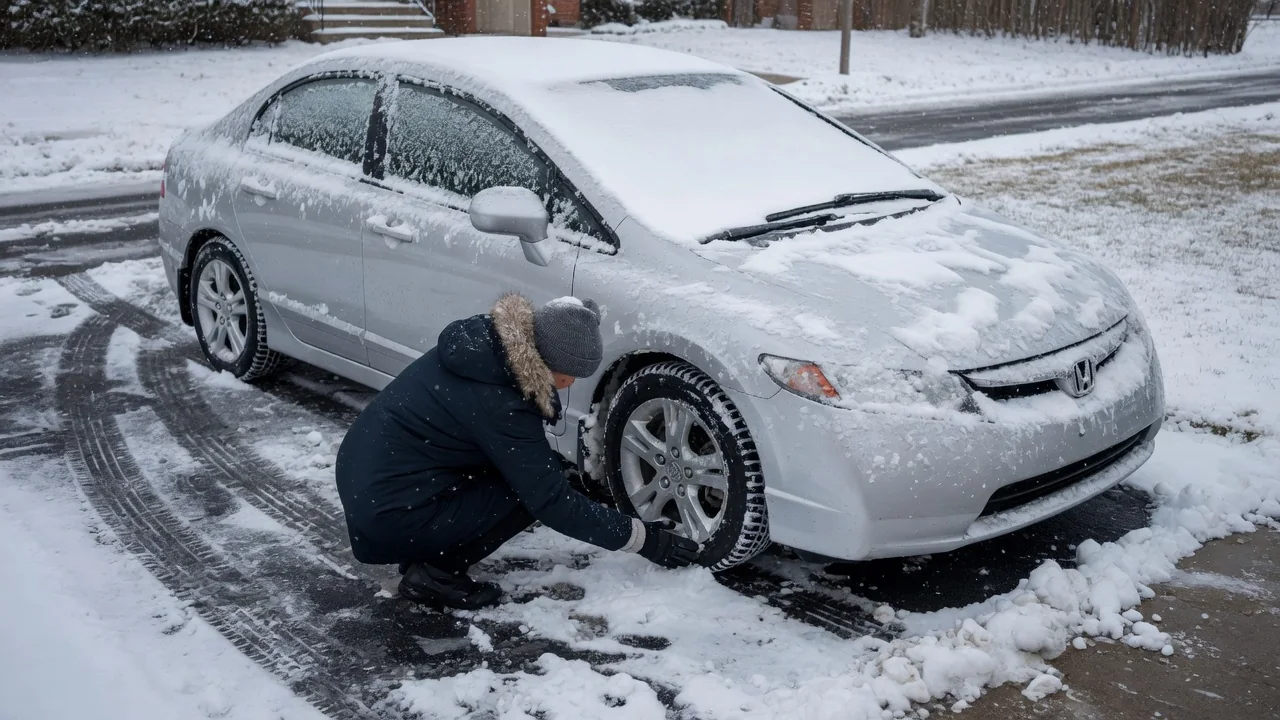
Knowing what to check on a car after it sits through a snowstorm can prevent a simple cold start from turning into a stuck vehicle, a damaged wiper, or a cabin filling with exhaust. A slow walkaround before turning the key takes only a few minutes, and it reveals most of the problems that packed snow, ice, and drifting create while a vehicle is parked.
Clear openings
Snow blocks more than the windshield. Start at the front and look at the grille and lower bumper intake, because packed snow there restricts airflow to the radiator and, on many newer vehicles, covers radar or camera sensors used by driver assistance features. Move up to the cowl at the base of the windshield, where the cabin ventilation system draws in outside air. If that intake is buried, the defroster struggles to clear glass and the blower may pull in moisture that fogs the interior.
Clear the roof, hood, and trunk fully rather than carving a small viewing port, since loose slabs slide onto the windshield under braking or blow onto traffic behind. Free the wiper blades by hand before they are switched on, because a blade frozen to the glass can tear its rubber edge or strain the wiper linkage and motor. Headlights, taillights, mirrors, and the license plate also need to be uncovered. Sensor and camera locations differ by make, so the owner's manual shows where yours are mounted.
Inspect tires and exhaust area
The tailpipe deserves attention before the engine ever runs. A plow berm or drift packed around the rear of the car can seal the exhaust outlet, and a blocked outlet may push carbon monoxide back toward the cabin while the vehicle idles. Dig out the pipe and open a clear space behind and beneath the bumper so gases can disperse. Some vehicles have dual outlets or tips tucked behind the bumper cover, so look carefully rather than assuming one visible pipe is the only one.
Tires lose pressure as temperatures fall, so a tire that looked fine before the storm may now appear noticeably soft at the sidewall. Compare all four by eye, then confirm with a gauge against the pressures listed on the door jamb placard. Look for ice bonding the tread to the pavement and for snow packed inside the wheel wells, which can rub against the tire or limit steering travel. Chunks frozen inside the wheels themselves can throw off balance and cause a vibration at speed.
Check warnings
Once the outside is clear, switch the ignition on and watch the instrument cluster before driving away. Every warning light normally illuminates briefly as a self-test, then most go out after the engine starts. Lights that remain on are worth noting. A tire pressure warning after a cold night frequently reflects the temperature drop, though it still calls for a gauge reading. A battery or charging indicator, or cranking that sounds slow and labored, suggests the battery was weakened by cold and may need testing.
Snow and ice over sensors can also trigger messages about unavailable parking aids, blind spot monitoring, or adaptive cruise control, and these often clear once the sensor surface is cleaned and dry. Treat any warning as information to interpret rather than proof that a component has failed. If a check engine light appears and a code is read, its meaning can depend on the manufacturer, so confirm it against information specific to your vehicle before assuming which part is responsible or buying a replacement.
Everyday Use and Observations
The first few minutes of driving reveal what a stationary inspection cannot. Brakes may feel grabby or make a brief scraping sound as surface rust and moisture clear from the rotors, which normally fades after a few gentle stops. A parking brake that was set during freezing conditions can stick, felt as drag or reluctance to roll. Steering that feels heavy or limited may point to ice packed around suspension and steering components, so test both directions at low speed before reaching the road.
Inside the cabin, pay attention to how quickly the glass clears and whether the heater output grows warm as the engine reaches temperature. Persistent fogging can mean the fresh air intake is still obstructed or wet floor mats are adding humidity. Check that washer fluid sprays, since nozzles and lines freeze if the fluid is not rated for winter temperatures. Doors, locks, and window seals may also be frozen, and forcing a power window down against ice can strain the regulator.
Limits and Next Steps
A walkaround finds visible and obvious problems, but it cannot measure battery health, confirm coolant freeze protection, or detect a small leak hidden under snow. Look at the ground where the car was parked after moving it. Fresh drips or stains on the snow give a clue about fluid loss, and the color and position help a technician narrow the source. Electric and hybrid vehicles add their own considerations, such as reduced range in cold weather and charge port doors that may freeze shut.
When something does not resolve after cleaning and a short drive, stop guessing and have it examined. A warning light that stays on, a vibration that continues once wheels are clear of ice, a pulsing or soft brake pedal, or an exhaust smell inside the cabin all justify professional inspection. Avoid idling in an enclosed garage or with the vehicle still partly buried. Carrying a brush, scraper, small shovel, and tire gauge makes the next storm's inspection faster and more thorough.