How to Inspect Car Rubber Parts During a Walkaround
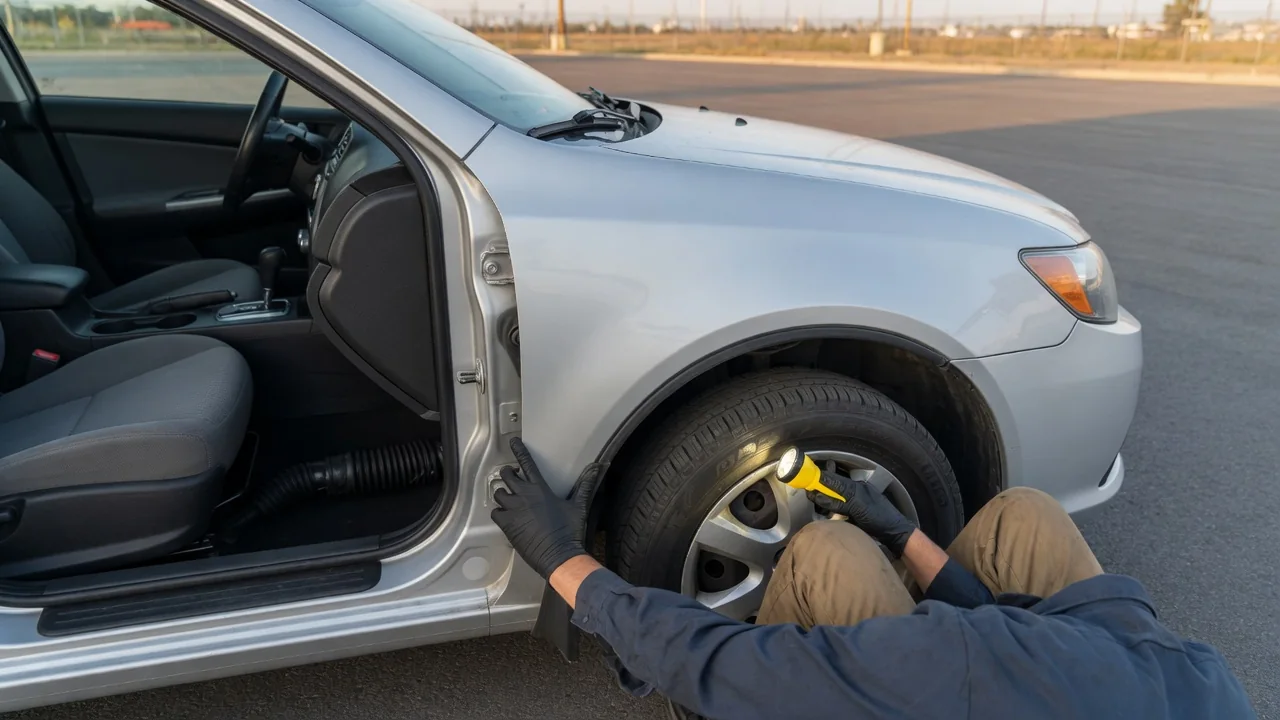
Rubber parts age quietly. Heat, ozone, sunlight, road chemicals and constant flexing harden and crack them long before most of them fail outright. A short, deliberate walkaround can catch many of those changes early, and all it takes is your eyes, your hands and a flashlight. This guide explains how to inspect car rubber parts during a walkaround, what normal aging looks like, which signs need attention, and where a visual check stops being enough.
Tires and seals
Start with the tires, because they carry the vehicle and reveal the most. Look at each sidewall closely, from more than one angle. Bulges or blisters can indicate internal cord damage. Cuts, gouges or exposed fabric are serious. Fine surface cracking, often called weather checking, appears as a network of shallow lines on the sidewall or between tread blocks. It is a sign of aging and should be watched. Deeper cracks that open when the tire flexes are more serious. Next, check the tread. Most tires have molded wear indicator bars in the main grooves, and tread worn level with them has reached the end of its usable depth. Uneven wear is also informative. Wear concentrated on one shoulder, on both shoulders or in the center, or a scalloped pattern, often points to alignment, inflation or suspension issues rather than to the tire itself. The manufacturing date is part of the DOT code on the sidewall. Rubber ages even on tires with plenty of tread, though age guidance varies by manufacturer. Finally, bend each valve stem gently and look for cracks at its base.
Body seals are easy to overlook. Open each door, the hood and the trunk or tailgate, and inspect the weatherstripping on both the opening and the panel. Healthy seals are flexible, hold their shape and spring back when pressed. Warning signs include: • flattened sections; • tears; • missing pieces at corners; • seals pulling away from their channel; • a hard, shiny or chalky surface; Run a finger along the window channels and the belt seals at the base of the side windows, since brittle belt seals can let water into the door. Damp carpet, water stains or persistent interior fogging may point to a seal that no longer seals even if it looks intact. Wiper blades are a quick related check, because a split or hardened edge will streak and chatter.
Boots and hoses
Protective boots keep lubricant in and dirt out of moving joints. A torn boot usually leads to joint wear if left alone. With the vehicle parked securely and the engine off, shine a flashlight behind the front wheels to find the constant-velocity joint boots used on front-wheel-drive and many all-wheel-drive vehicles. Turning the steering to full lock exposes more of the outer boots. Look for: • splits in the folds; • loose or missing clamps; • dark grease flung onto nearby suspension parts, brake components or the inside of the wheel; That spray is often the clearest sign that a boot has opened. Depending on the design, steering rack boots, tie-rod end and ball joint boots, and shock absorber dust boots may also be visible from the wheel wells. Never get under a vehicle supported only by a jack. Parts you cannot see from the side are better left for an inspection on a lift or ramps.
Under the hood, inspect only with the engine cool, because cooling system hoses can be hot and under pressure after driving. Check the radiator and heater hoses for cracks, swelling, soft spots, chafing where they touch other parts, and residue around the clamps. Coolant leaks often leave a crusty deposit or a colored film. Gently squeezing a cool hose can reveal what the eye misses. A hose that feels hard and crunchy, or one that collapses easily and stays dented, has likely degraded. Small vacuum and breather hoses tend to crack at their ends, where they bend over fittings. The drive belt is rubber too, so look for cracks across the ribs, missing chunks, glazing and frayed edges. Brake hoses near each wheel deserve a careful look for cracks, bulges or wetness.
Follow-up
A walkaround is only useful when its findings lead to action, so sort what you find into three groups. The first group is anything that affects immediate safety, such as a sidewall bulge, exposed cords, a wet or swollen brake hose, or an active coolant leak. Avoid driving the vehicle, beyond what is needed to reach a repair, until it has been checked. The second group is parts that are degrading but still working, such as a torn CV boot that is not yet noisy, an aged tire with adequate tread, or a cracked vacuum line. Schedule these for repair soon, because the damage usually progresses. The third group is early aging signs, such as light surface crazing or a slightly faded door seal. Note these and recheck them later.
Simple records work better than memory. Note the date, the mileage and what you saw on each tire and component, and take photos from the same angles each time. Comparing them over several checks shows whether a crack is growing, a seal is deforming further or a tire is wearing unevenly. Check tire pressures with a gauge at the same time, while the tires are cold. Use the values on the vehicle's placard or in the owner's manual, because incorrect pressure speeds up both tread wear and sidewall damage. For component locations, replacement intervals and approved parts, the owner's manual and the vehicle's service information are the authoritative sources for a specific model.
Practical implications and limits
A visual rubber car parts check is good at catching surface damage, leaks and deformation, but it cannot see everything. A hose can weaken from the inside, and a hard impact can damage a tire's internal structure without an obvious outer mark. Engine and transmission mounts and suspension bushings are also rubber, but their condition is often hard to judge without a lift or observing movement under load. Many components sit behind engine covers, splash shields or underbody panels, and what is visible differs widely between vehicle designs. Grime can hide cracks, while a fresh coat of tire shine or rubber dressing can make an aged surface look healthier than it is.
For these reasons, a walkaround works best as an early-warning habit rather than a replacement for scheduled service inspections. Repeating it at regular moments makes changes easier to spot. Good times include before long trips, at seasonal changes and after hitting a pothole or curb. Interpreting the results also takes some restraint. Light surface checking and gradual hardening are normal parts of rubber aging, and not every crack means a part must be replaced immediately. Get a professional assessment when a finding is borderline, when it involves steering, braking or tire integrity, or when it concerns a part you cannot see clearly.