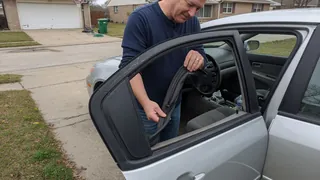
Where to buy car door rubber seals
A worn or torn door rubber seal allows wind noise, water, and dust into the cabin, but replacement is straightforward once the original profile is matched. Shoppers looking for a car door rubber seal at AutoZone, Canadian Tire, or a nearby supplier usually choose between universal roll weatherstrip and vehicle-shaped sections. The right option depends on cross-section, mounting style, and flexibility rather than advertised length alone. This guide explains how to buy with enough confidence to avoid leaks, hard closing, and adhesive failure after the first warm day.
The direct answer
The direct answer is that a replacement seal is generally available from national parts chains, local independent stores, and online sellers offering universal or direct-fit weatherstrip. An AutoZone location typically carries common bulb and sponge-rubber profiles that suit many cars and light trucks. Canadian Tire fills the same role for Canadian drivers who need material quickly. If a preformed door aperture seal is not listed, a generic extrusion with the same cross-section can often be cut to length and pressed onto the original pinch weld or bonded to a flat flange.
Local purchase has a practical advantage when the old seal is damaged unevenly. You can bring a short clean sample to the counter and compare its shape, width, and mounting groove before buying. A seal that looks correct in a photo may be too dense, forcing the latch harder, or too soft, collapsing at highway speed. For that reason, the answer is not simply the first roll marked door weatherstrip. The usable purchase is the one whose profile and attachment edge match what the vehicle already has.
Identification and location
Identification begins with the seal's section and the way it attaches. Push-on weatherstrip has a U-shaped carrier that grips the body flange, while glue-on material relies on a flat adhesive face. To separate similar products, cut away a short undamaged portion from the lower door area and measure the slot width and overall height. Profiles may be bulb, lip, or twin-channel even when the outer face appears identical. Selecting the wrong carrier can cause the rubber to release when the door closes or to tear along a curved section.
Location also matters because different parts of the perimeter use different shapes. A lower auxiliary seal may be a separate scuff-protecting strip, while the main body-side seal follows the roof and B-pillar. Before ordering, feel along the frame for plastic retainers or clips that hold the original rubber. If those retainers are broken, new rubber alone may not stay seated. Some Canadian Tire and AutoZone listings include universal lengths only, so a nearby trim supplier can be better when a molded corner must be replaced without stretching the extrusion.