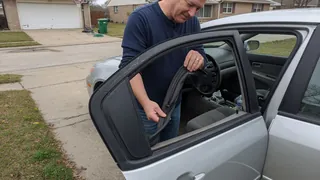
Soundproof car door rubber seals
A sound proof car rubber door seal can reduce the sharpness of wind noise, tire roar, and traffic sounds that enter through the door shut area. The improvement is rarely a total silence treatment, but a fresh or correctly seated weatherstrip often makes highway-speed cabin noise less fatiguing. Important limits apply: a rubber door seal mainly addresses noise crossing the door gap, while glass fitment, floor pan, wheel well, and trim leaks remain separate paths. Choosing a suitable product depends on seal condition, mounting style, and the vehicle specification rather than on the thickest or most heavily advertised extrusion.
The direct answer
A sound proof car rubber door seal helps most when the current seal is hardened, flattened, torn, or no longer presses evenly against the door frame. In that condition, outside sound finds a narrow air path, and road or wind noise becomes noticeably sharper. Replacing worn weatherstripping or adding a compatible secondary bulb seal can restore a more consistent barrier and reduce the high-frequency edge of intruding noise. The result is usually a calmer cabin rather than a recording-studio quiet interior.
Before buying, confirm whether the vehicle needs a factory-style formed weatherstrip or a universal self-adhesive soundproof car rubber door seal. Formed seals suit damaged original sections and preserve the designed water ingress protection. Universal extrusions can close an uneven door gap on some vehicles but may interfere with latch effort or wiper contact along the glass. Seal condition and the shape of the existing channel matter more than product thickness, because a bulb that is too tall can fold, tear, or prevent the door from closing cleanly.