Why Do Car Door Seals Squeak?
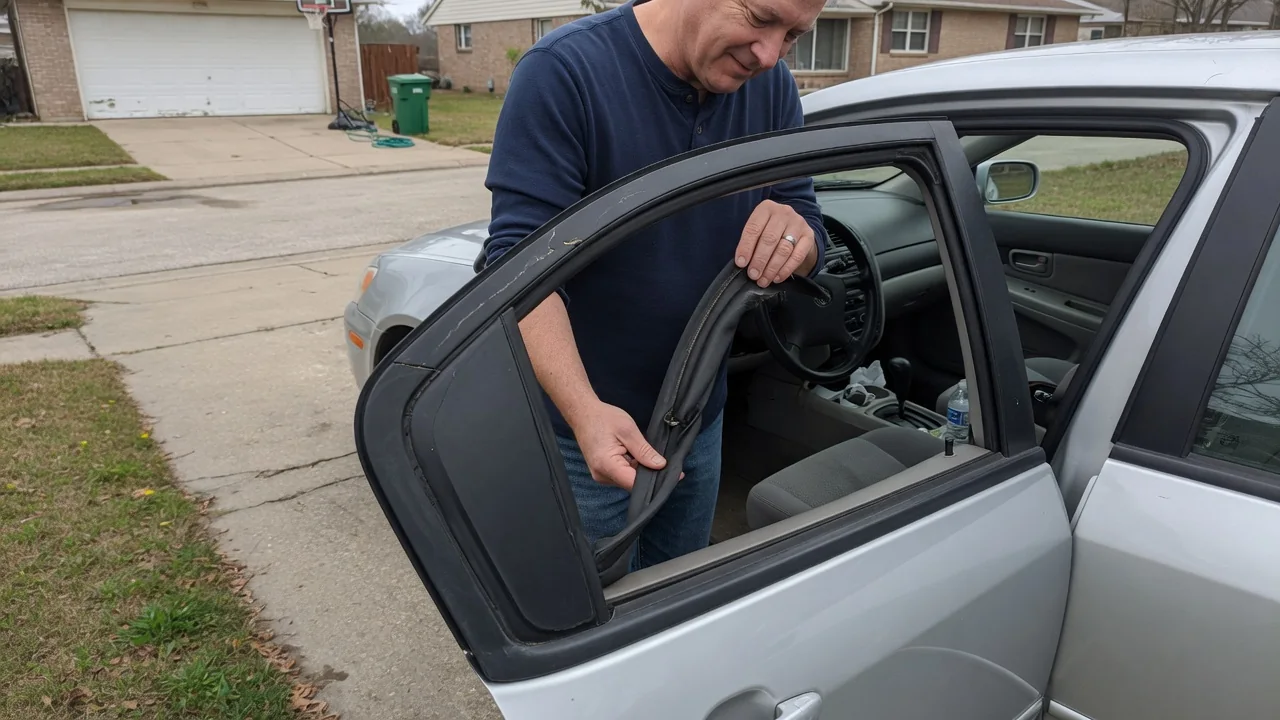
Anyone who has wondered why do car door seals squeak is usually hearing rubber rubbing against paint, glass, or another strip of rubber as the body flexes. The weatherstripping is designed to compress and stay put, but dirt, dryness, and small door movements can turn that quiet contact into a chirp or creak over bumps and driveways.
Identify contact
A door seal squeaks through a stick-slip action. The rubber grips the painted door frame or the edge of the door, the body twists slightly, tension builds, and the rubber suddenly releases and grabs again. That rapid grab and release repeats many times a second and produces the squeak. It tends to show up when the body is loaded unevenly, such as crossing a driveway apron at an angle, pulling over a speed bump, or turning into a steep parking lot entrance.
Finding the contact point starts with listening for the location, since a noise near the top of the door suggests the upper frame seal, while one near the latch side points toward the rear edge. Shiny, polished patches on the rubber or faint rub lines on the paint show where the two surfaces are working against each other. Layouts vary by vehicle, because some designs carry the main seal on the body opening, others on the door, and frameless doors rely on the glass pressing into the roof seal.
Clean seals
Dirt is one of the most common reasons a quiet seal becomes a noisy one. Road dust, pollen, wax residue, and fine grit settle on the rubber and on the painted surface it presses against, raising friction and giving the seal something abrasive to drag across. Washing the weatherstripping and the matching contact surface with mild soapy water and a soft cloth, then drying both, often changes the noise noticeably. The painted side matters as much as the rubber, because the squeak comes from the pair.
Clean rubber that still feels dry or grabby generally benefits from a rubber-safe conditioner, with silicone-based products being a common choice for weatherstripping. A light film lowers friction so the seal can slide slightly instead of sticking and releasing. Petroleum-based products are usually avoided because they can swell or soften some rubber compounds over time. Since seal materials and coatings differ between manufacturers, the owner's manual or the dealer is the right reference for which product suits a particular vehicle, especially on seals with a factory flocked or low-friction coating.
When replacement helps
Cleaning and conditioning cannot restore rubber that has lost its shape. A seal that has hardened, cracked, torn, or flattened no longer springs back against the door, so it may rub unevenly, leave gaps, or vibrate against the body instead of pressing firmly. Visible splits at the corners, sections pulled away from their channel or clips, and a permanently crushed profile along the bottom edge are the usual signs. Wind noise at highway speed or damp carpet after rain often accompany the squeak when a seal has reached that stage.
Replacement helps when the rubber itself is the cause, but a new seal will not quiet a door that sits in the wrong position. A sagging hinge, a striker that has shifted, or body repairs that altered the opening can press one area too hard and leave another loose, and fresh rubber simply inherits the same uneven contact. Comparing the gaps around the door with the opposite side gives a rough indication. Seal profiles are specific to the vehicle and often to the individual door, so parts need to be matched accordingly.
Everyday Use and Observations
Weather strongly shapes how seals behave from day to day. Cold stiffens rubber and makes it less willing to slide, so a car that is quiet in summer may creak on winter mornings until the cabin warms. Heat and sun exposure dry the surface over the years, particularly on the side of the vehicle that faces the afternoon sun where it is usually parked. Many drivers notice the squeak disappears in the rain, because water briefly lubricates the contact, then returns once everything dries.
A few simple observations narrow things down without any tools. Pressing a hand against the door panel or the top of the door frame while a passenger drives over a rough patch may change or stop the noise, which points toward the seal on that door. Lowering the window slightly can alter the sound on frameless doors where glass meets rubber. Noting whether the squeak follows temperature, a recent car wash, a fresh coat of wax, or a particular type of road surface gives useful information for whoever looks at it next.
Limits and Next Steps
Not every squeak near a door comes from the seal. Door hinges and check straps, the latch and striker, interior trim panels, window channels, and sunroof seals all make similar sounds, and noise travels through the body in ways that make the source seem to be somewhere else. Suspension bushings can also creak over the same bumps that flex the body. If cleaning and conditioning the weatherstripping makes no difference at all, that result is itself a clue that the contact causing the noise lies elsewhere.
A noise that persists, or one accompanied by water leaks, a door that is hard to close, or uneven gaps, deserves a professional look. Door and striker alignment involves adjustments that affect how securely the door latches, so it is better handled by a body shop or qualified technician than by trial and error. Vehicles still under warranty may have seal or adjustment concerns addressed by the dealer, and some manufacturers publish service guidance for known noise issues. Describing when and where the squeak occurs helps the shop reproduce it quickly.