Why Do Car Connectors Have Seals?
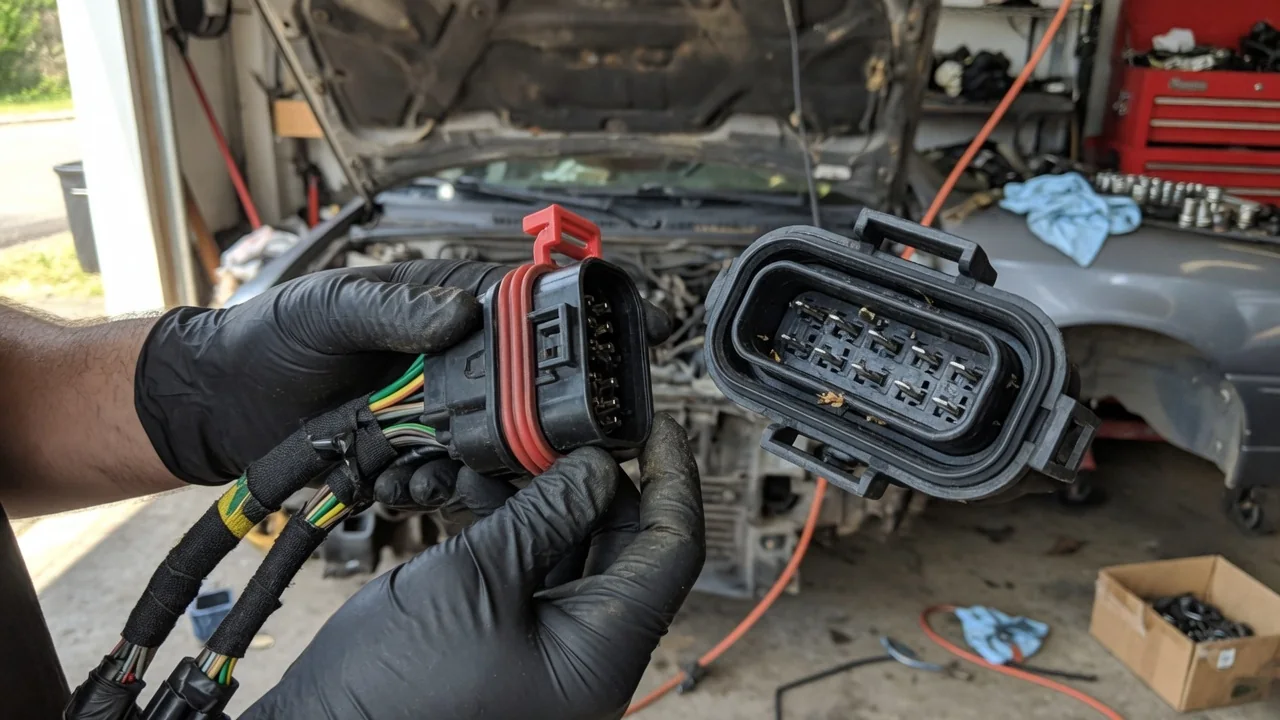
Anyone who has unplugged a sensor under the hood has probably noticed a small rubber ring or a row of colored plugs inside the connector body. Those parts answer the question of why do car connectors have seals: they keep water, road salt, and dirt away from the metal terminals, where even slight corrosion can disturb the low-voltage signals modern vehicles depend on.
Where used
Sealed connectors appear wherever wiring is exposed to weather, spray, or fluids. Typical locations include the engine bay, wheel wells, the underbody, bumpers, and the areas behind exterior lamps. Wheel speed sensors, oxygen sensors, fuel injectors, coolant temperature sensors, parking sensors, and trailer wiring are common examples, because each sits where rain, wash water, or road slush can reach it. Many of these circuits carry small voltages or currents, so a little added resistance from corrosion can change what a control module reads.
Inside the cabin, connectors behind the dashboard or under the seats are often unsealed, since that space is expected to stay dry. Looking closely at a sealed design usually reveals two barriers: a ring or gasket where the two halves mate, and individual wire seals or a single multi-hole grommet where the wires enter the back. Unused cavities are commonly filled with blank plugs. The exact layout, seal color, and locking style differ by manufacturer and connector family, so two similar-looking plugs may not be built alike.
How seals fail
Seals are usually made of silicone or a similar elastomer, and they work by being compressed evenly between surfaces. Years of engine heat, temperature cycling, and contact with oil or other fluids can harden the material until it no longer springs back, leaving a path for moisture. Seals also get nicked, rolled, or pinched during assembly, or fall out unnoticed when a connector is separated. A connector that is not fully latched may look seated while the mating seal carries little or no compression.
Water does not always enter at the connector itself. A chafed wire or a damaged splice elsewhere in the harness can let moisture travel along the copper strands under the insulation, a process often called wicking, and arrive behind an otherwise healthy seal. Probing through the back of a connector with a sharp tool can also tear a wire seal. Once moisture is inside, terminals may show green or white deposits, and the sealed housing can actually hold that moisture in rather than letting it dry.
Service care
Care during service starts with how a connector is opened. Releasing the lock properly and pulling on the housing rather than the wires protects both the terminals and the wire seals at the back. Before reconnecting, it is worth checking that the mating seal is present, sitting flat in its groove, and free of grit, cuts, or flattening. A connector should close with a positive click, and any secondary lock or lever should return fully to its closed position.
Cleaning methods matter as well. High-pressure washing aimed directly at connectors can force water past a seal that would shrug off ordinary rain and spray. Some manufacturers specify dielectric grease or a particular terminal treatment for certain connectors, while others advise against adding anything, so the service information for the specific vehicle is the right guide. When a seal is damaged, replacement parts need to match the connector family and wire size, because a seal that is slightly too loose around the insulation will not close the gap.
Everyday Use and Observations
Drivers rarely see connector seals, but they may notice the effects when one stops working. Moisture-related faults often come and go: a warning light that appears after heavy rain, a car wash, or a cold damp morning and then clears once things dry out. Exterior lights that flicker, a parking sensor that behaves erratically, or an anti-lock brake warning tied to wet weather can all fit this pattern, though each of these symptoms has other possible causes too.
A stored fault code can help narrow the search, but it describes what a module detected on a circuit, not which part caused it. A code pointing to a sensor signal may trace back to a corroded terminal or a wet connector rather than the sensor itself, and some codes are manufacturer-specific and need to be checked against information for that vehicle. Visible clues include deposits on terminals, water droplets inside a housing, discolored plastic, or a seal that looks dry, cracked, or out of place.
Limits and Next Steps
Seals reduce moisture exposure, but they have limits. Connectors are designed for a defined level of splash or immersion, and that level varies with the component and its location, so a sealed plug is not a guarantee against deep water, flood damage, or prolonged submersion. Seals also cannot reverse corrosion that has already begun, and they do nothing for wiring damaged elsewhere in the harness. Aftermarket accessories spliced in with unsealed connectors or tape can introduce a weak point into an otherwise protected circuit.
When a moisture problem is suspected, a careful visual inspection is a reasonable first step, followed by proper electrical testing rather than replacing parts on a hunch. Corroded terminals often need repair or replacement, since cleaning alone may leave a weakened contact surface. Connectors on airbag circuits, high-voltage hybrid or electric systems, and other safety-critical wiring should be left to qualified technicians with the correct procedures. Wiring diagrams and repair information for the specific vehicle identify the right connector, seal, and approved repair method.