How to Inspect Tire Sidewalls for Damage
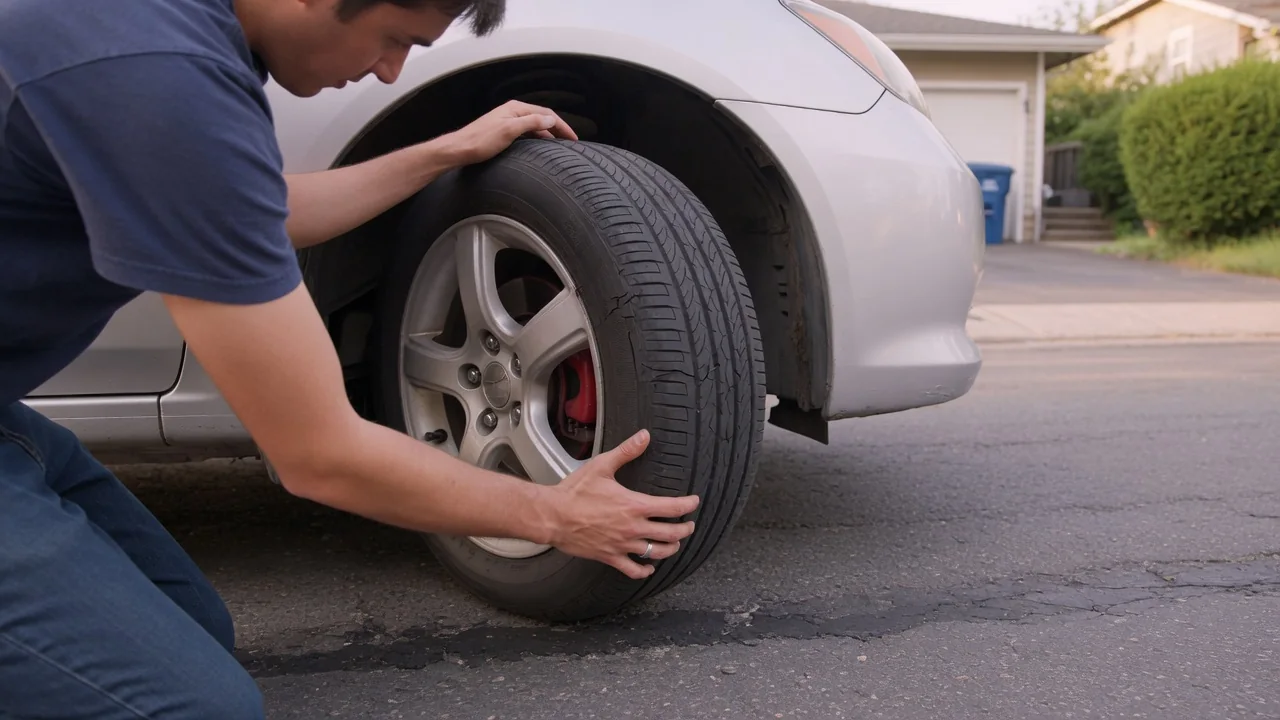
The sidewall is the thinnest, most flexible part of a tire, and it carries the vehicle's load without the steel belts that protect the tread. Learning how to inspect tire sidewalls for damage takes only a few minutes with good light and clean rubber. This routine explains what to look for, where problems hide, and which findings mean the tire should not stay in service.
Cuts and bulges
Start with the tire clean and dry, because road film hides fine lines. Move slowly around the circumference and look for cuts, gouges, and scuffs from curbs or debris. A shallow scrape that only roughens the surface rubber is different from a cut that opens when the sidewall flexes or reveals fabric cords beneath. Any exposed cord, whether it looks like loose threads or a woven texture, means the structural layer has been reached and the tire should be considered unsafe to keep driving on.
A bulge or bubble tells a different story. It usually forms after an impact, such as a pothole or curb strike, breaks internal cords and lets air pressure push the rubber outward. Run a gloved hand lightly over the sidewall to feel for raised areas that the eye may miss in flat light. Do not confuse a bulge with a slight, narrow indentation running radially, which is often just a normal overlap in the casing construction; when unsure, have a tire shop judge it.
Both sides
The outer sidewall is easy to see, but the inner one facing the suspension takes damage too and is rarely checked. On the front axle, turning the steering wheel to full lock exposes much of the inboard face of each tire. A flashlight and a small mirror help at the rear, where access depends on wheel well clearance, ride height, and body design. Low cars and vehicles with wide tires or tight fender liners may offer only a partial view from ground level.
Because only part of the tire is visible at any time, roll the vehicle forward a few feet and look again so the section that was resting on the ground or hidden behind the fender gets checked. Inner sidewalls can be chafed by a loose liner, a rubbing suspension component, or debris thrown up from the road, leaving a polished band or groove. If a full view is not possible safely, a shop can raise the vehicle and spin each wheel for a complete inspection of both faces.
Service decision
Some findings call for stopping rather than monitoring. A bulge of any size, a cut showing cords, a puncture in the sidewall, or a split that weeps air are generally treated as reasons to replace the tire, because the sidewall flexes constantly and repairs in that area are generally not accepted as dependable. In those cases, fitting the spare or arranging a tow is the cautious choice, since a weakened casing can fail suddenly at highway speed or under a heavy load.
Other marks sit in a gray area. Light curb scuffing, shallow surface abrasions, and fine weather cracking, the network of tiny lines sometimes called dry rot or ozone checking, deserve a professional opinion rather than a guess. A technician can gauge depth, check the inner liner with the tire dismounted, and weigh the tire's age, which can be read from the date code molded into the sidewall. Replacement practices also differ by vehicle; some all-wheel-drive systems are sensitive to mismatched tire diameters, so consult the owner's manual.
Everyday Use and Observations
Sidewall checks work best as a habit tied to something already done regularly, such as checking pressures or washing the car. A walk around the vehicle before a long trip, and another after hitting a pothole, striking a curb while parking, or driving over debris, catches most problems early. Damage from an impact doesn't always appear immediately; a bubble can develop over the following days, so a second look later in the week is worthwhile.
Clues also come from how the vehicle behaves. A new vibration, a pull, or a tire that keeps losing pressure can point toward casing damage, though each of those symptoms has other possible causes, including wheel balance, alignment, or a leaking valve. A tire pressure warning light is a prompt to look, not a diagnosis. Running underinflated is itself hard on sidewalls, since the extra flexing builds heat and can leave a scuffed, wrinkled ring around the tire that signals internal harm.
Limits and Next Steps
A visual check has real limits. It cannot reveal broken cords that have not yet produced a bulge, damage to the inner liner, or separation hidden within the casing. Tires with stiff reinforced sidewalls, including run-flat designs, may look normal even after being driven with little or no air, so their condition is harder to judge from outside. Low-profile tires leave less sidewall to absorb impacts, meaning the wheel rim itself may be bent even when the rubber appears intact.
When anything looks questionable, photograph it, note which wheel position it is on, and reduce speed and load until a tire professional has examined it. Mention any recent impact, since that history guides where they look. Confirm the correct inflation pressure from the placard on the vehicle, usually in the driver's door opening, rather than the maximum figure printed on the tire. If replacement is advised, the size, load index, and speed rating should match what the vehicle manufacturer specifies for that model.