How Car Wheel Size Affects Ride Comfort
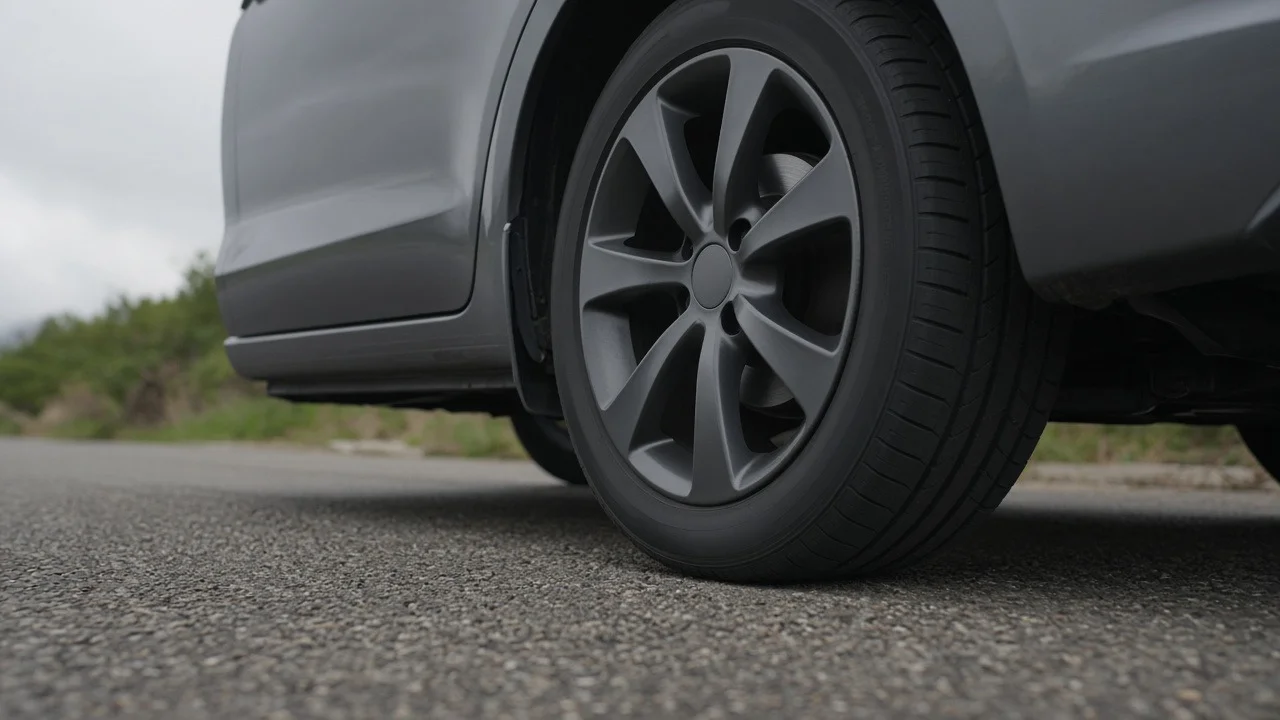
Wheel size affects ride comfort mainly through the tire wrapped around it. When a car moves to a larger wheel while keeping roughly the same overall wheel-and-tire diameter, the tire sidewall gets shorter. A shorter sidewall has less room to flex over bumps, so more road impact reaches the suspension and cabin. In most cases, then, larger wheels make a car ride firmer and smaller wheels with taller tires ride softer. The effect is real, but its size depends on the specific vehicle, its suspension tuning, the tire model and the tire pressure, so the same wheel upgrade can feel very different from one car to another.
The short answer
Larger rim diameter, same overall size: shorter sidewall, firmer and often noisier ride, sharper steering response. Smaller rim diameter, same overall size: taller sidewall, more cushioning over potholes and broken pavement, slightly softer steering feel. Heavier wheels add unsprung weight, which can make the suspension work harder to keep the tire in contact with uneven roads. The tire itself, including its construction, load rating and inflation pressure, often matters as much as the wheel size.
Why the tire sidewall does most of the work
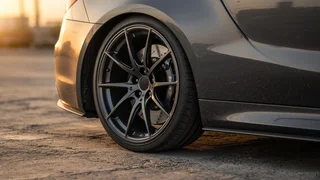
A tire is the first part of the car to meet a bump. Its sidewall acts as a small, fast-acting spring that absorbs sharp edges, such as expansion joints and pothole rims, before the suspension springs and dampers respond. A taller sidewall can deflect more, softening those quick, sharp impacts. A low-profile tire has less deflection available, so sharp inputs pass through more directly. That is why owners who switch to larger wheels often notice the change most on rough city streets rather than on smooth highways.
Sidewall height is described by the tire's aspect ratio, the middle number in a standard size such as 225/45R18. In that example, 225 is the tread width in millimeters, 45 means the sidewall height is 45 percent of that width, and 18 is the rim diameter in inches. A lower aspect ratio means a shorter sidewall. When rim diameter goes up and the overall diameter stays similar, the aspect ratio has to go down.
Rim diameter versus overall wheel and tire diameter
It helps to separate two measurements. Rim diameter is the size of the metal wheel. Overall diameter is the full height of the mounted tire. Automakers and tire fitters generally try to keep overall diameter close to the original so that the speedometer, odometer, gearing, stability systems and body clearance behave as designed. Because overall diameter is held roughly constant, any increase in rim diameter is taken out of the sidewall, which is the direct link between bigger wheels and a firmer ride.
Unsprung weight and wheel mass
Unsprung weight is the mass not supported by the springs: wheels, tires, brakes and parts of the suspension. When unsprung weight increases, the wheel has more inertia, so it is harder for the springs and dampers to control its movement over bumps. The result can be a busier, less settled ride and slightly reduced grip on uneven surfaces. Larger wheels are often heavier, though not always; construction method and material can make a larger wheel lighter than a smaller one. Wheel weight is therefore worth checking rather than assuming from diameter alone.
Rim width and tire compatibility
Rim width also influences how a tire behaves. Each tire size has an approved range of rim widths. A tire mounted on a rim near the narrow end of its range tends to have a more rounded, flexible sidewall, while a rim near the wide end stretches the sidewall tighter, which can sharpen response and firm up the ride. Mounting a tire outside its approved range is not recommended because it can affect bead seating, handling and tire wear. Tire compatibility should be confirmed against the tire maker's published rim width range for that size.
Offset, bolt pattern and clearance
These measurements decide whether a wheel fits safely, and some also affect how the car feels. Bolt pattern is the number of lug holes and the diameter of the circle they sit on; it must match the vehicle's hub exactly. Offset is the distance from the wheel's mounting surface to its centerline. Changing offset moves the wheel inward or outward, which alters the suspension's leverage on the hub and can change steering feel, bearing load and how impacts are transmitted. Clearance is the space between the wheel and tire and the brakes, suspension parts, fender liners and body, checked through full steering lock and suspension travel. A wheel that rubs or sits too close to components can cause damage and noise even if the ride itself feels acceptable.
Other trade-offs that come with wheel size
Factor | Larger wheels, lower-profile tires | Smaller wheels, taller tires; Ride over sharp bumps | Generally firmer | Generally softer; Steering response | Typically sharper | Typically more relaxed; Risk of wheel or tire damage from potholes | Typically higher | Typically lower; Road noise | Often higher | Often lower; Tire replacement cost | Often higher for the same tire line | Often lower for the same tire line; Appearance | Fills the wheel arch more | More conventional look
These are general tendencies, not fixed rules. A well-engineered suspension paired with a comfort-oriented tire can ride better on large wheels than a stiff setup on smaller ones.
Factors that can matter as much as wheel size
Tire pressure: running above the recommended pressure firms the ride noticeably; use the figure on the door-jamb placard, not the maximum printed on the sidewall. Tire type: touring and all-season tires usually prioritize comfort, while performance tires often use stiffer sidewalls. Run-flat tires: their reinforced sidewalls can make the ride firmer regardless of wheel size. Load and speed ratings: higher-rated or reinforced tires may use stiffer construction. Suspension tuning: some vehicles offer different suspension settings by trim, often bundled with larger wheels, so comparing trims can mix two variables. Road conditions: the difference between wheel sizes is usually more noticeable on rough surfaces than on smooth ones.
How to choose with comfort in mind
If comfort is the priority, the smallest wheel size the manufacturer offers for a given model, model year and trim, paired with a quality touring tire, is usually the safest choice. Check that smaller wheels clear the brakes, since some trims have larger brake components that set a minimum wheel size. When shopping for a new or used car, test-drive trims with different wheel packages on familiar rough roads, keeping in mind that trims may also differ in suspension. If you are changing wheels on a car you already own, keep the overall diameter close to the original, match the bolt pattern and center bore, stay within an appropriate offset range, confirm clearance through full steering and suspension travel, and choose a tire whose approved rim width range fits the new wheel.
Bottom line
Car wheel size and comfort are linked mostly through tire sidewall height and, to a lesser degree, wheel weight. Bigger wheels with low-profile tires tend to trade cushioning for sharper response and appearance, while smaller wheels with taller sidewalls tend to ride more gently and better withstand potholes. Because suspension tuning, tire construction and inflation pressure all shape the final result, the most reliable way to judge a specific car is to compare its wheel options back to back on the roads you actually drive.