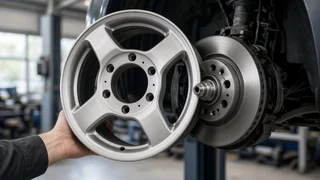
Car Wheel Fitment and Clearance: How to Tell Whether a Wheel Will Fit
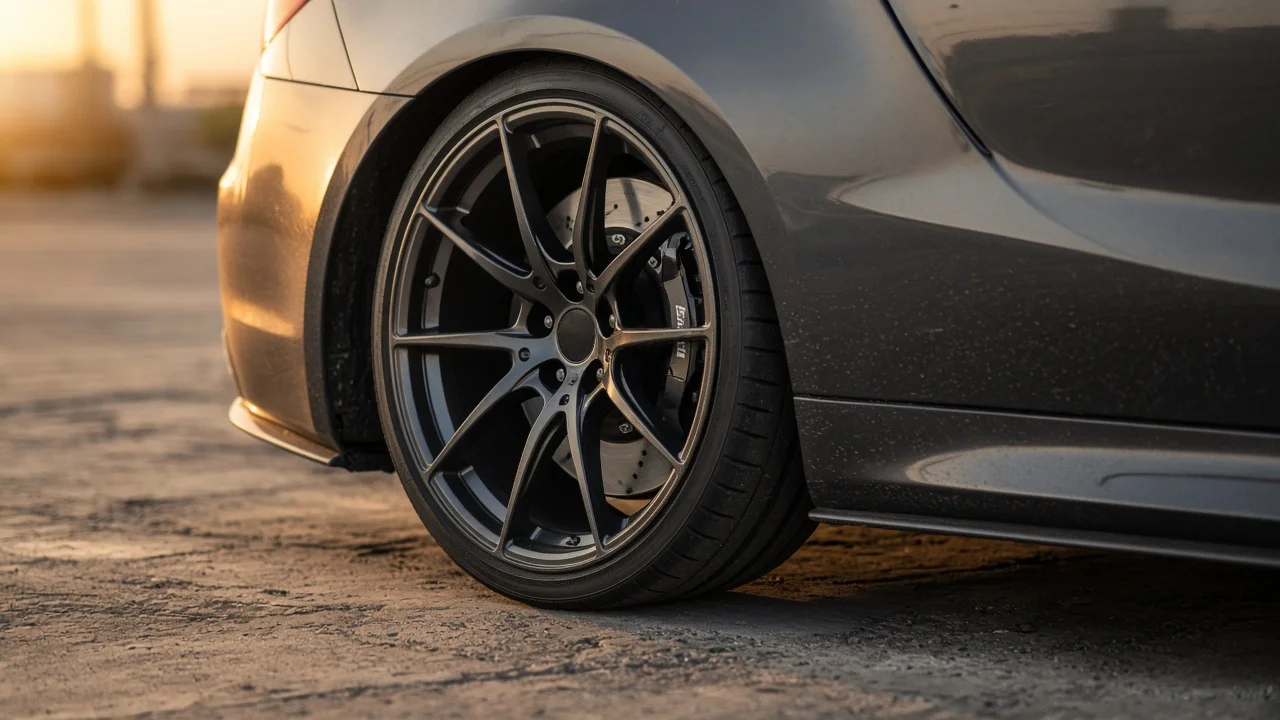
The short answer
A wheel fits a car when its mounting specifications match the hub and its size and position leave room for everything around it. Mounting depends on bolt pattern, center bore, lug seat type and thread size. Clearance depends on diameter, width, offset and the tire mounted on the wheel. A wheel can bolt on correctly and still rub a strut, a fender lip or a brake caliper, so both halves of the question matter.
Fitment is specific to the vehicle, not just the model name. The same nameplate can use different hubs, brakes or suspension depending on model year, generation, drivetrain, trim and market. Confirm the exact configuration before relying on any general size recommendation.
The specifications that define wheel fitment
Specification | What it describes | Why it matters; Bolt pattern (PCD) | Number of lug studs and the diameter of the circle they sit on | Must match the hub exactly or the wheel cannot mount safely; Center bore | Diameter of the hole in the middle of the wheel | Must be equal to or larger than the hub pilot; a close match centers the wheel; Diameter | Rim size where the tire bead seats, in inches | Affects brake clearance and which tires can be used; Width | Distance between the bead seats, in inches | Affects tire fit and how far the wheel extends inward and outward; Offset | Distance from the wheel centerline to the mounting face, in millimeters | Determines where the wheel sits relative to the suspension and fender; Backspacing | Distance from the mounting face to the inner edge of the wheel | A direct way to judge inner clearance; Lug seat type | Shape of the seat where the lug nut or bolt contacts the wheel | Wrong seat type can prevent proper clamping; Thread size | Diameter and pitch of the studs or bolts | Lug hardware must match the vehicle; Load rating | Maximum load the wheel is designed to carry | Must be adequate for the vehicle's weight
Bolt pattern
Bolt pattern is written as the number of lugs followed by the pitch circle diameter, for example in a format such as 5x114.3, where the second number is in millimeters (some patterns are also expressed in inches). The pattern must match exactly. Patterns that are close but not identical can look like they line up, yet forcing them leaves the lugs side-loaded and the wheel improperly seated. Some aftermarket wheels are drilled for two patterns; that is fine as long as one of them matches the vehicle.
Center bore: hub-centric and lug-centric
Many vehicles are hub-centric, meaning the hub pilot locates the wheel and the lugs clamp it. A wheel with a center bore larger than the hub can still be used with a hub-centric ring, which fills the gap so the wheel is centered by the hub rather than only by the lug seats. A center bore smaller than the hub will not fit without machining. Lug-centric designs rely on the tapered lug seats for centering, which is common on some aftermarket wheels. Vibration after a wheel change is often traced to a missing or mismatched centering ring.
Diameter and width
Diameter determines which tires fit and whether the wheel clears the brakes. Vehicles with larger optional brake packages may need a larger minimum wheel diameter, and caliper shape can matter as much as diameter because spoke design affects how close the wheel's inner face sits to the caliper.
Width affects both tire fitment and position. If width increases while offset stays the same, the extra width is split evenly: going one inch wider adds roughly half an inch on the inboard side and half an inch on the outboard side. That is why a wider wheel can create rubbing at both the suspension and the fender at once.
Offset and backspacing
Offset is the distance between the wheel's centerline and its mounting face, usually marked in millimeters, often with the letters ET. Positive offset places the mounting face toward the outside of the wheel, tucking the wheel inward; most modern front-wheel-drive and many other passenger cars use positive offset. Zero offset places the mounting face on the centerline. Negative offset places the mounting face toward the inside, pushing the wheel outward.
Backspacing measures the same placement from a different reference: the distance from the mounting face to the wheel's inner lip. It is common in truck and off-road fitment and is easy to measure with a straightedge across the back of the wheel. The two values are related by a simple calculation.
Backspacing = (overall wheel width / 2) + offset; Notes: • Convert offset to inches first: offset in mm / 25.4; • Overall width is measured lip to lip and is usually; slightly more than the labeled rim width because of; the flanges; measure it when precision matters
How offset changes affect clearance
On wheels of the same width, every millimeter of offset change moves the whole wheel by that same amount. Lowering offset moves the wheel outward: more room at the strut and inner liner, less room at the fender. Raising offset moves it inward: more room at the fender, less room at the suspension. For example, switching from a hypothetical +45 mm wheel to a +35 mm wheel of the same width moves the face 10 mm farther out and the inner edge 10 mm farther from the suspension.
When width and offset both change, compare two numbers rather than offset alone: inner position (backspacing) and outer position (how far the outer lip sits from the mounting face). Online offset calculators perform this comparison, but the logic is just the formula above applied to the old and new wheel.
Where clearance problems appear
Brake calipers: the inner face of the spokes or the barrel can contact the caliper, especially with large brakes or flat spoke designs. Struts, springs and control arms: too much backspacing or too wide a tire can rub the inboard suspension. Fender lip and bodywork: low offset or wide tires can contact the fender when the suspension compresses. Inner fender liner: the tire can touch the liner at full steering lock. Steering lock: a wider or larger tire may hit components only when turning fully, not when driving straight. Suspension travel: clearance that looks fine at rest can disappear over bumps, with passengers or cargo, or on lowered cars with less travel. Tire sidewall bulge: the tire's shape, not the rim, is often what touches first.
Tire size matters as much as the wheel
Clearance is ultimately set by the tire-and-wheel assembly. A tire size such as 245/40R18 encodes section width in millimeters, aspect ratio (sidewall height as a percentage of width) and rim diameter in inches. A wider tire increases the footprint on both sides; a taller tire raises overall diameter, which can reduce room at the fender and inner liner. Each tire size also has an approved range of rim widths, and mounting outside that range changes the sidewall shape and handling.
Changing overall tire diameter also changes how far the car travels per revolution, which affects speedometer and odometer readings and can influence traction and stability systems. Keeping overall diameter close to the original size is the usual approach when changing wheel diameter, often called plus-sizing.
Lug hardware, load rating and sensors
Lug nuts and bolts must match both the vehicle's thread size and the wheel's seat type. Common seat types include conical (tapered), ball (radius) and flat with a washer. Original-equipment hardware does not always suit aftermarket wheels, so check the wheel's requirement rather than reusing hardware by default. Thread engagement and correct torque are part of safe fitment.
The wheel's load rating should meet or exceed the vehicle's requirement, which matters most on heavier vehicles, trucks and SUVs. Vehicles with tire pressure monitoring sensors mounted on the valve stem need wheels that accept those sensors, or new sensors programmed to the vehicle.
How to read a wheel fitment chart
A fitment chart lists a vehicle's mounting specifications, usually bolt pattern, center bore and thread size, along with the original wheel and tire sizes and sometimes ranges of width and offset that are known to work. Retailer and community charts may also add notes about rubbing, rolling fenders or spacers.
Match the exact vehicle: model year, generation, drivetrain, trim and market can change hub, brake and suspension specifications. Separate mounting data from clearance data: bolt pattern and center bore are fixed facts for a given configuration; offset and width ranges are recommendations that depend on tire size and ride height. Check the conditions behind a recommendation: a range listed for a lowered car or with rolled fenders will not necessarily suit a stock car. Look for brake notes: vehicles with performance brake packages often have a larger minimum wheel size. Treat aggressive fitments as judgments, not specifications: a combination described as fitting may still rub under compression or full lock.
Spacers and adapters
Wheel spacers move the wheel outward, effectively lowering offset, and adapters can convert one bolt pattern to another. They can solve inner clearance problems, but they add parts to the load path, so quality, hub-centric design and correct installation are essential. Thin spacers can also reduce thread engagement on the original studs. They are a workaround rather than a substitute for choosing a correctly specified wheel.
Checking fitment before you buy
1) Confirm the vehicle's bolt pattern, center bore, thread size and original wheel and tire sizes for the exact configuration. 2) Note the original wheel width and offset so you have a baseline for comparison. 3) Compare inner and outer position of the new wheel against the original using the backspacing formula or an offset calculator. 4) Choose a tire size suited to the new rim width and close to the original overall diameter. 5) Check brake clearance, especially if the vehicle has a larger brake option. 6) Measure available room at the strut and fender if you plan to push fitment beyond common ranges. 7) Test-fit one wheel and tire, turn the steering to full lock both ways and inspect clearance before mounting the full set. 8) Use the correct lug hardware, centering rings if needed, and torque to the vehicle's specification, then recheck after a short drive.
Side effects of changing fitment
Moving the wheel outward with lower offset or spacers widens the track and can change steering feel, scrub radius and the leverage applied to wheel bearings and suspension parts. Heavier or larger wheels add unsprung mass, which can affect ride quality and responsiveness. These effects vary widely by vehicle and the size of the change, so modest changes from the original specifications are the conservative choice. Rules about tires extending beyond the bodywork also vary by state, which is worth checking when planning a wide or low-offset setup.