How Does Wheel Diameter Affect Tire Fit?
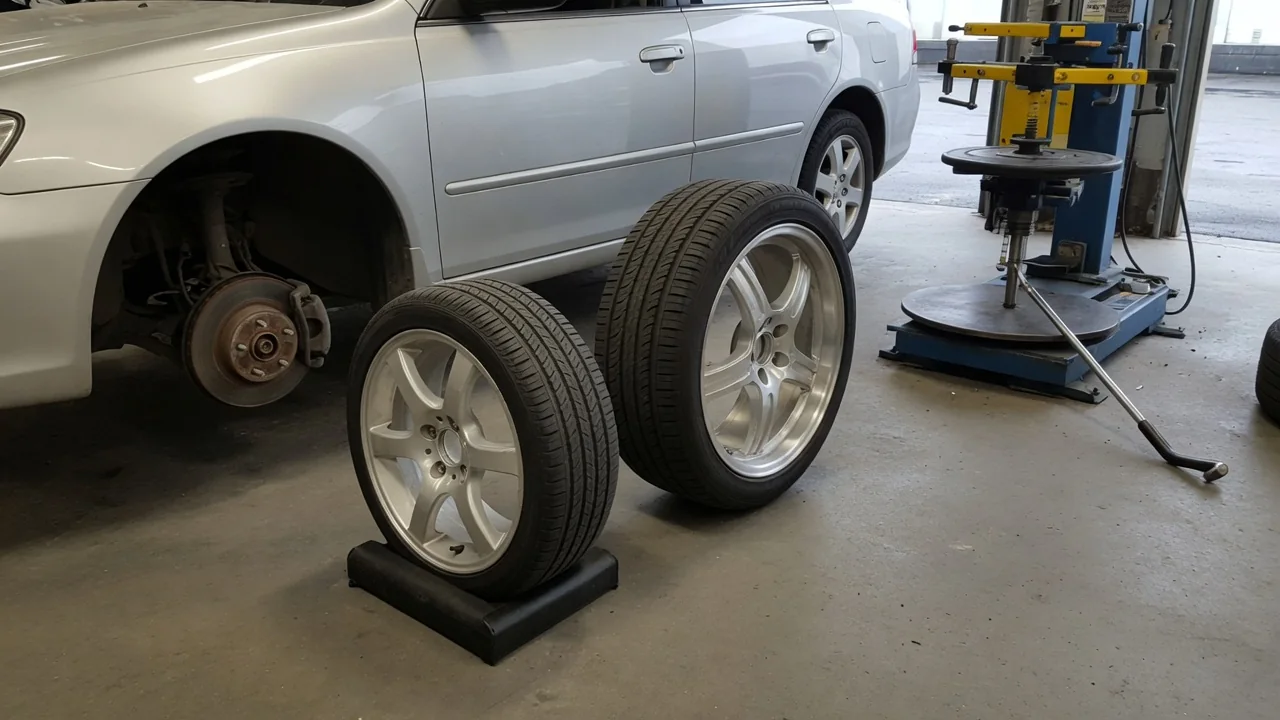
Wheel diameter is the one tire measurement that leaves no room for compromise. A tire is built around a specific rim diameter, and that number decides three things: whether the tire can be mounted at all, how tall its sidewall must be to keep the overall size in range, and whether the assembly clears the brakes, suspension, and bodywork. Understanding how wheel diameter affects tire fit comes down to bead size, sidewall, and vehicle clearance.
Bead size: why rim diameter must match exactly
The diameter quoted for a wheel, such as 16, 17, or 18 inches, is not the outside edge of the wheel. It is measured across the bead seats, the shoulders just inside the rim flanges where the tire's beads rest. In a common size designation such as 225/45R17, the final number is the bead diameter the tire was designed for, and it must match the wheel's bead seat diameter. The bead is a hoop of steel wire wrapped in rubber, and it is essentially inextensible by design. It has to hold the tire on the rim under cornering loads and maintain an airtight seal against the bead seat. Because it does not stretch, a tire cannot be forced onto a larger wheel, and on a smaller wheel it would have nothing to grip and seal against.
This is why diameter is treated as an absolute match rather than a range. Width has some tolerance, since a given tire size is usually approved for several rim widths, but diameter does not. A well-known trap involves half-inch sizes used on some light trucks and specialty wheels: a tire made for a 16-inch wheel can pass over the flange of a 16.5-inch wheel but cannot seat correctly on it, and inflating it in an attempt to seat the bead can cause the bead to fail with dangerous force. Matching the marked diameter on both the tire and the wheel is the first and non-negotiable fit check.
Sidewall: how wheel diameter changes the tire's profile
Once bead diameter is fixed, the sidewall becomes the variable that sets how tall the tire is overall. In metric sizing, the aspect ratio is sidewall height expressed as a percentage of section width, so a 45-series tire has a sidewall height equal to 45 percent of its width. Overall tire diameter equals the wheel diameter plus two sidewall heights, one above the rim and one below. That relationship explains why changing wheel diameter almost always means changing the aspect ratio. If a larger wheel is fitted and overall diameter is meant to stay roughly the same, each sidewall must get shorter by half the increase in wheel diameter. This approach, often called plus sizing, keeps rolling diameter close to the original while trading sidewall height for wheel size.
Sidewall height does more than fill space. The sidewall flexes as the tire rolls and absorbs part of each road impact before it reaches the wheel and suspension. A taller sidewall generally offers more cushioning and more protection for the rim edge, while a shorter sidewall usually responds more quickly to steering input but transmits more harshness and leaves the wheel more exposed to potholes and curbs. Load capacity also depends partly on the air volume inside the tire, so a lower-profile replacement may need a higher load index or reinforced construction to carry the same load as the original size. Load index and speed rating should be checked against the vehicle's requirements rather than assumed to carry over.
Going smaller works the same way in reverse. A smaller wheel needs a taller sidewall to reach a similar overall diameter, a common choice for dedicated winter or rough-road sets. The limit in that direction is usually not the tire but what sits inside the wheel.
Vehicle clearance: brakes, suspension, and body
Clearance has to be considered from two directions: inside the wheel and outside the tire. Inside, the wheel barrel and spokes must clear the brake calipers, rotors, and any suspension parts positioned close to the hub. Because brake hardware is packaged to fit within the original wheels, the smallest wheel diameter a vehicle can accept is often set by its brakes. A wheel below that minimum may not slide over the caliper at all, or it may contact the caliper or balance weights as it rotates. Spoke shape and wheel offset influence this as well, so two wheels of the same diameter can behave differently against the same brakes.
Outside, the concern is the tire's overall diameter and width rather than the wheel diameter itself. A taller tire reduces the gap to the fender liner, the wheel arch lip, and upper suspension components, and it can rub as the suspension compresses over bumps. Steering adds another dimension, because front tires sweep through an arc as they turn and can contact the inner wheel well, frame rails, or other components at full lock. Clearance that looks generous with the vehicle parked can disappear under combined compression, steering, and body roll, so fit has to be judged across the full range of motion, not at rest.
Overall diameter also matters beyond physical space. Rolling diameter determines how far the vehicle travels per wheel revolution, which the speedometer and odometer rely on, and which many vehicles also use for stability, traction, and anti-lock braking calculations. A noticeable change can make those readings less accurate. On all-wheel-drive and four-wheel-drive vehicles, mismatched diameters can also add strain to driveline components.
Practical implications and limits
In practice, the most reliable starting point is the vehicle's tire information placard, typically found on or near the driver's door jamb, along with the owner's manual. Together they list the approved tire sizes and often more than one wheel diameter. Sizes listed there have already been matched by the manufacturer to the vehicle's brakes, bodywork, load requirements, and electronic systems. Moving outside them is not automatically unsafe, but it shifts responsibility for verifying fit to the owner and the installer.
General rules also have limits. A matching bead diameter guarantees only that a tire can be mounted, not that it suits the vehicle. Keeping overall diameter close to stock reduces clearance and calibration risk, but it does not account for width, offset, suspension modifications, or aftermarket brake kits, all of which change the available space. Actual mounted dimensions can also differ slightly from the nominal size between tire brands and models. For anything beyond an approved size, a test fit with the wheel mounted and checked through full steering lock and suspension travel gives a clearer answer than calculations alone.