How to Clean a Car's Piano-Black Trim Without Scratches
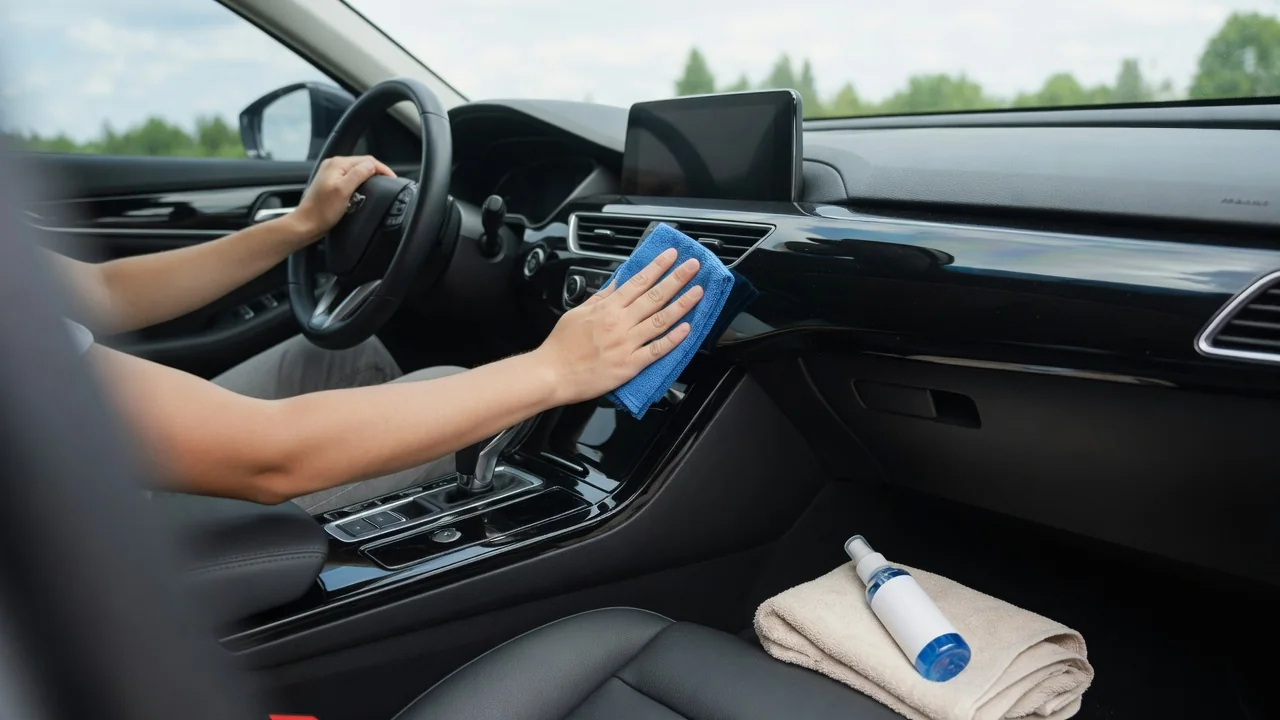
Piano-black trim looks sharp in a showroom and marks easily everywhere else. The glossy plastic around shifters, screens, and door switches is softer than exterior paint, so dust dragged across it leaves fine swirls. Learning how to clean a car's piano-black trim without scratches comes down to a gentle sequence: lift loose grit first, wipe with almost no pressure, then protect the finish.
Remove grit
Most scratches on gloss-black interior panels come from dry dust being pushed across the surface, not from the cleaner itself. Cabin dust contains fine mineral particles, sand tracked in on shoes, and fibers from clothing, and each acts like a tiny abrasive under a cloth. Before anything touches the trim, loose debris should be lifted away. A soft detailing brush with long, flagged bristles or a gentle stream of air moves particles off the panel without grinding them into the clear, high-gloss surface.
Looking at the trim under angled light, such as a flashlight held low, shows how much grit is sitting there. A gray haze of dust near cup holders, the shifter surround, and window switch panels is common because those areas attract hands and static. A vacuum with a soft brush attachment held just above the surface collects what the brush loosens. Exterior gloss-black pieces, such as pillar covers, carry road film and should be rinsed thoroughly with water before any contact.
Soft wiping
Once the loose grit is gone, the wipe itself should be lubricated and light. A clean, plush microfiber towel with a soft edge, lightly misted with an interior detailer or a diluted cleaner suitable for plastics, glides instead of dragging. Spraying the towel rather than the panel keeps liquid away from switch gaps, seams, and nearby screens. The motion matters too: straight, overlapping passes in one direction with only the weight of the towel are kinder than tight circles pressed in with fingertips.
Folding the towel into quarters gives several fresh faces, so a side that has collected dirt can be turned away before it touches the next section. A second dry microfiber, used just as lightly, removes remaining moisture and streaks. Paper towels, household glass cloths, and old cotton rags are often coarse enough to haze the gloss. Fingerprints and skin oils may need a second gentle pass rather than more pressure, and sticky residue responds better to a brief dwell with the damp towel than to scrubbing.
Protect against repeat marks
A clean gloss panel stays cleaner longer when it has a slick, protected surface. Interior-safe protectants, spray sealants, and some ceramic-type coatings formulated for plastics can reduce static, making dust less likely to cling and easier to lift at the next cleaning. A slicker surface also means the towel meets less friction, which lowers the chance of fresh swirls. Product suitability varies, so the label should confirm it is intended for glossy interior plastics before it goes on a visible panel.
For high-contact areas such as a center console, some owners choose clear protective film cut to the shape of the trim. Film takes the wear from keys, rings, and phone edges, and can be replaced when it becomes marked. Availability of pre-cut kits depends on the vehicle, and fit differs between model years and trim levels. Testing any protectant on a small, less visible spot first shows whether it leaves smearing, an uneven sheen, or a greasy feel that attracts more dust.
Everyday Use and Observations
Daily habits decide how the trim looks months later. Wiping dust away with a sleeve, a dry tissue, or a bare hand at a red light is the most common source of fine scratches. Keeping a dedicated clean microfiber in a sealed bag in the glovebox prevents the temptation to grab whatever is nearby. Items such as keys, coins, charging cables, and phone mounts resting against the console also leave marks that no amount of careful cleaning will prevent.
What appears on the surface offers clues about what it needs. Smears that move around when wiped are usually oils from skin, lotion, or hand sanitizer and call for a mild cleaner. A uniform dull film often comes from leftover product or interior off-gassing. Marks that stay in exactly the same place under changing light are likely physical scratches rather than dirt. Sunlight through the windshield exaggerates all of these, so trim that looks flawless in a garage may reveal swirls outdoors.
Limits and Next Steps
Careful cleaning prevents new damage but does not remove scratches already in the surface. Light swirls can sometimes be reduced with a fine finishing polish made for plastics, applied gently by hand with a soft applicator. The gloss layer on interior trim can be thin, and its makeup differs between manufacturers, so aggressive compounds or machine polishing risk cutting through or leaving haze. Deeper scratches that catch a fingernail generally will not polish out and are better left alone than chased.
When marks are beyond what gentle polishing can address, the realistic options are a professional detailer experienced with interior plastics, covering the panel with protective or decorative film, or replacing the trim piece. Which route makes sense depends on how the part is attached and what is available for that particular vehicle. The owner's manual may list cleaning products to avoid on interior surfaces, particularly near touchscreens and coated displays, and those instructions should take priority over general advice.