How Does Extreme Heat Affect Car Adhesives?
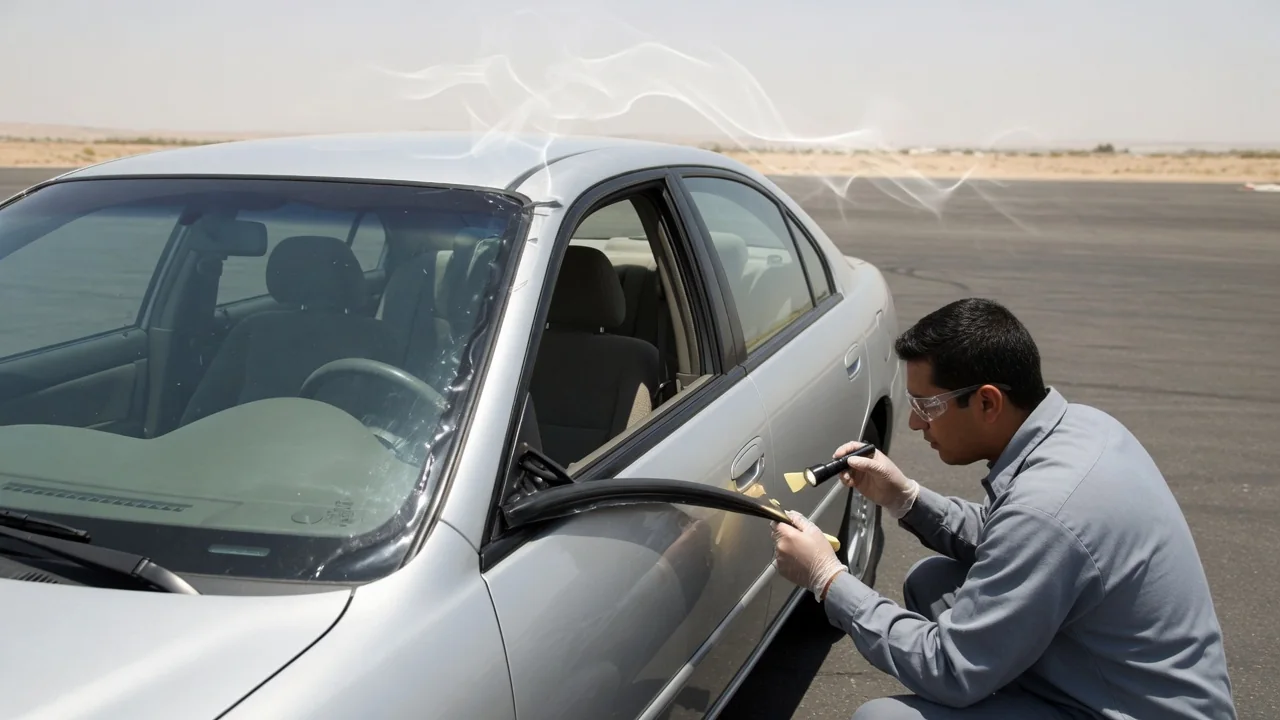
Modern vehicles depend on adhesives more than most owners realize. Double-sided foam tapes hold emblems, body moldings, and exterior trim. Urethane bonds the windshield to the body, and spray or contact adhesives keep headliners and door panel coverings in place. Extreme heat rarely destroys these bonds instantly, but it changes how they behave. Heat softens adhesives, and a softened bond under load can stretch, creep, or let go. This guide covers how that happens and how to repair the damage properly.
Softening: What Heat Does to Adhesive Materials
Nearly all automotive adhesives are polymers, and polymers respond to temperature. As they warm, their molecular chains gain mobility, and the material shifts from stiff toward soft and rubbery. Pressure-sensitive adhesives, the type used on most trim tapes, are deliberately viscoelastic. They flow slightly so they can wet out a surface and grip it. Heat increases that flow. The adhesive loses internal (cohesive) strength and becomes less able to resist slow deformation. A bond that feels rock solid on a mild day may be noticeably weaker when the panel underneath is hot.
The temperature that matters is the temperature of the bonded surface, not the air. Dark paint in direct sun, roof panels above the headliner, dashboards and rear package shelves behind glass, and parts near the engine or exhaust can all run much hotter than the outside air. A closed cabin traps solar heat. Interior adhesives therefore often see harsher conditions than the weather forecast suggests.
Repeated exposure adds aging on top of the temporary softening. Heat cycles combine with ultraviolet light, oxidation, and plasticizers migrating out of nearby vinyl, and over time an adhesive can dry out and turn brittle or degrade into a gummy residue. With headliners, the problem is often the thin foam layer between the fabric and the backing board breaking down rather than the glue alone. Once that foam crumbles, the fabric has nothing solid to stay attached to.
Load: Why Softened Bonds Let Go
Softening by itself does not cause a failure. A bond fails when the load on it exceeds the strength it has at that moment. Some loads are constant. Gravity pulls on headliner fabric, and a curved molding may carry built-in tension that tries to straighten it. The direction of the load matters a great deal. Adhesives generally resist shear, where surfaces slide parallel to each other, far better than peel, where an edge is pried up. Heat makes the peel weakness worse, which is why failures so often start at a corner or an edge.
Sustained load on a warm adhesive causes creep, a slow movement that builds over days or weeks. That is how a trim strip ends up with a gradually lifting end or an emblem drifts slightly out of position. Dynamic loads finish the job. Highway wind can catch a lifted edge, and car wash brushes and pressure washer spray can force their way under the bond line. Door slams and road vibration add more. Thermal expansion also plays a part. Plastic trim expands and contracts more than steel or glass, so every heat cycle shears the adhesive between dissimilar materials.
Windshield urethane is a different case. In many vehicle designs, the bonded glass contributes to the structure of the body, and properly cured windshield urethane is formulated for normal service temperatures. Heat is less of a concern for a sound, cured windshield bond than for trim tape. Freshly installed glass is different. The urethane needs time to cure, and temperature and humidity affect how quickly that happens, so the installer's stated safe drive-away time should be followed.
Repair: Restoring Heat-Damaged Bonds Correctly
Start by looking at how the bond failed. If the adhesive stayed entirely on one surface and the other is clean, the problem was adhesion to that surface, which usually points to contamination or poor preparation. If adhesive residue remains on both parts, the adhesive itself split apart, which suggests the product was overloaded or degraded. If backing foam or fabric tore away, the substrate failed, and fresh glue on the old material will not last. Each pattern calls for a different fix.
For trim, emblems, and moldings, preparation decides the result. Remove all old adhesive using a plastic scraper, gentle warmth to soften the residue, and an adhesive remover that is safe for automotive paint. Clean the surface with a solvent compatible with the paint and plastic, often isopropyl alcohol. Use an adhesion promoter if the tape manufacturer calls for one. Apply the new automotive-grade tape in moderate temperatures, press firmly along its full length, and give the bond time to build strength before washing or high-speed driving. Avoid household glues and hot glue. Hot glue is thermoplastic, and it will soften again the first time the car sits in the sun.
A sagging headliner rarely responds well to spot gluing or pins if the foam layer has deteriorated. The durable repair is to remove the headliner board, scrape off the old foam and adhesive, and recover it with new material using an adhesive rated for high interior temperatures. A windshield that leaks, creaks, or shows movement is a safety issue rather than a cosmetic one and belongs with a qualified glass technician.
Practical Implications and Limits
In daily ownership, reducing heat exposure slows both short-term softening and long-term aging. Shaded or covered parking and a reflective windshield sunshade lower the temperatures the adhesives reach. When washing, keep pressure washer nozzles away from trim edges. Inspect emblems, moldings, weatherstrip ends, and the headliner after a hot season. A slightly lifted edge is easy to fix and much easier to deal with than a missing molding found after a highway drive.
The mechanisms described here are general and do not predict how a specific vehicle will behave. Adhesive formulations, part designs, and assembly methods differ between manufacturers and model years, and age, previous repairs, and climate history all change the outcome. Some emblems and moldings combine tape with clips or locating pins, and some manufacturers specify replacing a part rather than re-bonding it. The service information for the specific vehicle is the right reference before removing or re-attaching a component.
Heat-related failure also has a practical limit for DIY work. Cosmetic trim and interior coverings are reasonable owner projects. Bonds that contribute to safety or structure call for professional work with the correct materials and procedures. These include windshield and other bonded glass, structurally bonded body panels, and anything whose detachment could create a road hazard. The same applies when the failure pattern points to a problem beyond the adhesive itself, such as corrosion under trim or water entering the cabin.