Why Does an EV Reduce Power in Extreme Heat?
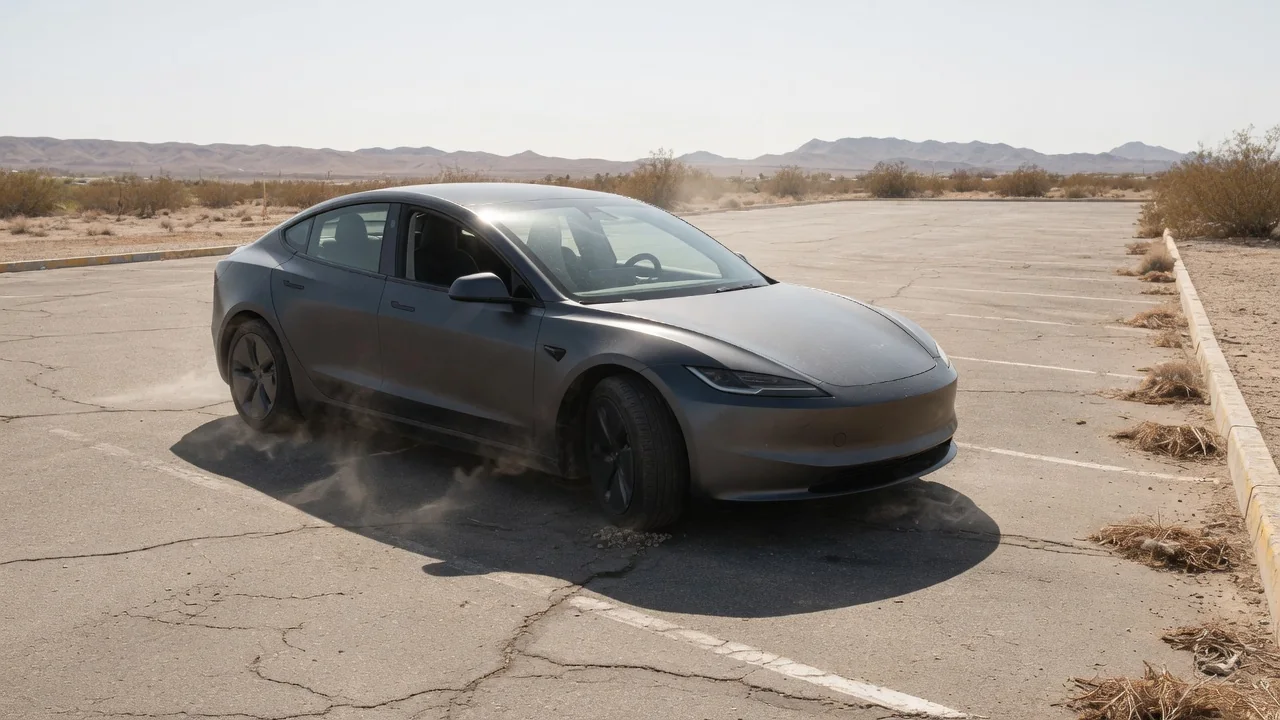
On a very hot day, an electric vehicle may accelerate less eagerly, hold back at sustained high speed, weaken regenerative braking, or charge more slowly than usual. In most cases this is not a malfunction. It is a deliberate protective response that keeps the battery, motor, and power electronics within safe temperatures. Knowing why an EV reduces power in extreme heat helps owners tell normal thermal management apart from a condition that needs service.
Protection logic
Lithium-ion cells work best within a limited temperature window. As cell temperature rises, unwanted chemical side reactions speed up, including breakdown of the electrolyte and growth of surface films on the electrodes. These reactions consume usable lithium and raise internal resistance, which shows up over time as lost capacity and weaker performance. At much higher temperatures, the concern shifts from gradual wear to safety, because overheated cells can enter thermal runaway. The battery also heats itself: every amp flowing in or out passes through internal resistance and turns part of the energy into heat, and that heat grows with the square of the current. Hard acceleration from an already hot pack therefore adds heat exactly when there is the least room for it.
The battery management system monitors cell temperature sensors along with voltage and current, and it continuously calculates how much power the pack may deliver and accept. Those limits are passed to the motor controller, which caps output accordingly. As temperatures approach the upper end of the allowed range, the limit is usually reduced progressively rather than switched off, so the car stays drivable while heat generation drops. The exact thresholds, taper curves, and recovery behavior are set by each manufacturer and depend on cell chemistry, pack design, and software, so they differ from one vehicle to another.
The battery is not the only component that can trigger a limit. The inverter's power semiconductors have their own temperature ceilings, and the drive motor's windings and, in permanent magnet designs, its magnets can be harmed by excessive heat. Whichever component is closest to its limit can set the allowed power. Regenerative braking may be reduced for a related reason, since pushing charge back into a hot battery adds more heat, and the car may then rely more on its friction brakes.
Cooling capacity
Most current EVs use active liquid cooling. A coolant mixture circulates through plates or channels in contact with the cell modules, absorbs heat, and carries it to a heat exchanger. Under moderate conditions that heat can be released through a front radiator. When the radiator alone cannot bring the coolant low enough, many systems route it through a chiller connected to the air conditioning refrigerant circuit. Some vehicles, particularly older or simpler designs, rely on air cooling or largely passive heat dissipation, which generally gives the pack less ability to shed heat under sustained load.
Every cooling path depends on a temperature difference. A radiator can only reject heat into air that is cooler than the coolant, so on an extremely hot day that margin shrinks and the radiator does less work. The system then leans on the refrigerant compressor, which has finite capacity, draws energy from the battery, and in many designs also serves the cabin air conditioning. When the battery, motor, and inverter generate heat faster than the system can remove it, temperatures keep rising. Reducing power is then the remaining way to bring heat generation back into balance with cooling capacity.
Certain situations push the system toward that point: long uphill climbs, towing or heavy loads, sustained high speed, repeated hard launches, and DC fast charging, especially right after demanding driving. A car parked in direct sun can also begin a trip with a heat-soaked pack, and slow traffic reduces airflow through the front heat exchangers. Cooling effectiveness further depends on the system being in good order, including correct coolant level and condition, unobstructed heat exchangers, and working pumps and fans.
Driver alert
How a vehicle tells the driver that power is limited varies widely. Common approaches include a reduced power or turtle-style indicator, a text message about high battery temperature or limited performance, a power meter with part of its range shortened or greyed out, a notice that regenerative braking is reduced, and a lower charging rate shown on the charging screen. Some vehicles apply mild limits with no explicit message at all, so the only sign may be softer acceleration than the driver expects.
It helps to distinguish informational alerts from warnings. A reduced power notice that appears during hard use in hot weather and clears as the car cools generally reflects normal protection. A red warning, an instruction to stop safely, a high-voltage or cooling system fault message, or a limit that persists after the vehicle has cooled down points to a possible fault that should be checked by a qualified service provider. The owner's manual is the authoritative reference for what each symbol and message means on a specific vehicle.
Drivers may also notice cooling fans and the air conditioning compressor running loudly in slow traffic, during charging, or for a while after parking. In many EVs this is ordinary thermal management at work rather than a sign of trouble.
Practical implications and limits
When an EV has power limited by a hot battery, the effect shows up mostly when the driver asks for a lot at once: merging onto a fast road, passing, climbing a long grade, or towing. Leaving extra margin for those maneuvers on very hot days avoids surprises. Parking in shade or a garage reduces heat soak, and where the vehicle supports it, cooling the cabin while still plugged in lets grid power handle part of the initial cooling load. Cooling itself consumes energy, so some range reduction in extreme heat is expected.
Charging follows the same logic. A pack that arrives hot after highway driving may charge more slowly at a DC fast charger until the cooling system brings its temperature down, and charging speeds can remain lower overall in high ambient temperatures. Where a vehicle offers battery preconditioning before fast charging, in hot conditions its role is mainly to bring the pack toward a suitable temperature before arrival.
There are also limits to what an owner can do or conclude. Thermal derating is generally not something the driver can or should override, because it exists to prevent damage and reduce safety risk. A single episode during demanding driving in extreme heat says little about battery health on its own. Frequent power limits in mild weather or during light driving are different and may indicate a cooling system problem worth inspecting. Because thresholds and behavior are vehicle-specific, the owner's manual or the manufacturer remains the right source for how a particular model responds to heat.