How Did Car Roof Shapes Change With Aerodynamics?
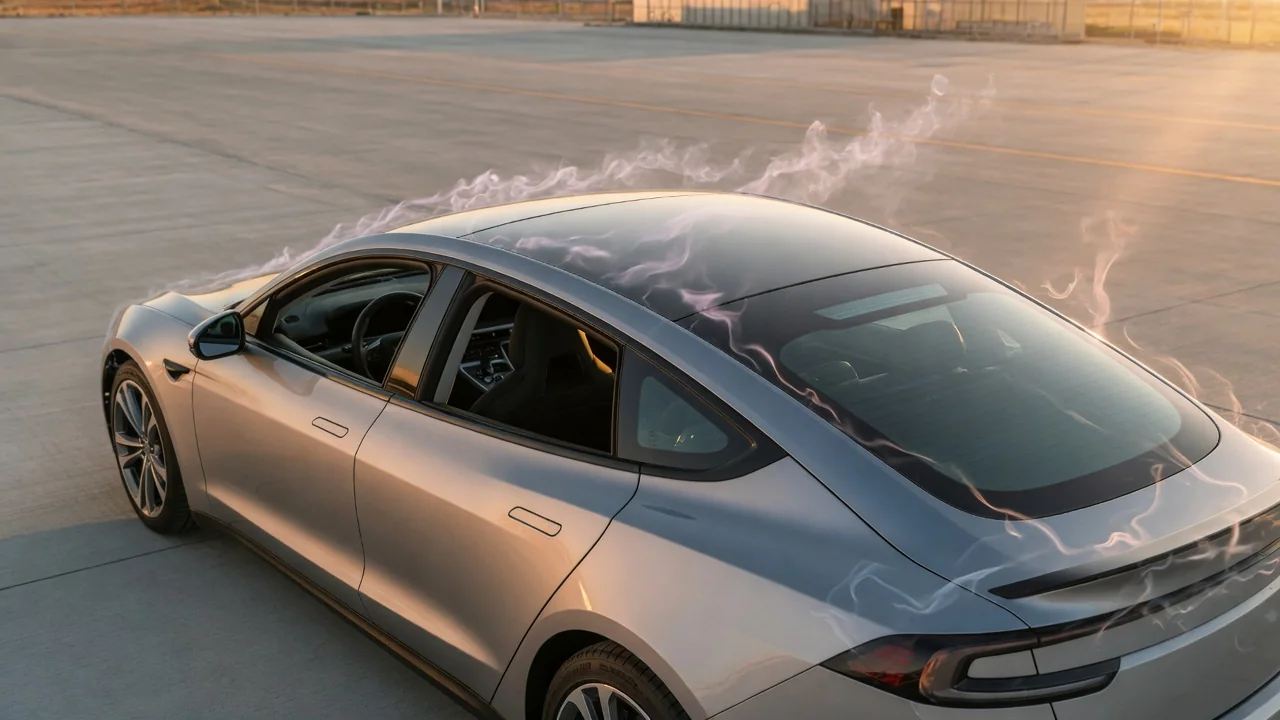
Car roof shapes did not move in a straight line toward the most slippery form possible. The history of car roof shapes is better read as a long negotiation. Designers moved from tall, upright cabins inherited from horse-drawn carriages toward lower, rounder and more steeply raked profiles as they learned how air flows around a moving body. At every step, people still needed headroom, visibility and space for luggage, and those needs kept pulling the roofline back toward practicality.
Early upright cabins
The earliest automobile bodies borrowed heavily from coachbuilding. Roofs were flat or gently arched panels set on upright pillars, and windshields stood close to vertical. The cabin was essentially a box placed on a separate chassis, often with wooden framing beneath the outer panels. This suited the construction methods of the time, since flat and simply curved panels were easier to form and fit by hand. It also suited how people sat: upright, on relatively high seats, with plenty of vertical space above them. At the modest speeds most early cars could reach, mechanical losses and rolling resistance mattered more to performance than the shape of the roof, so there was little pressure to change it.
Aerodynamically, the upright cabin behaves like what engineers call a bluff body. Air striking a vertical windshield slows sharply and builds pressure on the glass. It then has to turn abruptly at the top edge to pass over the roof. Air cannot follow such a sharp corner smoothly, so the flow separates from the surface and becomes turbulent. At the back, a flat roof that ends in a near-vertical rear panel leaves a large, low-pressure wake that effectively pulls the car backward. The tall cabin also increases frontal area. Aerodynamic drag depends on both the drag coefficient and the frontal area, so a tall, square cabin is penalized twice: it is a poor shape, and it presents a large one to the oncoming air.
Streamlining
As engines grew more powerful and roads allowed higher sustained speeds, the roof became an engineering problem rather than only a styling and comfort question. Aerodynamic drag rises roughly with the square of speed, so at highway pace it becomes a dominant source of resistance. Ideas from aviation and wind tunnel testing pushed designers to treat the body as one continuous shape instead of a box with parts attached. Windshields were raked back so air could climb onto the roof more gradually. Flat split windshields eventually gave way to curved glass as manufacturing allowed. The leading edge of the roof was rounded so the flow could stay attached instead of tearing away.
The rear of the roof turned out to be the most important area. A long, gently tapering roofline, the fastback, lets air stay attached for longer and shrinks the wake behind the car. A full teardrop tail would be ideal in theory, but it is far too long for a practical vehicle. Research associated with the engineer Wunibald Kamm showed that a body could taper gently and then be cut off sharply without giving up much of the benefit, because the wake stays relatively compact. This principle helps explain why many modern roofs slope down smoothly and then end at a crisp edge, a small lip or a roof spoiler. That edge fixes the point where the airflow separates.
Later refinement moved to details that are easy to overlook. Glass was mounted closer to flush with the surrounding body, and external rain gutters along the roof edges were reduced or hidden. The joints between the windshield pillars and the roof were smoothed. Many cabins were also tapered in plan view, narrowing toward the rear so the sides of the greenhouse guide air inward. Computer simulation now works alongside wind tunnels. Designers can evaluate small changes in roof curvature, pillar shape and trailing edges that would have been impractical to test one by one in the past.
Packaging
Packaging is the task of fitting people, cargo and mechanical components inside a given exterior envelope, and the roof sets some of its hardest limits. A lower, more steeply sloping roofline reduces frontal area and can improve airflow. It also takes away rear headroom and lowers the top of the rear door opening. It can steepen the rear window so much that rearward visibility and cargo height suffer. Designers recover space by seating occupants lower, moving the rear seat forward, sculpting the headliner to create pockets of extra headroom, and using thinner roof structures where strength requirements allow. Each technique has its own cost, from harder entry and exit to a less upright seating posture.
Other demands also shape the roof. Roof strength requirements, side curtain airbags and the structure needed to protect occupants in a rollover all affect how thin the pillars and roof rails can be, which in turn affects visibility. A sunroof mechanism consumes some headroom. Different rear roof treatments represent different compromises. A notchback separates the cabin from a trunk, and a fastback or hatchback favors a smooth taper. A wagon or tall utility vehicle keeps the roof high to maximize cargo space at the expense of a larger wake. Tall vehicles cannot hide their frontal area, so designers typically rake the windshield, gently taper the rear of the roof and add spoilers to manage separation.
Practical implications and limits
For drivers, the benefits of a carefully shaped roof are most noticeable at sustained highway speeds. That is where aerodynamic drag weighs most on fuel or energy consumption and on wind noise. In slow city traffic, rolling resistance and repeated acceleration matter more. Anything added to the roof changes the airflow the designers worked to manage. Crossbars, cargo boxes, bicycle carriers and roof-mounted equipment typically increase drag and noise, so removing unused accessories is a sensible habit. Open windows and sunroofs also alter the flow around the cabin. The size of these effects varies from vehicle to vehicle. Roof load limits should always be taken from the owner's manual rather than estimated.
Roof shape alone can only tell you so much. A sleek-looking roofline does not guarantee low drag, because total resistance depends on the whole vehicle, including the underbody, wheels, mirrors and cooling airflow. Some styling borrows aerodynamic cues mainly for appearance. Published drag figures come from specific test setups and are not always directly comparable between sources. The low-pressure wake behind a tapered roof can also deposit road grime on the rear glass, which is one reason rear wipers are common on hatchbacks and wagons. A low roof that suits aerodynamics may not suit every occupant. Anyone who regularly carries tall passengers or bulky loads should check rear headroom and cargo opening height in person.