Why Do Some Car Cabins Feel Airier Than Others?
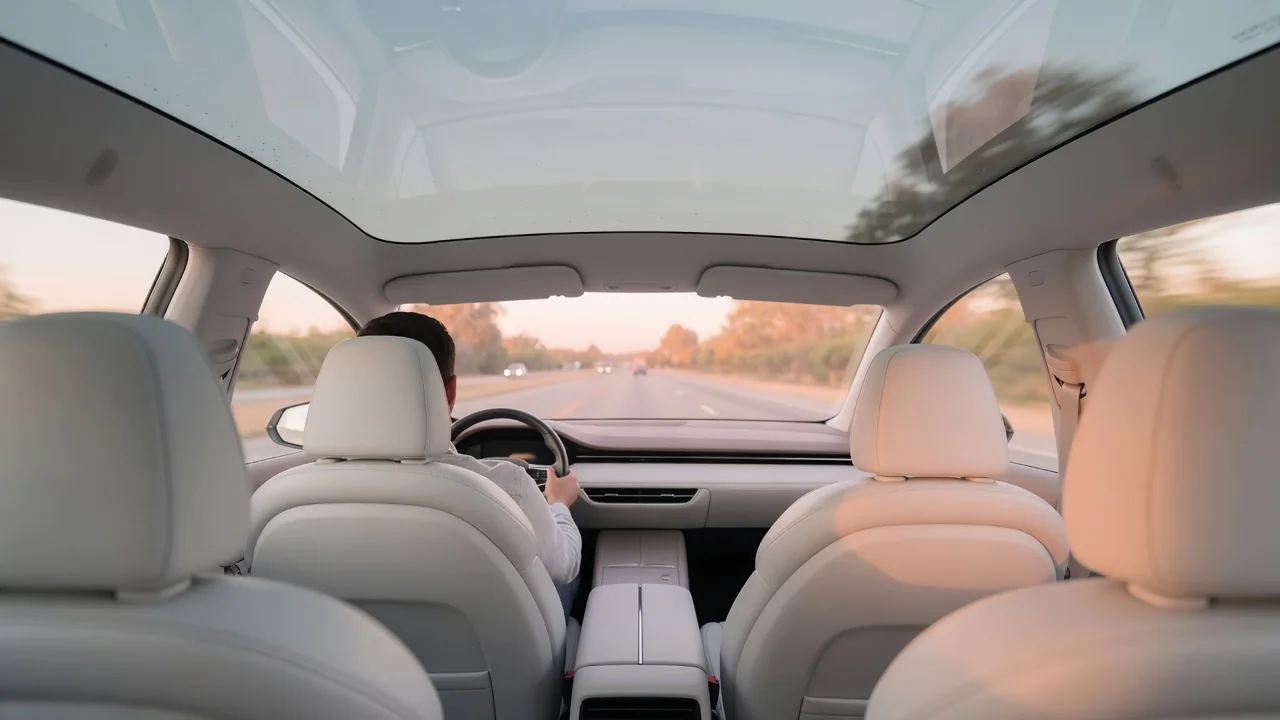
Two cars with similar exterior dimensions can feel surprisingly different once you sit inside. One seems open and relaxed, while the other feels closed in, even when headroom and shoulder room are close on paper. That gap is mostly about perception, and deliberate design choices shape it. If you have wondered why some car cabins feel airier than others, the answer usually comes down to three areas: glass area, color and roof treatment, and the way the interior is packaged around the people inside.
Glass area and the greenhouse
The amount of the outside world you can see from the seat is the strongest single cue in airy car cabin design. Designers call the glazed upper body the greenhouse, and its proportions matter as much as its total size. The beltline, the line where the doors meet the side windows, is a key part of it. A low beltline lets daylight fall across your shoulders and lap and lets you see the road edge without leaning. A high beltline wraps the body around you. That can feel secure or sporty, but also more enclosed, especially for shorter occupants who sit lower relative to the window sill.
Pillars interrupt that view. A-pillars have generally grown thicker as vehicles have been engineered for crash protection and roof strength, and a thick pillar both blocks the corners of your vision and visually narrows the windshield. Some designs split the pillar and add a small fixed window ahead of the front door, or place a quarter window behind the rear door, to restore a view through those corners. Windshield angle matters as well. A more upright windshield keeps the top edge of the glass, called the header, farther from your face. A steeply raked one brings it closer and makes the space above your head feel lower.
In the rear, the door opening and the rear wheel arch often decide the shape of the side glass. Windows that extend well back and sit low help rear passengers feel included in the view, while a small window followed by a broad solid C-pillar can make the back seat feel like a separate compartment. Darker privacy glass, common on rear windows, reduces incoming light and can make the rear feel dimmer, even though it also cuts glare and heat.
Color and roof treatment
Interior color changes how light behaves once it is inside. Light upholstery, door trim and especially a light headliner reflect daylight back into the cabin, softening shadows and making surfaces seem farther away. Dark materials absorb light, so edges and corners fade into shadow and the boundaries of the space feel closer. Many interiors split the difference: designers often keep the top of the dashboard dark to limit reflections in the windshield, then use lighter colors lower down and overhead. Strong horizontal lines across the dashboard and doors, such as a continuous trim strip, tend to emphasize width, while busy patterns and many contrasting materials can make a cabin feel visually crowded.
The roof is the surface you notice least directly but feel the most. A light headliner makes the ceiling recede, while a dark one, often chosen for a sporty theme, pulls it visually closer. A sunroof or panoramic glass roof adds overhead daylight and a view of the sky, which can transform how open the cabin feels, particularly for rear passengers who otherwise see mostly the front seatbacks. The trade-off is that the glass panel, its frame and any sliding mechanism or shade usually occupy some space above the headliner, so a glass roof can reduce measured headroom slightly even while making the cabin look bigger. How large the opening is, how far back it reaches and whether the shade is fabric or solid all vary by vehicle and trim.
Packaging around the occupants
Packaging is the engineering term for how occupants, mechanical components, storage and controls are arranged within the body. It sets the distances between you and the surfaces around you, and those distances drive much of the airy or cramped impression. A dashboard that sits low and far from the driver, with its upper surface running away toward the windshield, leaves open space in front of the chest and knees. A tall, deep dash that rises close to the steering wheel fills that space and also blocks part of the forward view. Door panels work the same way: thinner panels and lower armrests keep elbows free and the side glass closer to the occupant.
The center of the cabin is another major factor. A wide, high center console creates a strong division between driver and passenger, which some buyers like for its cockpit feel. A narrower console, a bridge-style console with open storage underneath, or a nearly flat floor makes the front of the cabin read as one shared space. Seating position also plays a role. Sitting higher puts more glass above your eye line and more of the outside world in view, which is one reason taller vehicles often feel more open. In the rear, seats mounted slightly higher than the front seats, sometimes called theater or stadium seating, give back-seat passengers a view over the front headrests instead of directly into them.
Practical implications and limits
An airy feeling is a perception, not a measurement. It does not guarantee more legroom, cargo volume or usable headroom, and a cabin that looks open can still be tight for tall occupants. The only reliable way to judge the fit is to sit in the vehicle with the seat adjusted to your normal driving position, then try the rear seat behind it. Visit in daylight if possible, because the effect of glass and color is much weaker at night or in a dim showroom. Look at the exact trim and color combination you would buy, since the same model can feel quite different with a light or dark interior.
The features that create openness also carry trade-offs. Large glass areas and glass roofs let in more sunlight, which can mean more heat and glare in warm, sunny climates, so the quality of shades and the capacity of the climate control become more important. Light upholstery and headliners tend to show dirt and stains more readily and may need more frequent cleaning. Safety structure constrains how slim pillars and how low beltlines can be, so designers balance them against crash and rollover requirements rather than maximizing glass at any cost. Finally, preference is personal: some drivers want a cocooned, enclosed cockpit, and for them a high beltline, dark trim and a wide console are features rather than drawbacks.