How Does Humidity Affect Car Window Fogging?
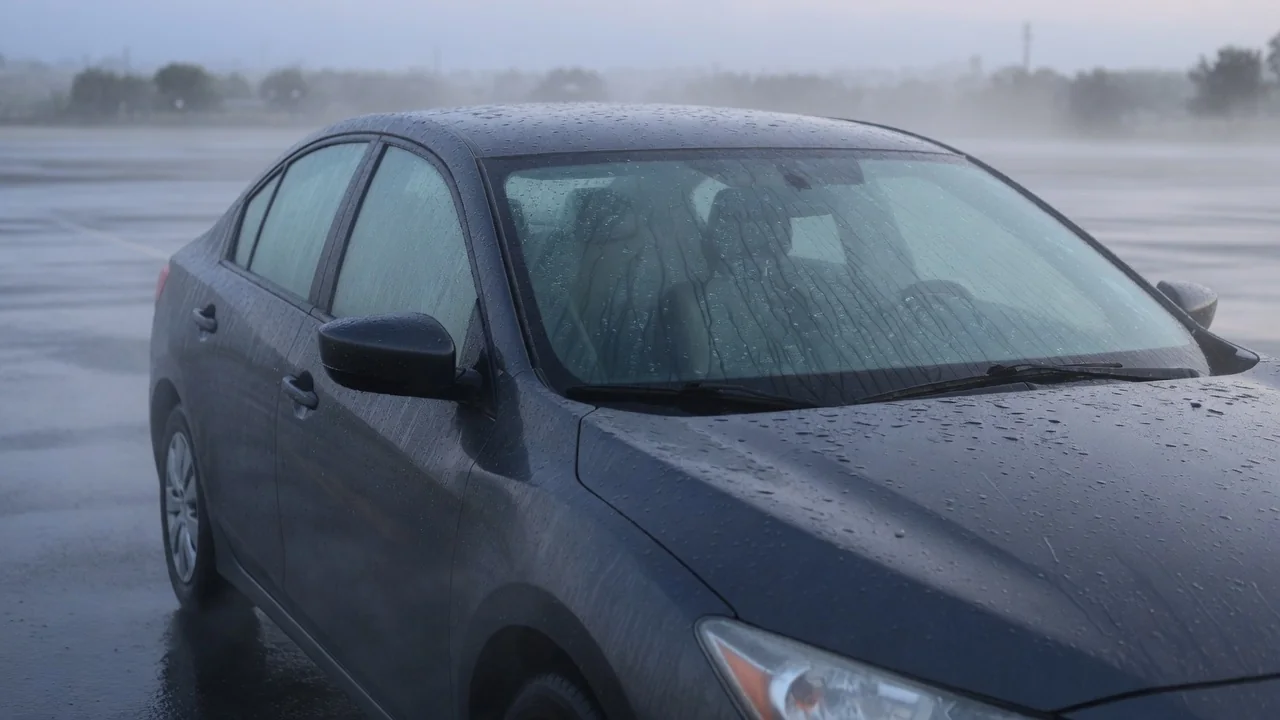
Car windows fog when water vapor in the air condenses on glass that is cooler than the air's dew point. Humidity determines how much vapor is available. That is why the windshield can stay clear one morning and turn milky within a minute the next. How humidity affects car window fogging comes down to three connected ideas: the dew point, the airflow across the glass, and how the climate system dries the air before it reaches the windshield.
Dew Point: Where Humidity Turns Into Fog
The dew point is the temperature at which air becomes saturated with the water vapor it already contains. Relative humidity describes how close the air is to saturation at its current temperature. The dew point is more useful for fogging because it tells you how cold a surface has to be before moisture starts to collect on it. When air touching the glass cools below its dew point, the excess vapor condenses into tiny droplets. Those droplets scatter light and produce the gray haze that blocks the view. Fogging is therefore never about humidity alone. It depends on humidity combined with the temperature of the glass.
In cold weather, fog most often forms on the inside. Outside air chills the windshield and side windows. Meanwhile the cabin air picks up moisture from breathing, damp jackets, snow melting off boots and wet floor mats. As that moisture builds up, the dew point of the cabin air rises. Once it climbs above the temperature of the glass, condensation forms on the interior surface. More occupants and wetter conditions push the dew point up faster. That is why a full car on a rainy evening fogs far more quickly than a single driver on a dry, cold morning.
In warm, humid weather the situation can reverse. If the air conditioning blows cold air onto the windshield, the outer surface of the glass may drop below the dew point of the outdoor air, and fog forms on the outside. Defroster airflow will not clear that layer because the moisture is out of its reach. The windshield wipers remove it, and making the air aimed at the glass less cold lowers the chance of it returning. A quick way to tell which side is fogged is to see whether the wipers make a difference.
Airflow: Moving Moist Air Away From the Glass
Air moving across the windshield does two jobs. First, it sweeps away the thin layer of nearly saturated air that sits against the glass and replaces it with air that can still absorb moisture. Second, if that air is warm, it raises the glass temperature toward or above the dew point. Still air next to a cold window saturates quickly, so fog tends to start in corners and along edges where vent airflow is weakest. This is why the defrost setting sends air through vents aimed at the base of the windshield.
The choice between fresh air and recirculation has a large effect. Recirculation reuses cabin air, so the moisture released by occupants has nowhere to go and the cabin dew point keeps rising. Fresh air mode replaces that air with outside air. In cold weather, outside air usually carries little water vapor in absolute terms, even when its relative humidity reads high, because cold air cannot hold much. Once the heater warms it, its relative humidity falls and it can absorb moisture from the cabin. In hot, muggy weather the outside air carries much more vapor. Fresh air alone helps less in those conditions, and drying becomes the main tool.
Anything that weakens airflow also weakens fog control. A clogged cabin air filter, debris in the intake area below the windshield, or objects on top of the dashboard vents can all reduce the amount of air reaching the glass.
Drying: Removing Moisture From Cabin Air
The air conditioning system works as the vehicle's dehumidifier. Air passing over the cold evaporator is cooled below its dew point. Water condenses on the evaporator fins and drains out of the vehicle, which is where the small puddle under a parked car in summer comes from. The air leaving the evaporator holds less vapor than before. In many vehicles it can then pass through the heater core, so the cabin receives air that is both warm and dry. The warmth raises the glass temperature, and the low moisture content lowers the dew point. Many systems engage the compressor automatically when defrost is selected. How and when this happens depends on the vehicle, and the owner's manual is the authority for a specific model.
Heat alone is not the same as drying. Warming cabin air lowers its relative humidity but removes no water from it. Heat still helps by warming the glass. But if the moisture source remains and the air recirculates, fog tends to return as soon as the glass cools again. Electrically heated rear windows, and heated mirrors where fitted, work differently: they warm the glass directly so its surface stays above the dew point, without changing the air at all.
The cabin itself also needs to dry. Carpets, floor mats and seat fabric absorb water and release it slowly, which keeps the dew point elevated long after the rain has stopped. Removing wet items and drying soaked mats reduce the moisture load the climate system has to handle.
Practical Implications and Limits
Timing matters at the start of a drive. In vehicles that rely on engine heat, the heater cannot deliver warm air until the engine coolant warms up. The glass therefore stays cold for the first minutes even when the controls are set correctly. Electrified vehicles may heat the cabin by other means, and some climate systems restrict compressor operation in very cold conditions. These behaviors vary between designs. The practical takeaway is to expect a delay and let the glass clear before setting off, rather than driving with a partly fogged windshield.
The condition of the glass changes how fog looks and how quickly it clears. A film of grime, residue from interior plastics, smoke or fingerprints gives water droplets more places to form and spreads them into a smeared layer that scatters light. Clean interior glass usually fogs less noticeably and clears faster.
Humidity explains much of windshield fog, but not all of it. The temperature difference between inside and outside, the number of occupants and the design of a given climate system all shape the outcome, and no single setting works in every season. Persistent fogging despite fresh air, A/C and good airflow points to an unusual moisture source. Possible sources include a leaking door or window seal, a blocked drain, or a coolant leak at the heater core, which may leave a greasy film on the glass and a sweet smell. These problems call for inspection by a qualified technician rather than a change in settings.