Why Does Road Spray Dirty a Rear Window Faster?
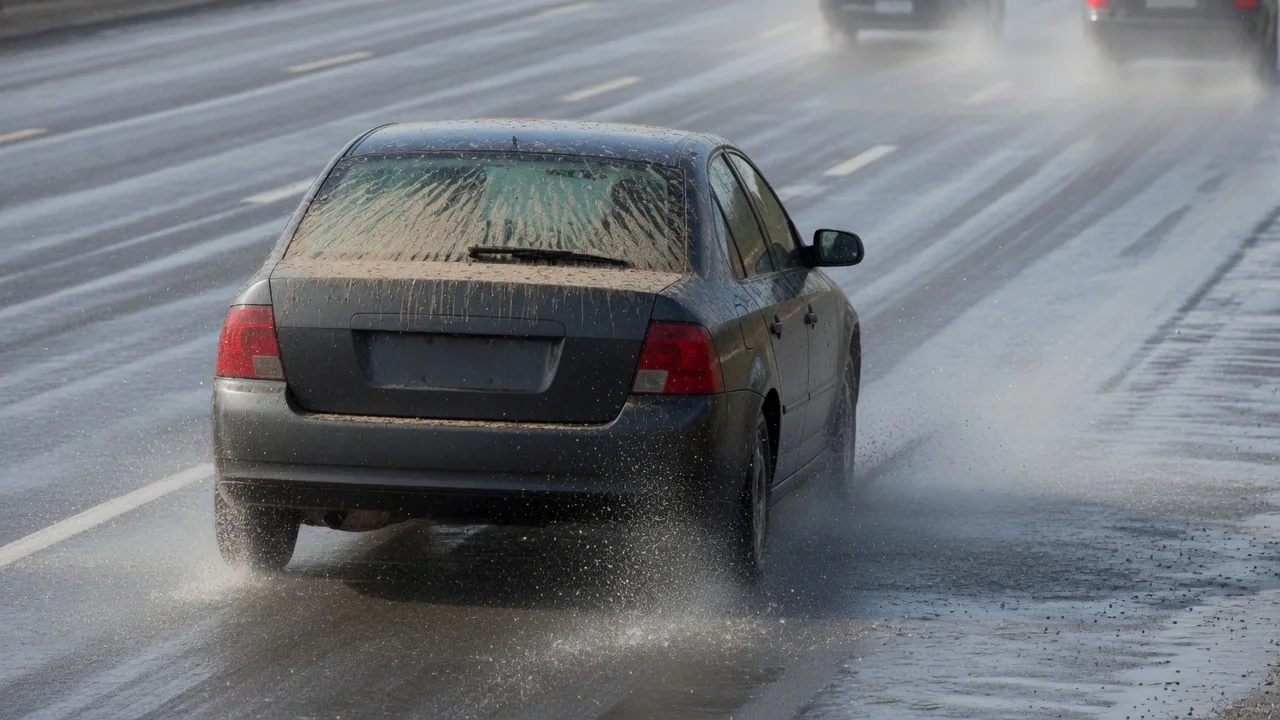
Owners of hatchbacks, SUVs, wagons, and vans often see the rear window turn gray with grime after a short wet drive, while the windshield stays fairly clear. Rear car window road spray is not random. It comes from three things: the way air flows off the back of the vehicle, the fine mist thrown up by tires, and the conditions a rear wiper has to handle. Understanding each one explains why some vehicles suffer more and what owners can do about it.
Wake airflow
As a vehicle moves, air flows over the roof and along the sides. On a body with a fairly upright rear surface, that air cannot follow the sharp edge where the roof ends. It separates and leaves behind a region of turbulent, recirculating air called the wake. Pressure in this region is lower than in the surrounding flow, and some of the swirling air within it moves slowly back toward the rear of the vehicle. Water droplets and road grime suspended in that air get carried into this zone and have time to settle on the glass. The windshield works differently. It faces the oncoming flow, so air sweeps steadily across it and pushes moisture up and away instead of letting it linger.
Body shape changes how strong this effect is. On a vehicle with a gently sloping rear window and a separate trunk, air stays attached to the body longer, so the wake forms farther back and lower. On these designs the trunk lid and bumper often collect more grime than the glass. A squared-off back puts the rear window right at the face of the wake, which is why the problem is usually most noticeable on hatchbacks, wagons, SUVs, and vans. Some designs use roof spoilers or deflectors meant to direct air down across the glass. How well they work depends on the specific body shape and on speed, so results vary from vehicle to vehicle.
Tire spray
On a wet road, rotating tires pick up water and throw it off the tread. Large drops fall back quickly, but much of the water breaks into fine droplets that stay airborne long enough to be carried by the airflow. That mist is not clean water. It picks up the film that collects on road surfaces, which can include oil residue, rubber and brake particles, dust, and in winter, salt or de-icing brine. Fender liners and mud flaps catch part of the spray, but the finest droplets escape around them and drift into the low-pressure region behind the vehicle.
A vehicle's own tires are only part of the source. Spray from vehicles ahead, especially larger ones, hangs in the air and gets drawn into the wake as well. Higher speed generally produces more spray and more air movement to carry it. Once the droplets land on the rear glass, the water evaporates and leaves the dissolved and suspended material behind. Repeated cycles of wetting and drying build up a gray or white film. That is why the rear window can look worse after a damp, misty road than after heavy rain, which rinses the glass more thoroughly.
Wiper care
A rear wiper works in harder conditions than many owners expect. It usually sweeps a layer of grit and salt rather than plain water. It is also typically used less often than the front wipers, so the rubber can harden, crack, or take a set while it rests against the glass. A worn edge smears the film instead of clearing it. Dragging a blade over gritty, dry glass wears the blade faster and may mark the glass over time.
A few habits help. Spray washer fluid before switching on the rear wiper so the blade moves over a wet surface. When cleaning the glass, wipe the blade edge with a damp cloth to remove embedded grit. Check that the rear washer nozzle is aimed correctly and not clogged, and keep the reservoir filled with a fluid suited to the season. In freezing weather, free a blade that is stuck to the glass before turning the wiper on, because forcing it can strain the rubber or the wiper motor. Replace the blade when it streaks, chatters, or leaves unwiped bands, using the size and type listed in the owner's manual.
Practical implications and limits
A dirty rear window limits what the interior mirror shows. In wet or salty conditions, it makes sense to rely more on the side mirrors and to clean the glass at stops rather than waiting for the next wash. Rear-view cameras mounted near the license plate or tailgate sit in the same wake and can become obscured quickly, so a quick wipe of the lens belongs in the same routine. Leaving more distance to the vehicle ahead also reduces the amount of outside spray a car drives through.
No single measure solves the problem completely. Water-repellent glass treatments can help water bead and run off, but they do not stop road film from settling, and their performance depends on the product and how it is applied. Roof boxes, bike carriers, and towed loads change the airflow at the back of the vehicle and can make deposits better or worse in ways that are hard to predict. Crosswinds, road surface, and speed also shift the pattern from trip to trip. The basic mechanism applies to most vehicles, but how much grime reaches a particular rear window depends on that vehicle's design and how it is driven.