What to Do When Road Spray Coats the Windshield
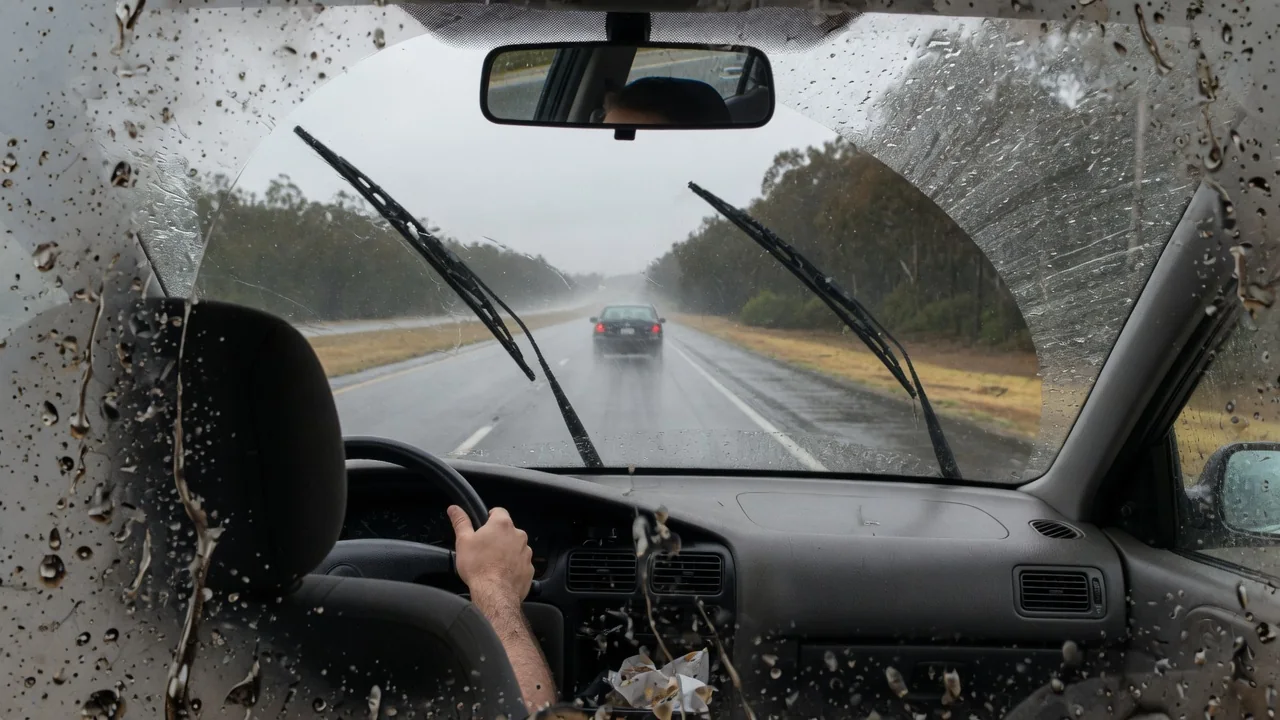
Knowing what to do when road spray coats the windshield comes down to three moves: open up space, clear the glass with the washer and wipers, and pull off safely if the view does not return. Spray from wet pavement carries dirt, oil film, and in winter, salt, so it smears rather than rinses. A ready washer system makes the difference.
Increase distance
Most road spray comes from the tires of the vehicle directly ahead or the one passing alongside. Large trucks and trailers throw the heaviest mist because their many wide tires lift water from the pavement and release it at windshield height. Easing off the accelerator and letting the gap grow moves your vehicle out of the thickest part of that plume. The spray thins quickly with distance, so even a few extra car lengths can turn a constant coating into occasional droplets the wipers can handle.
Extra space also buys reaction time during the seconds when the glass is partly obscured. Wet pavement lengthens stopping distances, and a film of dirty water hides brake lights and lane markings until the wipers sweep it away. When passing a truck, expect a burst of spray near the trailer's rear wheels and again beside the cab, and switch the wipers to a faster setting before entering it. Avoid lingering alongside; complete the pass steadily or drop back to where the air is clearer.
Use washer
Wipers alone often make dirty spray worse, dragging grit and oily residue into a gray smear across the driver's view. A few seconds of washer fluid gives the blades something to work with, floating the film off the glass so it can be swept aside. Use the washer early, before the coating dries into a crust, and repeat in short bursts rather than waiting until the view is nearly gone. On salted winter roads, the residue dries white and fast, so more frequent washing is normal.
Washer controls and behavior differ between vehicles. Many trigger several automatic wipes after the spray, some have heated nozzles or headlamp washers, and vehicles with a rear wiper usually have a separate rear washer function worth using since spray coats the back glass too. The owner's manual shows the exact stalk or button operation. Fluid choice matters as well: plain water cleans poorly and can freeze in the reservoir, lines, or on the glass, while a seasonal washer fluid rated for cold temperatures stays usable.
Stop if vision fails
If the washer runs dry, the nozzles are blocked, or the wipers cannot keep up, the view can deteriorate within seconds. Driving on by peering through a small clear patch is a gamble, because the obscured areas hide pedestrians, stopped traffic, and road edges. Slow down smoothly, signal, and move toward a safe place to leave the road, such as a parking lot, rest area, or fuel station. Sudden braking in traffic creates its own danger when drivers behind are also dealing with reduced visibility.
A highway shoulder is a last resort because passing traffic is close and other drivers may also be struggling to see. When no better option exists, pull as far from the travel lane as possible and turn on the hazard flashers. Once stopped safely, the glass can be cleaned by hand with a cloth, a squeegee, or bottled water if temperatures are above freezing. Wiping the blade edges at the same time removes trapped grit that would otherwise streak the freshly cleaned windshield on the next sweep.
Everyday Use and Observations
Readiness starts before the wet road does. Checking the washer reservoir regularly, and topping it up ahead of long trips or stormy weather, prevents the most common failure, which is simply running out of fluid. Some vehicles display a low washer fluid warning while others give no notice, so a look under the hood is the reliable check. Many drivers keep a spare jug in the trunk during winter, when slush and salt spray can drain a reservoir far faster than summer driving.
The wipers and glass tell their own story in daily use. Streaks, skipped bands, chattering, or a hazy arc left after each pass suggest worn, hardened, or dirty blades. Washer jets that dribble, miss the glass, or spray unevenly point to clogged or misaimed nozzles. A windshield that smears even with fresh fluid may carry a film of road oil or wax residue on the outside, or a haze on the inside that scatters oncoming headlights, and a thorough cleaning of both surfaces usually sharpens the view.
Limits and Next Steps
Even a healthy washer system has limits. In heavy spray behind a line of trucks, or in deep cold where fluid thickens and freezes on contact with the glass, the wipers may clear the view only briefly. Running the defroster to warm the windshield helps fluid stay liquid and keeps the inside from fogging. Water-repellent glass treatments help droplets bead and blow away on some vehicles, though results vary with wiper type and windshield condition. Slower speeds and longer gaps remain the dependable fallback when equipment cannot keep up.
When the washer does not respond, a few observations help narrow the cause without proving it. A pump that hums while nothing reaches the glass may indicate an empty reservoir, a frozen or blocked line, or a disconnected hose, while silence could point to an electrical issue such as a fuse or the pump itself. Fuse locations, pump access, and nozzle designs vary by make and model, so the owner's manual or a qualified technician is the right next step when a simple refill or nozzle cleaning does not restore the spray.