Why Do Some Cars Have a Humidity Sensor?
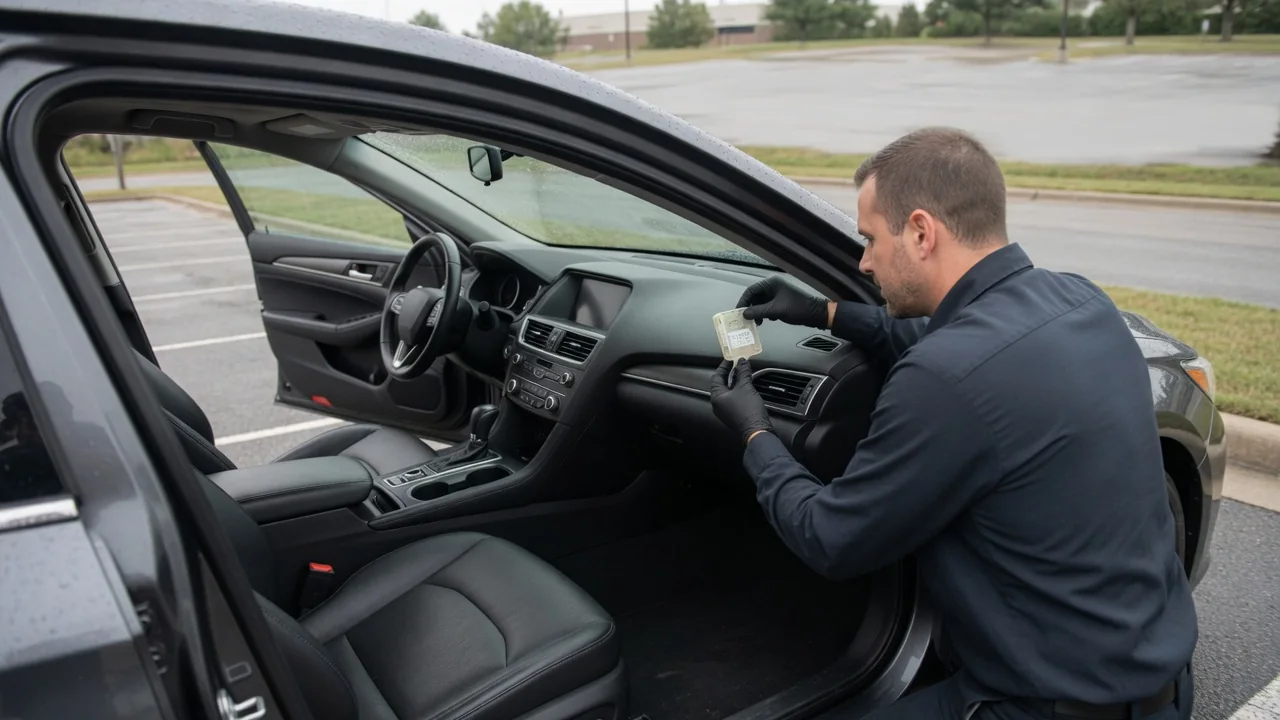
A humidity sensor lets a car's climate control system estimate how much moisture is in the air near the windshield and react before the glass fogs. Not every vehicle has one. Many automatic systems rely on temperature sensors and fixed logic instead. Where a car cabin humidity sensor is fitted, it works with automatic climate control to balance clear visibility, comfort and energy use. Knowing why some cars have a humidity sensor helps explain climate behavior that can otherwise seem puzzling.
Fog prevention
Interior windshield fog forms when the inner surface of the glass is colder than the dew point of the air touching it. At that point, water vapor condenses into tiny droplets that scatter light and reduce visibility. Moisture comes from many sources in a closed cabin. These include occupants' breath, wet clothing, damp floor mats and snow carried in on shoes. Cold weather makes the problem worse because the windshield is cooled by outside air while the cabin air holds moisture. The risk depends on two things together: how humid the air is and how cold the glass is.
A typical humidity sensor is a small module mounted on the inside of the windshield, often near the rearview mirror base. It measures the relative humidity of the air close to the glass. In many designs it also measures air temperature and the temperature of the glass itself. With those readings, the climate control module can calculate the dew point and how close the windshield is to fogging. This margin is the key advantage. The system can act while the glass is still clear, rather than waiting for the driver to notice fog and press the defrost button.
When the margin shrinks, the system can respond in several ways. It may engage the air conditioning compressor, because the evaporator removes moisture from the air passing over it. It may reduce recirculation and bring in more outside air, which is usually drier than the cabin air in cold weather. It may also send more airflow to the windshield vents, raise blower speed or warm the discharge air. The exact combination, thresholds and timing are set by each manufacturer and are not standardized across vehicles.
Auto climate
Without humidity information, an automatic system has to guess. Some designs run the compressor whenever air conditioning or defrost is selected, whether or not moisture actually needs removing. Others decide based on temperature alone. A humidity input gives the controller a more direct measure of the condition it is trying to manage. This allows it to run the compressor when drying is needed and ease off when the air is already dry. Because the compressor draws power from the engine or the high-voltage battery, avoiding unnecessary operation can reduce energy use.
Recirculation is another area where humidity data helps. Recirculating cabin air reduces the energy needed to heat or cool it and limits outside odors. However, it also traps the moisture produced inside the car. With a humidity sensor, the system can use recirculation for longer and switch toward fresh air as moisture rises. The occupants do not have to manage that trade-off by hand. Some systems may also factor humidity into the comfort side of automatic control, since air at the same temperature can feel different depending on its moisture content.
In electrified vehicles, heating and cooling draw from the same battery that provides driving range. Avoiding unnecessary compressor use or excess fresh-air heating can therefore matter more than in a conventional car. Humidity sensing is one input that can support more targeted climate control in these vehicles. How much it contributes depends on the overall system design.
Limits
A humidity sensor measures conditions at one location, usually a small area of the windshield. Other parts of the glass, side windows and the rear window can be colder or exposed to different air, so they may fog even when the sensed area does not. The sensor is also inside the cabin. Condensation on the outside of the windshield can occur when the glass is chilled by air conditioning in humid weather. That situation is governed by outside air and is not what an interior sensor is designed to detect.
The system can only remove moisture as fast as its hardware allows. In very cold conditions, many air conditioning systems restrict or prevent compressor operation, which reduces drying capacity. Just after a cold start, the heater may not yet produce much warmth, so the glass stays cold. A large moisture load, such as several passengers in wet clothing or a cabin full of melting snow, can exceed what the system can handle quickly. Earlier detection does not change these physical limits.
Sensor accuracy can also degrade. A film on the glass, dirt or physical damage around the module, calibration drift or electrical faults can all produce unreliable readings. Depending on the design, the system may fall back to a default strategy and may store a fault code. That code would normally be read with diagnostic equipment, and the driver may not see any obvious warning.
Practical implications and limits
Some automatic climate behavior that seems odd is usually intentional when a humidity sensor is present. Examples include the compressor running on a cold day, the system leaving recirculation on its own, or extra air flowing to the windshield without a request. Overriding these choices, for example by forcing recirculation on for a long time, can work against fog prevention. The owner's manual is the best guide to how a particular vehicle's automatic mode behaves and which settings are recommended.
Owners can help the system work as intended. Keep the area around the sensor clear of stickers, toll tags and device mounts unless the manual allows them there. Keep the inside of the windshield clean. A clogged cabin air filter restricts airflow, which reduces the system's ability to clear glass even when it detects a problem. Following the maintenance schedule for that filter supports both fog control and general ventilation.
The sensor is an aid, not a guarantee. If fog forms, manual defrost remains the direct way to clear it, and visibility is still the driver's responsibility. Fogging that keeps coming back can point to excess moisture inside the car, such as a water leak or damp carpet, or to a fault in the sensor or climate system that is worth diagnosing. Not every car has a humidity sensor, and its absence does not mean poor fog control. Many systems without one still engage drying automatically when defrost is selected.