How to Reduce Cabin Humidity During Rainy Weather
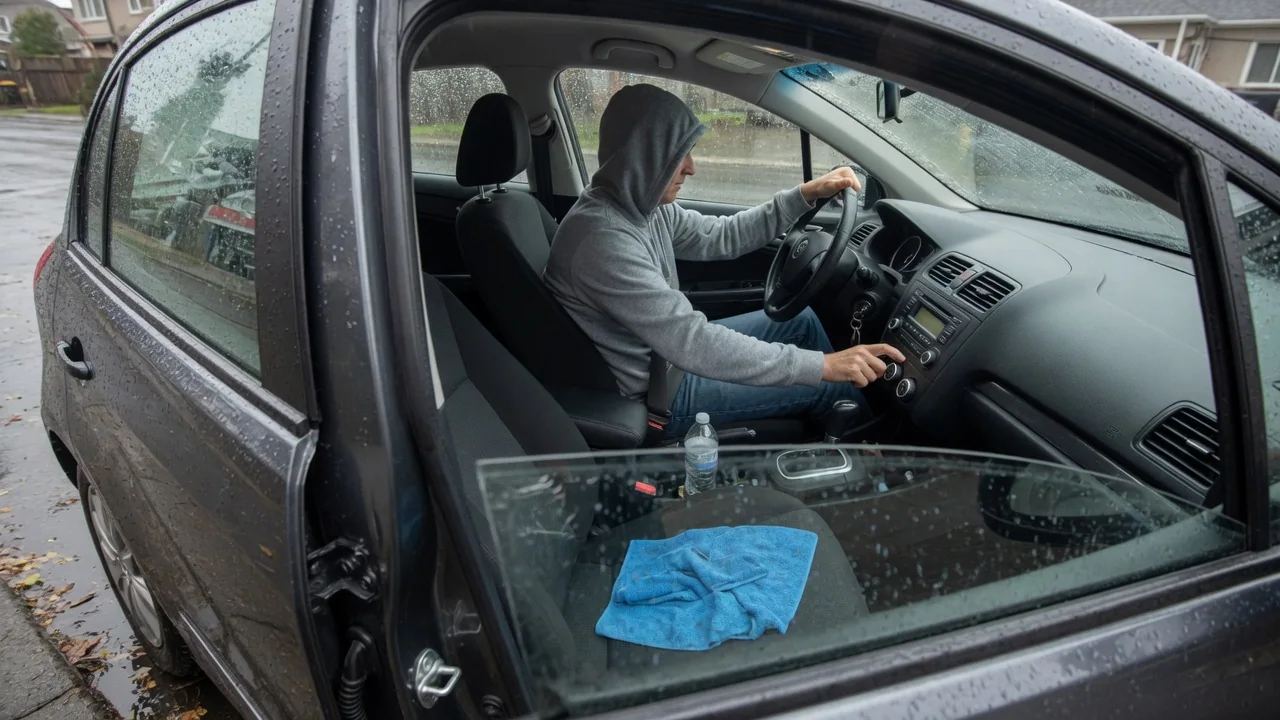
Wet weather brings moisture into a vehicle on shoes, coats, umbrellas and every breath the occupants take. Knowing how to reduce cabin humidity during rainy weather keeps the glass clear, the air comfortable and the upholstery free of musty odors. The approach combines removing water at its source with climate settings that move damp air out and dry what remains.
Dry mats
Floor mats are the largest reservoir of water in most cabins during a rainy spell. Shoes carry in rain with every trip, and carpeted mats soak it up like a sponge. Once the heater warms the footwell, that water evaporates into the cabin air and then condenses on the coolest surface available, which is usually the windshield and side glass. A mat that feels only slightly damp to the hand can still hold enough moisture to fog windows repeatedly over several days of driving.
Rubber or molded all-weather mats hold water in channels where it can be poured out rather than absorbed, which makes them easier to manage in a wet season. Carpet mats benefit from being taken indoors to dry overnight instead of being left in a closed vehicle. It is also worth pressing a hand into the carpet beneath the mat, because moisture trapped underneath dries very slowly. Mat shape, retention clips and carpet thickness differ between vehicles, so the fit should keep the mat clear of the pedals after it is reinstalled.
Fresh-air mode
The climate system can either draw air from outside or recirculate the air already in the cabin. In recirculation, the moisture from breath, wet clothing and damp carpet stays inside and builds with every minute, which is why windows often fog quickly with several passengers aboard. Fresh-air mode pulls outside air through the intake at the base of the windshield and pushes cabin air out through vents in the body, steadily replacing humid air with new air.
Outside air in the rain is humid too, but once it is warmed by the heater its relative humidity falls, so it can pick up moisture from the interior and carry it out. The control is usually a button showing a vehicle outline with a curved arrow inside for recirculation, and fresh air is selected when that indicator is off. Some automatic systems switch modes on their own, and many select fresh air whenever defrost is chosen. The owner's manual explains how a particular vehicle behaves.
AC drying
Air conditioning is a dehumidifier as much as a cooler. Air passing over the cold evaporator behind the dashboard gives up moisture as condensation, which drains out through a tube beneath the vehicle. Running the compressor with the temperature dial set to warm is perfectly normal: the air is dried first, then reheated by the heater core, so it arrives at the glass both warm and dry. That combination clears a fogged windshield far faster than heat or airflow alone.
On many vehicles the compressor engages automatically in defrost mode, sometimes without lighting the AC indicator, while others need the button pressed. A small puddle of clear water under the front passenger area after parking is a sign that the system is removing moisture as intended. In cold conditions the compressor may not run at all, because many systems disable it near freezing temperatures to protect the evaporator. In that case warm fresh air directed at the glass does most of the work.
Everyday Use and Observations
Daily habits matter as much as settings. Shaking off umbrellas and coats before getting in, and placing wet gear in the trunk or cargo area rather than on the seats, keeps a surprising amount of water out of the cabin. Starting the drive with fresh air, the AC on and airflow directed to the windshield prevents fog from forming instead of chasing it afterward. A clean inside surface on the glass also helps, since the film that builds up there gives moisture something to cling to.
The pattern of fogging is useful information. Mist that appears with a full load of passengers and clears within a minute or two of defrost is ordinary. Glass that is already wet on the inside before anyone gets in, or that fogs again soon after clearing, suggests water is stored somewhere in the vehicle. On a dry day, leaving the windows slightly open while parked in a secure place, or driving with the heater and fresh air running, helps the interior release what it has absorbed.
Limits and Next Steps
Climate settings can only manage moisture, not stop it from entering. If humidity keeps returning despite dry mats and correct settings, water may be getting in through a worn door or trunk seal, blocked sunroof drains, or debris-clogged drains in the cowl below the windshield. A blocked evaporator drain can send condensation onto the front carpet instead of the ground. A cabin air filter loaded with dirt or dampness restricts airflow and can add a stale smell, and its location and replacement schedule vary by vehicle.
Some signs deserve a professional look. A sweet smell with a greasy film on the inside of the windshield can point to an engine coolant leak from the heater core, which should be diagnosed rather than masked with more defrost. Carpet that stays soaked, water sloshing in the doors or a persistent mildew odor also justify an inspection, since wiring and electronic modules are often routed beneath the floor covering. Moisture-absorbing products can help in a parked vehicle, but they support the fix rather than replace finding the source.