Why Did Some Cars Have Landau Roof Treatments?
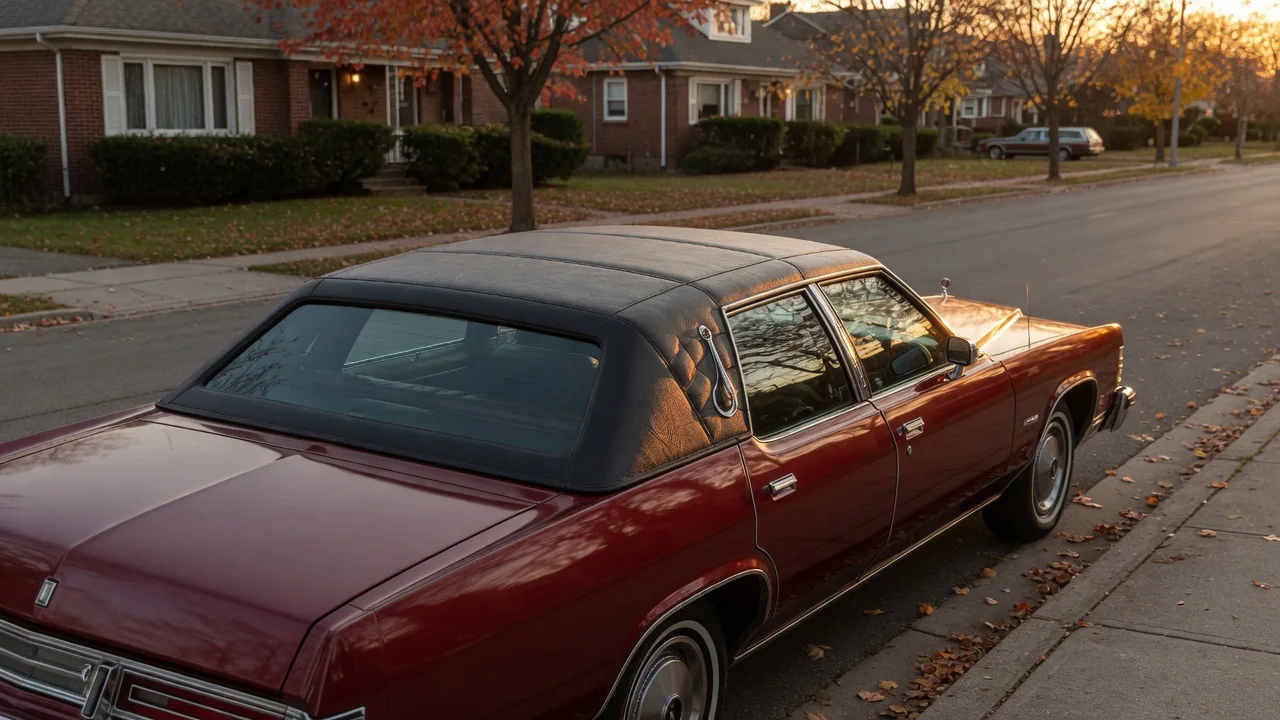
A landau roof treatment covers only part of a car's roof, usually the rear section, with a contrasting material such as textured vinyl. The look borrows from horse-drawn carriages and was used to make ordinary closed bodies appear more formal and expensive. Knowing why some cars had landau roof treatments explains a distinctive era of landau roof car styling, the materials involved, and the care these coverings still need today.
Historical appearance
The name comes from the landau, a type of horse-drawn carriage whose rear top could fold down. On those carriages, hinged S-shaped irons supported the folding hood, and the rear quarter was typically covered in leather or a similar flexible material. Early automobile coachbuilders carried the idea forward in landaulet bodies, where the rear passenger compartment had a convertible section while the front area was fixed or open. In those vehicles the landau elements had a real mechanical purpose: they allowed the top to fold.
As closed steel bodies became standard, the folding function largely disappeared, but the appearance survived. Designers applied a covering to the rear part of the roof, often ending at a trim line across the top, and sometimes added decorative landau bars on the rear roof pillars. These bars imitated the old carriage hinges but did nothing structural. Small opera windows, or no rear side windows at all, frequently accompanied the treatment, creating a wide, closed rear pillar. The overall effect suggested a formal, chauffeured car in which rear passengers sat in privacy behind a substantial-looking roof.
Manufacturers had several reasons to offer it. A partial roof covering was a relatively inexpensive way to signal luxury and to distinguish a higher trim level from the base version of the same body. It added a two-tone contrast to the car's profile without changing the underlying sheet metal. It could also alter perceived proportions, making the cabin look more upright and the rear pillar heavier and more formal. The treatment became especially common on American cars during the 1970s, when formal styling cues were widely used in marketing, and it appeared both as a factory option and as a dealer-installed or aftermarket addition.
Materials
Most automotive landau roofs used vinyl, a plastic coating applied over a woven or knit fabric backing. The surface was usually embossed with a grain pattern meant to imitate leather or other textures, and it came in colors chosen to contrast or coordinate with the body paint. The fabric backing gives the material strength and helps it conform to the curves of the roof, while the vinyl layer forms the weather-facing surface. The covering is bonded to the roof panel with adhesive, and its edges are typically tucked under or held in place by trim moldings.
Some installations placed a thin foam layer between the steel roof and the vinyl, producing a softer, padded appearance that strengthened the carriage reference. Stainless steel or chrome-plated moldings usually framed the covered area, finishing the edges visually and giving them some protection. Landau bars, where fitted, were generally plated metal pieces fastened to the roof pillar with studs or other hardware. Beneath everything sits the original steel roof panel, which carries the structural load; the covering itself contributes appearance and texture, not strength.
Carriage-era and early coachbuilt landau tops relied on leather or treated fabric because those materials had to fold repeatedly. Later fixed coverings did not need to bend in use, which is one reason durable, low-cost vinyl suited mass production. Replacement materials for restoration are generally offered in common grain patterns and colors, though an exact match depends on what the original vehicle used.
Care
Regular cleaning keeps a vinyl landau roof looking right and helps reveal problems early. A mild soap solution and a soft brush lift dirt out of the grain without scratching the surface, while harsh solvents, abrasive compounds and strong degreasers can dry out or discolor vinyl. Rinse thoroughly so soap residue does not remain in the texture, then dry the surface and the trim edges. Avoid aiming a high-pressure spray directly at seams and molding edges, where water can be forced underneath the covering.
Sunlight is the main long-term enemy of vinyl. Ultraviolet exposure and heat gradually harden the material, fade its color and lead to cracking, especially on the flat, upward-facing roof surface. A protectant made specifically for exterior vinyl, ideally one with UV protection, can slow this process. Products that leave a greasy film tend to attract dust, so a dry-finish formula is usually more practical. Garage storage or a breathable cover reduces exposure further. Check product labels and any guidance from the vehicle manufacturer before use, because formulations differ.
Inspection matters as much as cleaning. Look for lifting edges, small splits, bubbles or soft spots, and pay particular attention to the areas around moldings, the rear window and any landau bar mounting points. Small tears and loose edges are easier to repair with a suitable vinyl adhesive or patch while they are minor than after water has spread beneath the material.
Practical implications and limits
The biggest practical consequence of a landau roof is that it hides the metal beneath it. Moisture that gets past a split or loose edge can be trapped against the steel, where it may cause corrosion that stays invisible from outside until the vinyl bubbles, ripples or feels rough under light pressure. When evaluating a car with this treatment, those surface symptoms deserve serious attention, because the true extent of any damage can only be judged once the covering is removed.
Owners sometimes consider removing a worn covering instead of replacing it, but that choice has limits. The roof under a factory covering may not have been finished to the same standard as visible painted panels, and holes or clip points for trim and landau bars may remain, so a painted roof can require bodywork before it looks complete. Replacement, by contrast, involves removing trim, cleaning off old adhesive, repairing any rust and fitting new material carefully around curves and seams. For collectors, whether a car retains its original roof treatment can also influence how the vehicle is judged, so originality may matter alongside appearance.
Construction details varied between manufacturers, body styles and installers, and aftermarket landau kits did not always follow factory methods. The general mechanisms described here apply broadly, but the specific materials, trim fastening and recommended care for a particular vehicle should be confirmed from its service documentation or with a specialist familiar with that model.