Why Did Early Cars Have Exposed Fenders? Wheels, Frames and Style
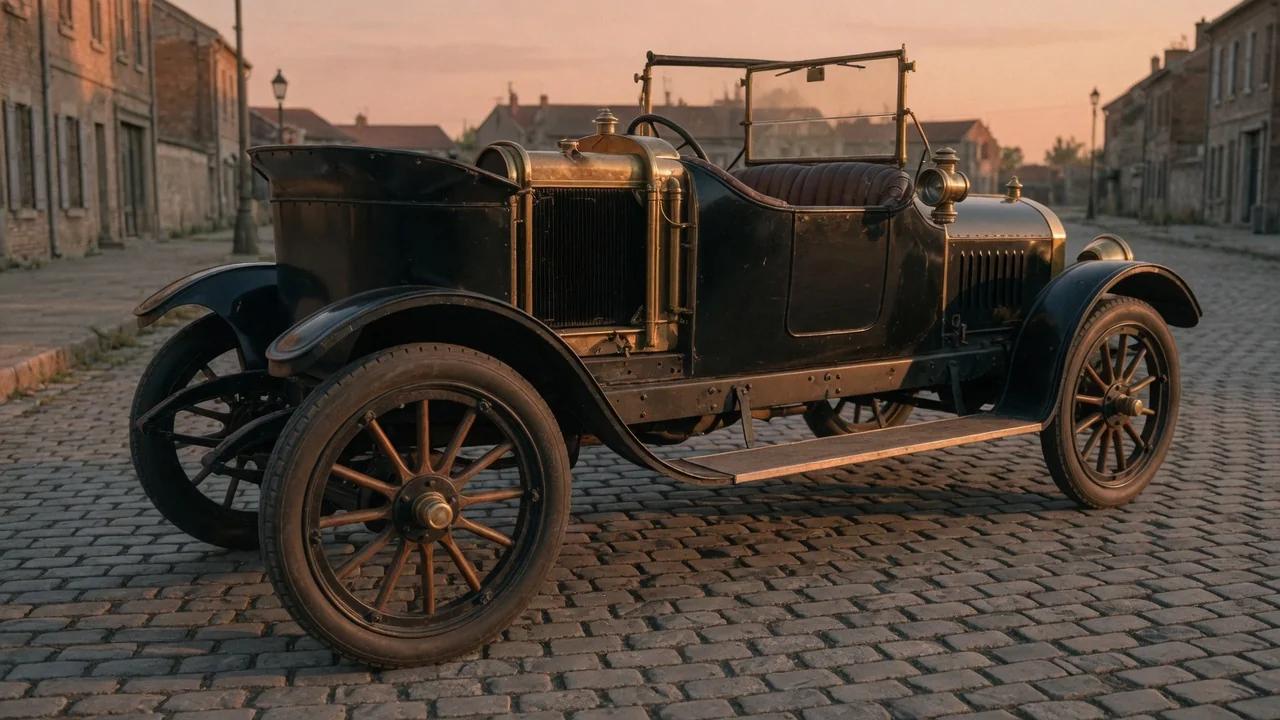
On almost any automobile from the first decades of motoring, the fenders stand apart from the body and arch over each wheel like separate pieces of equipment. That was not just a matter of taste. Early car fender design grew out of practical needs on rough roads, the way vehicles were built from separate frames and bodies, and visual habits inherited from horse-drawn carriages. Those three forces explain why the exposed fender lasted as long as it did.
Wheel coverage: keeping mud and stones off the car
The first job of a fender was simple: catch what the wheels threw up. Many early motorists drove on unpaved roads of dirt, gravel or crushed stone, and a spinning tire flings mud, water and debris forward, upward and backward. Without a guard over the wheel, that material would land on the occupants, the body and anything carried on board. The older British term mudguard describes the purpose directly. Many early cars had open or partly open bodies, so protecting passengers from spray mattered even more than it does on a closed modern vehicle.
Wheel size and suspension movement also pushed fenders away from the body. Early cars typically rode on tall, narrow wheels, with leaf-spring suspensions that let the axles move considerably over ruts and potholes. Each wheel needed room to move up and down, and the front wheels also needed room to turn for steering. A separate fender mounted above the wheel with generous clearance met all of these needs without forcing the main body to be shaped around the wheel's full range of motion. Following the tire's arc instead of enclosing it also kept weight and material to a minimum.
Exposure also made service easier. Tires of the period often needed attention, and roads could pack mud or snow around a wheel. An open fender left the tire visible and reachable, so a driver could inspect it, clear debris or change it at the roadside without removing body panels. Enclosed wheel openings can trap mud and make roadside tire work more awkward, and that trade-off mattered when breakdowns were a routine part of driving.
Body construction: separate parts on a separate frame
Most early automobiles used body-on-frame construction. A rigid chassis frame carried the engine, drivetrain, suspension and axles, and the passenger body was a separate structure mounted on top of it. Under that arrangement, fenders were naturally treated as separate components too. They were usually attached with brackets and bolts to the frame or to supports, rather than being formed as part of the body shell. This made it logical to fit a curved, self-contained guard over each wheel, independent of how the body itself was built.
Manufacturing methods reinforced the pattern. Many early bodies relied on a wooden framework covered with panels, a technique carried over from carriage building, and bodies were frequently built by different firms from the ones that made the running chassis. Forming large, deeply curved sheet-metal panels in one piece was difficult with the tools and materials of the time, so it was easier to make a fender as a smaller part with a single sweep of curvature. Smaller parts were simpler to shape, paint, replace and ship, and they did not have to match a complex body contour exactly.
Running boards often tied the front and rear fenders together along each side. They provided a step up into a tall vehicle, a place to carry spare equipment and a physical link between the separate guards. As steel stamping improved and more manufacturers moved toward all-steel bodies, it became practical to shape fenders that blended into the sides of the car. Later, integrated body structures, in which the shell itself carries the loads, made a fully enclosed side profile easier still. The exposed fender faded as those construction methods matured, even though wheels still threw up mud and stones.
Styling: a carriage look that became a signature
Early automobiles were often called horseless carriages, and their appearance reflected that lineage. Horse-drawn vehicles already used separate guards over their wheels, and buyers were used to a vehicle that looked like a body perched above a set of wheels rather than a single enclosed mass. Exposed fenders fit that visual vocabulary. They made the structure of the car easy to read: wheels, frame, body and guards each had a recognizable place.
As the automobile matured, designers turned the fender into a styling element in its own right. Fenders grew longer, more sweeping and more sculpted, flowing from the front wheels toward the running boards and rising again over the rear wheels. Headlights were often mounted on or between the front fenders, and the curve of the fender helped define the stance of the car. Contrasting paint and bright trim could emphasize the fender line. What began as a functional mudguard became one of the most expressive surfaces on the vehicle.
Tastes eventually shifted toward smoother, wider bodies with fewer separate shapes. Designers increasingly valued a unified look, and enclosed forms suited the growing interest in streamlining. Fenders gradually merged into the body until separate guards appeared mainly on some trucks, utility vehicles and deliberately retro designs. Even on modern cars, the outline of the old fender often survives as a crease or bulge over the wheel opening.
Practical implications and limits for owners and restorers
For anyone who owns, restores or studies an older vehicle, the separate fender has real consequences. Because it is usually a bolt-on part, a damaged fender can often be removed and repaired or replaced without cutting into the main body. The trade-off is that every joint between fender, body, frame and running board creates seams and fastener points where water, road salt and grit can collect. Those areas deserve close inspection for rust, cracked mounting points, loose hardware and worn welting or padding between panels. Because exposed fenders sit directly in the path of road spray, their undersides often wear differently from their outer surfaces.
Exposed fenders also affect how an early car behaves on the road today. Open wheels can let more spray reach the sides of the vehicle and, depending on the design, following traffic. The protruding shapes also catch air, which helps explain why later designs moved toward enclosed bodies as speeds rose. These are general tendencies, not measured figures, and their size varies with fender shape, wheel size and the speeds a particular car can reach.
This article explains broad patterns rather than the history of any single make or model. Construction details varied widely between manufacturers, coachbuilders and periods, and some early vehicles departed from the typical layout. For removal procedures, fastener types, panel materials or correct finishes on a specific vehicle, rely on the factory service manual, the parts catalog or a reference dedicated to that make.