What Is Body-on-Frame Construction?
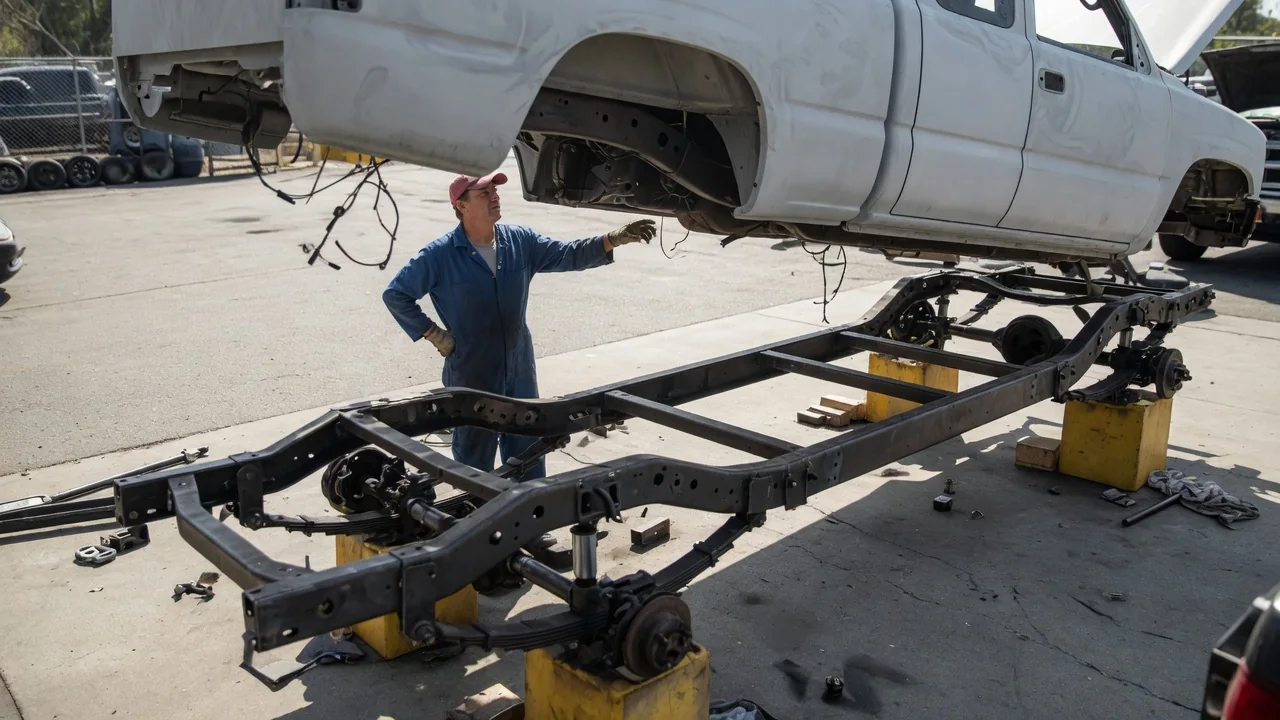
If you have wondered what is body on frame construction, the short answer is that the vehicle is built in two major pieces: a rigid ladder-style chassis that carries the engine, suspension and axles, and a separate body bolted on top. This layout differs from unibody designs, where the shell itself is the structure, and it shapes how a truck or SUV drives, works and ages.
Frame and mounts
The frame is usually a pair of long steel rails running front to rear, tied together by crossmembers so the assembly resembles a ladder. Rails may be open C-channel, fully boxed, or a mix of both along their length, depending on the manufacturer and the duty the vehicle is built for. The engine, transmission, suspension, steering gear, fuel tank and axles all attach to this skeleton, which means the chassis can technically roll and steer before any cab or cargo bed is lowered onto it.
Between the frame and the body sit body mounts, typically rubber or polyurethane cushions clamped by a long bolt through a bracket on the rail. They locate the cab while filtering road vibration and letting the frame flex slightly without stressing sheet metal. On a pickup, you can often spot them by looking behind the front wheel or under the cab's rocker area, and you may notice a visible gap between cab and bed. The number, position and stiffness of mounts differ by model and generation.
Why vehicles use it
Separating the load-carrying structure from the passenger shell lets engineers build a frame sized for heavy work. Towing a trailer puts tongue weight and pulling forces into the hitch, and on a framed truck those loads travel through the rails rather than through thin body panels. The same applies to payload in a bed, a snowplow on the front, or a winch. That is why full-size pickups, many large SUVs and most commercial chassis cabs still rely on this layout.
Manufacturing flexibility matters too. One frame can carry a regular cab, a crew cab, a utility body or a flatbed, and wheelbase can be changed by lengthening the rails rather than redesigning an entire shell. Off-road use benefits because a frame tolerates twisting over uneven terrain, and solid axles and long-travel suspension attach to sturdy brackets. Lift kits and upfitter equipment are also simpler to accommodate, though what is permitted or advisable depends on the specific vehicle and its ratings.
Inspection and repair
Because the frame lives underneath, exposed to water, road salt and debris, corrosion is the main thing to inspect. Surface rust on thick rails is common and often cosmetic, but flaking layers, swelling seams, or holes near suspension mounts, spring hangers and crossmembers deserve professional evaluation. Boxed sections can trap moisture and rust from the inside, so a clean exterior does not guarantee sound metal. Body mounts should be checked for cracked or collapsed rubber and for corroded brackets or bolts.
Collision repair follows different logic than on a unibody. A bent frame can sometimes be measured and straightened on dedicated equipment, and damaged body sections such as a pickup bed may be unbolted and replaced as a unit. Whether a frame is repairable, sectionable or must be replaced is governed by the manufacturer's repair guidance, particularly where high-strength steel is involved. Heating, welding or drilling rails without that guidance can weaken them, so structural work belongs with a qualified shop.
Everyday Use and Observations
On the road, a framed vehicle often feels different. Because the cab is isolated on cushions, some road noise and harshness are filtered, yet drivers may notice a faint shudder or jiggle after a sharp bump as the body and frame settle at slightly different rates. The floor tends to sit higher because it rides above the rails, which raises step-in height and seating position. Modern designs with stiffer frames and tuned mounts have narrowed these differences considerably, so impressions vary by model.
A few simple observations hint at the construction. A separate bed that moves slightly relative to the cab when crossing a driveway at an angle is a classic sign, as are thick rails visible behind the wheels. Changes over time are worth noting: new clunks over bumps, uneven gaps between cab and bed, or doors that begin to close differently can point toward worn mounts, though suspension and exhaust components produce similar noises and should be ruled out first.
Limits and Next Steps
The layout has trade-offs. A heavy steel frame adds mass, which generally works against fuel economy and nimble handling, and the tall floor reduces interior space relative to exterior size. Unibody vehicles integrate crumple zones into the shell, while framed vehicles manage crash energy through both frame and body engineering; neither approach is automatically safer, and results depend on the individual design. For commuting and light hauling, a unibody crossover may suit a driver better than a traditional truck.
To confirm how a particular vehicle is built, check the owner's manual or manufacturer information rather than judging by appearance, since some SUVs and pickups that look rugged use unibody structures. Shoppers considering a used truck should have the underside inspected on a lift, with attention to rust and prior repairs. Towing and payload limits come from the ratings printed for that exact vehicle, not from the construction type alone, so those labels remain the final word before loading up.