DIY Car Frame Straightening: What's Realistic and What Isn't
The short answer: DIY car frame straightening is realistic only in a narrow set of cases. Examples include a minor bend on an older body-on-frame truck, a kinked bumper mount, or a slightly pushed-in frame horn. For most modern passenger cars, a professional shop with a frame rack and a measuring system is the appropriate repair method. These cars are built as unibodies, and their structure is designed to manage crash energy. A home garage usually lacks the anchoring, pulling force and, above all, the precise measurement needed to put the structure back where it belongs. This guide explains what frame straightening involves, how the vehicle's construction changes the answer, and what you can reasonably do yourself.
What Frame Straightening Actually Means
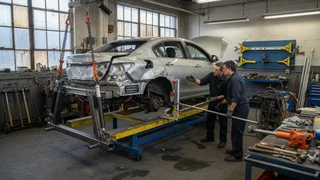
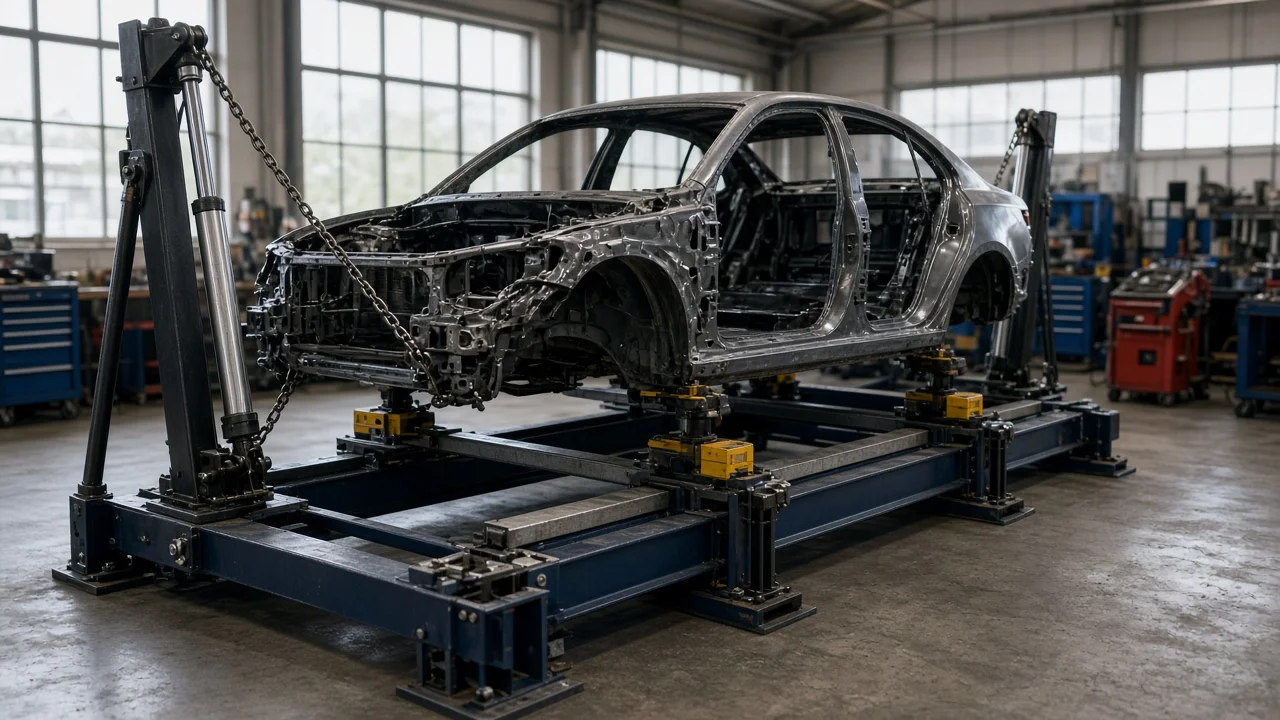
Frame straightening, also called frame or structural pulling, uses controlled force to return a damaged chassis to its original dimensions. Technicians anchor the vehicle firmly and attach chains or clamps to the damaged area. They then apply force, usually hydraulic, in the direction opposite to the impact. Throughout the process they measure specific reference points on the structure and compare them with the vehicle's published dimensions. The goal is not to make the frame look straight. The goal is to restore its geometry so that suspension mounting points, steering, doors, hood and crash structures all line up as designed.
Unibody vs. Body-on-Frame: Why It Changes the Answer
Whether DIY frame straightening on a car makes sense depends heavily on how the vehicle is built.
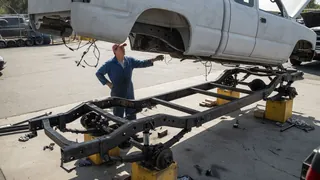
Construction type | Typical vehicles | How damage behaves | DIY practicality; Body-on-frame | Many full-size pickups, some large SUVs, older cars | A separate ladder-style frame carries the body; damage is often localized to frame rails, horns or crossmembers | Limited minor work may be feasible with proper equipment and measurement; Unibody | Most modern cars, crossovers and many SUVs | Body panels, floor and rails form one load-bearing structure; damage can transfer across the shell | Generally not a DIY job beyond diagnosis and non-structural parts
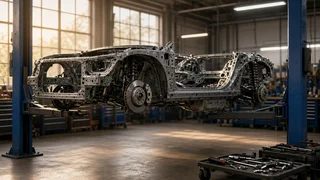
On a unibody, a hit to one corner can shift dimensions elsewhere in the structure. Crumple zones are designed to deform in a controlled way. Once deformed, some sections are meant to be replaced rather than pulled back into shape. That is why straightening a unibody without accurate measurement can leave hidden problems, even if the panels appear to fit.
Signs a Frame May Be Bent
Uneven or changed panel gaps around doors, hood or trunk lid; Doors that are harder to close or no longer latch cleanly; The vehicle pulls to one side or the steering wheel sits off-center after an alignment; Uneven or unusually rapid tire wear; Visible kinks, wrinkles or cracked seam sealer on rails, aprons or the floor; The vehicle appears to sit lower at one corner or 'crab walks' down the road; Unusual noises or creaks over bumps after an impact
None of these symptoms proves frame damage on its own. Worn suspension parts, a bent control arm or a damaged subframe can produce similar effects. A proper structural measurement is the only reliable way to tell the difference.
What DIY Can Realistically Handle
Some owners straighten minor frame damage at home, typically on older body-on-frame trucks or project cars. Reasonable DIY tasks include:
Inspecting and documenting damage, including checking for kinks, cracks and corrosion; Comparing diagonal and side-to-side measurements between matching reference points with a tram gauge or tape, as a rough screening check; Straightening a lightly bent bumper bracket, tow hook mount or non-structural bracket; Using a portable hydraulic body repair kit, often called a porta-power, for small, localized pushes or pulls on a separate frame; Replacing bolt-on parts such as bumper reinforcements, radiator supports or crossmembers where they are designed to be unbolted
Even for these jobs, the vehicle must be securely supported and anchored. Hydraulic tools and chains under tension store a great deal of energy. A slipping clamp or a snapping chain can cause serious injury, so never stand in line with a chain under load.
Where DIY Stops Making Sense
Any structural damage on a unibody vehicle, such as rails, aprons, pillars or floor pans; Damage near suspension or steering mounting points, where small errors affect handling; Kinked metal, as opposed to a smooth bend; kinked sections are commonly replaced rather than straightened; Damage involving airbag sensor locations or crash-energy-management structures; Aluminum or ultra-high-strength steel structures, which have specific repair limits; Any case where you cannot measure the result against the vehicle's published dimensions
How Professional Frame Straightening Works
Knowing the professional process helps explain why home results are hard to match. It also helps you judge a shop's estimate.
Assessment: the technician inspects the vehicle, and sometimes partly disassembles it, to expose damaged areas. Mounting: the vehicle is clamped to a frame rack or bench at designated anchoring points so it cannot move during pulls. Measuring: a mechanical, laser or computerized system compares key points with the manufacturer's dimensional data. Pulling: hydraulic towers apply force in stages, often from several directions at once, with repeated measurement between pulls. Stress relief and inspection: pulled areas are inspected for cracks or stretched metal, following the material's repair limits. Sectioning or replacement: parts that cannot be safely straightened are cut out and replaced at approved locations. Final verification: the structure is measured again, then suspension alignment and panel fit are checked.
Why the Substrate Material Matters
The substrate material, meaning the metal the structure is made of, strongly affects which repair method is acceptable. Older frames are often mild steel, which tolerates bending and straightening reasonably well. Many modern vehicles use high-strength or ultra-high-strength steels in key areas, and some use aluminum. These materials can lose strength or crack when bent back and forth or heated. For that reason, automakers commonly restrict or prohibit heating and limit straightening on certain parts. Applying heat with a torch to 'relax' a bend, a common old-school shortcut, can weaken these materials in ways you cannot see. If you don't know what your frame is made of, treat that as a reason to stop and get a professional assessment.
After Straightening: Alignment, Preparation and Corrosion Protection
A straightened structure still needs finishing work before the repair is complete.
Panel alignment: once the structure is in spec, doors, fenders, hood and trunk lid should be adjusted to even gaps. Persistent gap problems can indicate the structure is still out of position. Wheel alignment: suspension geometry should be checked and set after any structural repair. Surface preparation: pulled or welded areas need cleaning and removal of damaged coatings, scale and rust before refinishing. Coating compatibility: primers, seam sealers and topcoats should suit the substrate. Aluminum and steel, for example, may need different primers, and products from the same system are generally used together. Corrosion protection: straightening, clamping and welding can crack factory coatings and seam sealer. Restoring sealer, applying anti-corrosion coatings and treating inside rail cavities helps prevent rust from starting at the repair.
Cost, Safety and Ownership Considerations
Frame damage affects more than the repair bill. A structure that is not restored correctly may not protect occupants as designed in a later crash. It can also cause ongoing alignment and tire-wear problems. Structural damage is often recorded in vehicle history reports and can reduce resale value. If the damage is severe enough that an insurer declares the vehicle a total loss, title branding and inspection rules vary by state. If insurance is involved, getting a professional estimate first usually makes sense, even if you plan to do part of the work yourself.
Bottom Line
DIY frame straightening is a reasonable project only for minor, well-defined damage, mostly on separate body-on-frame chassis. It also requires secure anchoring, appropriate hydraulic tools and a way to verify measurements. For unibody cars, damage near suspension or crash structures, kinked metal, or high-strength steel and aluminum, the safer choice is a collision shop with a frame rack and a measuring system. A practical next step is to document the damage, run a basic measurement check if you can, and get a professional structural assessment before deciding which parts of the repair, such as bolt-on parts, refinishing or corrosion protection, you want to handle yourself.