What Is Unibody Construction?
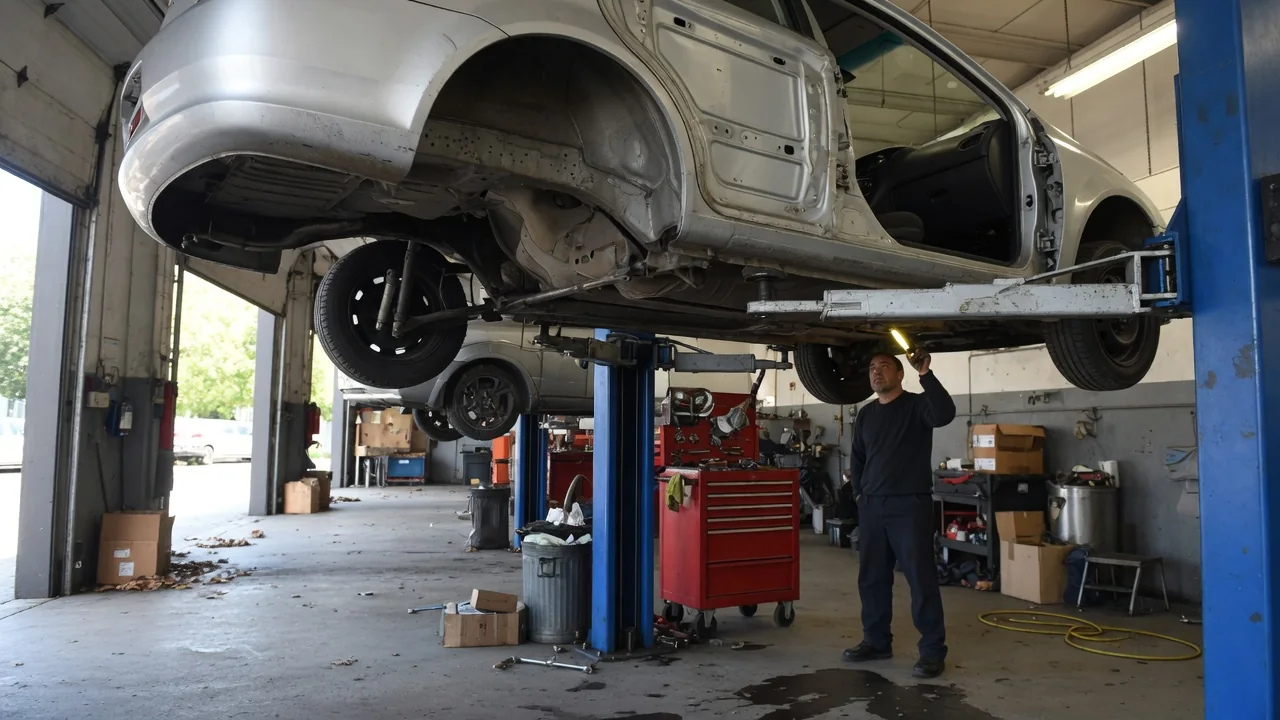
Anyone asking what is unibody construction is really asking how a vehicle holds itself together. In a unibody design, the floor, pillars, roof and inner panels are joined into a single shell that serves as both the body and the supporting structure. There is no separate frame underneath carrying the load, so the shell itself does the work.
Load paths
A load path is the route a force takes through the structure before it is absorbed or spread out. In a unibody, suspension forces enter at reinforced mounting points such as strut towers and subframe attachments, then travel into rails, rocker sills, the floor pan and the pillars. Because the panels are welded or bonded into a closed shell, each one shares part of the work. Even the roof and the transmission tunnel contribute stiffness, which is why a thin stamped panel can matter far more than its weight suggests.
Collision forces follow planned routes as well. Front and rear rails are shaped to fold progressively, soaking up energy in crush zones before it reaches the passenger compartment, which is built from stronger sections intended to hold their shape. Open the hood on most passenger cars and you can see the rails running forward from the firewall and the towers that locate the suspension. The exact layout, the grades of steel or aluminum used, and the joining methods differ by manufacturer and model, so the details are always vehicle specific.
Repair measurement
Because the body is the structure, damage in one area can shift the position of mounting points some distance away. A hit to a front corner may move a strut tower or push a rail slightly out of line without leaving obvious creases. For that reason, collision repair on an integrated shell depends on measurement rather than appearance. Technicians compare fixed reference points on the underbody and upper structure against the manufacturer's published dimensions, checking length, width and height so that hidden distortion is found before any cosmetic work begins.
Shops typically use mechanical gauges or electronic measuring systems, often with the vehicle anchored to a bench or frame machine that can pull the structure back toward its original geometry. Manufacturers also specify where sections may be cut, which parts must be replaced rather than straightened, and how joints should be remade. An owner cannot verify these dimensions at home, but uneven panel gaps, doors that no longer close cleanly, or alignment readings that will not come into range after a collision are reasonable signs that structural measurement is warranted.
Everyday vehicle examples
Most sedans, hatchbacks, minivans and crossovers on the road today use an integrated body structure. The approach suits them because a single shell can be lighter than a separate body bolted to a heavy frame, and it allows a lower floor, which helps cabin room and step-in height. Many of these vehicles add bolt-on subframes or cradles at the front or rear to carry the engine, steering and suspension. Those subframes attach to the shell, but the shell remains the primary structure tying everything together.
Body-on-frame construction, by contrast, remains common on many full-size pickups and some large sport utility vehicles, where a separate ladder frame carries the drivetrain and the body sits on mounts above it. The line is not perfectly clean, since some pickups and utility vehicles use unibody shells and some designs blend rails into the floor. Electric vehicles often incorporate the battery enclosure into the underbody as well. Checking how a particular model is built means consulting the manufacturer's information rather than assuming from its shape or size.
Everyday Use and Observations
On the road, a stiff one-piece shell gives the suspension a stable platform to work from, which supports predictable steering and consistent wheel alignment. It also tends to reduce the shudder that can occur when a body and frame move slightly against each other over rough pavement. The trade-off is that noise and vibration from the road and drivetrain have a more direct route into the cabin, so engineers rely on rubber bushings, isolated subframes and sound-deadening materials to manage what occupants actually hear and feel.
A few details are easy to observe. Looking underneath, a unibody shows a stamped floor with formed rails and sills instead of two thick beams running the length of the vehicle. Along the rocker area there are usually marked, reinforced points intended for a jack or lift; lifting elsewhere can crush the sill or dent the floor. Doors and a liftgate that open and close the same way when the car is parked on uneven ground suggest a rigid shell, though the behavior varies with body style and age.
Limits and Next Steps
An integrated structure has limits worth understanding. Because every welded section carries load, corrosion in rocker sills, floor pans, rails or suspension mounting areas is a structural concern, not only a cosmetic one. Towing and payload capability depend on what the shell and its attachment points were designed to handle, so ratings vary widely and the figures in the owner's manual are the ones that count. Severe collision damage can also be harder to correct than on a separate frame, since the distorted part cannot simply be unbolted and replaced.
For anyone evaluating a vehicle, the practical next steps are straightforward. Confirm the construction type and the approved lifting points in the owner's documentation. When buying used, look for rust at the sills and underbody seams, inconsistent panel gaps, and signs of previous structural repair, and consider a professional inspection if anything looks doubtful. After any significant impact, choose a repair facility equipped to measure the structure and follow the manufacturer's procedures, because a shell that looks straight is not necessarily back within its intended dimensions.