Group 96R AGM Car Battery: What to Check Before You Buy
If your vehicle calls for a Group 96R battery and it came with an AGM battery from the factory, replace it with another 96R AGM that meets or exceeds the original cold cranking amps rating. If your car originally used a conventional flooded battery, a 96R AGM is usually a workable upgrade, but it is not required. Two things change that answer. First, a vehicle with start-stop or a battery management system almost always needs AGM, and it may need the new battery registered. Second, if the old battery died early, a new one may not fix the problem. A charging fault or parasitic draw will drain the replacement too.
What "Group 96R" and "AGM" Actually Mean
The group number is a Battery Council International (BCI) size standard. It defines the case dimensions, the terminal type and the terminal placement. A Group 96 battery is a relatively compact size used in a range of smaller and midsize vehicles.
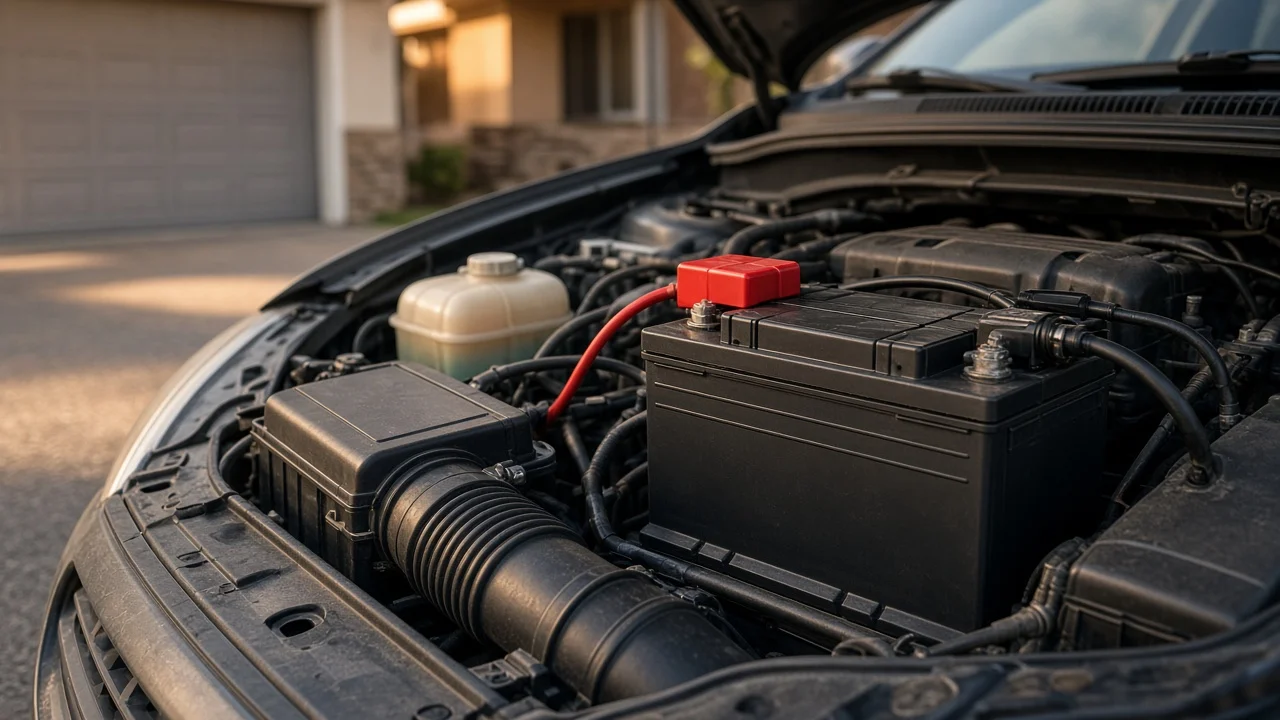
The "R" stands for reversed terminal layout. A 96R has its positive and negative posts on opposite sides compared with a standard Group 96. The case can be the same size, but the battery cables may not reach the posts if the layout is wrong. Before buying, compare the replacement with the battery that is in your car now. Face both batteries the same way and check which side the positive (+) post is on.
AGM stands for absorbent glass mat. The electrolyte is held in fiberglass separators rather than sloshing freely, so the battery is sealed and spill-resistant. AGM batteries handle repeated discharge and recharge better than conventional flooded batteries. They also tolerate vibration well and usually cost more than flooded batteries of the same group size.
Confirm Fitment for Your Exact Vehicle
Battery fitment can change between model years, trims, engines and markets. Some vehicles also switched battery types during a production run. Use your exact model year, engine and trim when checking a fitment guide, and treat the battery currently in the car as a cross-check rather than proof. A previous owner or shop may have installed the wrong size.
Group size on the label matches 96R, not 96 or a different group. The positive and negative posts sit on the same sides as your current battery, so the cables reach without stretching. The hold-down ledge or clamp style matches your battery tray, so the battery can be secured firmly. The terminal type matches. Group 96R normally uses standard top posts, but confirm this against your cable clamps. The battery type matches what the vehicle requires: AGM if the original was AGM or the car has start-stop.
When AGM Is Required and When It Is Optional
Vehicles with automatic engine start-stop, or with heavy electrical loads while the engine is off, are usually designed around an AGM battery. Putting a flooded battery in one of these vehicles can lead to short battery life and electrical warnings. As a rule, do not downgrade from AGM to flooded.
Going the other way, from flooded to AGM, is generally acceptable in a conventional vehicle as long as the size and terminal layout match. An AGM battery can help if you often take short trips, use plug-in accessories, or let the car sit for long periods. If none of those apply, a quality flooded battery may serve just as well for less money.
Ratings That Matter on the Label
Cold cranking amps (CCA): how much current the battery can deliver to start the engine in cold conditions. Match or exceed your vehicle's specified CCA. Reserve capacity (RC): how long the battery can run essential loads if charging stops. A higher number gives you more margin. Amp-hour (Ah) capacity: total stored energy. Some vehicles with battery management systems need this value when the new battery is registered. Manufacture date code: batteries slowly lose charge on the shelf, so a recently made battery is preferable. Learn to read the brand's date code before buying. Warranty terms: check how long the free-replacement period lasts compared with the prorated period. The headline warranty length alone does not tell you this.
More CCA than the original spec does no harm, but past a reasonable margin it adds little benefit. For most owners, correct fitment, AGM where required and a fresh date code matter more than chasing the highest number on the shelf.
Battery Registration and Charging Considerations
Many newer vehicles use a battery sensor and control module that adjusts charging output based on the battery's age, type and capacity. On these vehicles, the new battery may need to be registered with a scan tool so the system stops charging it like a worn-out battery. Skipping this step can shorten the new battery's life or cause start-stop to stop working. Whether your vehicle needs registration depends on the make, model year and equipment, so check before you swap the battery yourself.
If you use a battery charger or maintainer, choose one with an AGM setting. AGM batteries are sensitive to overcharging, and a charger designed only for flooded batteries may not be suitable.
If Your Battery Keeps Dying, Check These First
A battery that fails long before its expected life is often a symptom of another problem. Before buying a replacement, it is worth ruling out the common causes. Otherwise the new 96R AGM may end up in the same condition.
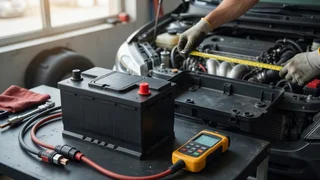
Battery terminals: corrosion or loose clamps cause voltage drop, which means some of the battery's voltage is lost across a poor connection before it reaches the starter or charging system. Clean and tighten the terminals and check the cable ends. Charging output: with the engine running, a healthy 12-volt charging system typically reads well above the battery's resting voltage, commonly in the range of about 13.5 to 14.5 volts at the battery. A reading near resting voltage suggests the alternator is not charging. Smart charging systems may vary their output, so a single reading is not conclusive. Parasitic draw: a small current drain when the car is off is normal. A larger one, from a stuck relay, an aftermarket accessory or a module that never shuts down, can drain a battery overnight or over a few days. It is measured with a meter in series with the battery after the vehicle's modules have gone to sleep. Fuses and wiring: if you isolate a draw by pulling fuses, use the vehicle's wiring diagram to identify each circuit. Always replace a fuse with one of the same fuse rating, never a higher one. System voltage at rest: a fully charged 12-volt battery that has sat for several hours should read roughly 12.6 volts or slightly more, and AGM batteries often read a little higher. A consistently low resting reading points to a weak battery or an ongoing drain.
Many parts stores will test the battery, starter and alternator. That is a useful first step if you are not comfortable taking these measurements yourself.
Quick Buying Checklist
Confirm 96R is correct for your exact model year, trim and engine. Match the terminal layout to your current battery and cables. Stay with AGM if the vehicle came with AGM or has start-stop. Meet or exceed the specified CCA, and compare reserve capacity between options. Check the date code for freshness. Find out whether your vehicle needs battery registration after installation. If the old battery died early, test the charging system and check for parasitic draw before replacing it.