Group 151R Car Battery: What to Check Before You Buy

A Group 151R car battery is the right purchase only if your vehicle was designed for that battery group and its terminal layout. Before you buy, confirm three things: the fitment for your exact model year, market, trim and powertrain; a cold cranking amp (CCA) rating at or above what the vehicle calls for; and a battery type (flooded, EFB or AGM) that matches the original. A fourth condition can change the whole decision. If the old battery died early or keeps going flat, a new 151R battery may not fix anything until a charging or drain problem is found.
What the 151R Group Size Means
In the US, battery group numbers follow a sizing system set by the Battery Council International (BCI). A group number defines the case dimensions and the terminal arrangement, so the battery fits the tray, the hold-down secures it, and the cables reach the posts. It does not define capacity. Two batteries sold as Group 151R can differ in cranking power, reserve capacity, construction and warranty.
The "R" stands for reversed terminal position. On an R battery, the positive and negative posts are swapped compared with the same group size without the R. This matters because battery cables are cut to a set length and routed for one layout. A battery with the case size right but the posts reversed may leave cables that won't reach, cables that are stretched or rubbing, or a positive terminal sitting where it can touch metal. Do not substitute a non-R battery for a 151R, or the reverse, unless the vehicle's specification allows it.
Group 151R is generally a smaller-format battery, used mainly in compact vehicles with limited space in the engine bay. Because the case is small, there is less room to add capacity by "upsizing" within the same tray. That makes it more important to compare ratings carefully between 151R options rather than assuming any battery that fits will perform the same.
How to Confirm a 151R Battery Fits Your Vehicle
Battery fitment can change within a single model name. Different engines, trims, model years, cold-climate packages and market versions sometimes use different battery groups or minimum ratings. Use these checks together rather than relying on any one of them:
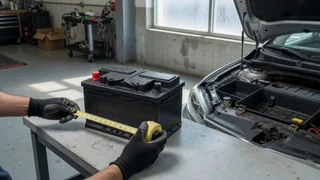
Owner's manual: the specifications section usually lists the battery group, the minimum CCA, or both. The battery in the car: the label on the original or current battery normally shows the group size. Keep in mind that a previous owner or shop may have installed the wrong size. Retailer fitment lookups: enter the full year, make, model, engine and trim. If the tool offers more than one group for your vehicle, find out what separates them, often engine size or a cold-weather option. Physical check: look at the tray, the hold-down style and how far the cables reach. Confirm which side the positive cable comes from before ordering.
If these sources disagree, go with the vehicle manufacturer's specification for your exact configuration. The size that happens to be installed now is less reliable.
Ratings and Features to Compare
Once you know Group 151R is correct, the differences between products come down to the following points.
Specification | What it tells you | How to use it; Cold cranking amps (CCA) | How much current the battery can deliver for engine starting in cold conditions | Meet or exceed the vehicle's minimum. Extra margin helps in cold climates or with an aging starter. Reserve capacity (RC) | How long the battery can support electrical loads if the alternator stops charging | Higher is useful for vehicles with heavy accessory loads or frequent short trips. Amp-hour (Ah) rating | Total stored energy over a set discharge period | Helpful for comparing endurance, though not every 151R label lists it. Battery type | Flooded, enhanced flooded (EFB) or absorbent glass mat (AGM) construction | Match or upgrade the original type. Do not downgrade from AGM or EFB. Terminal type | Post style and placement | Must match your cable clamps and the R layout. Date code | When the battery was manufactured | Buy the freshest stock available. Batteries slowly self-discharge on the shelf. Warranty | Free-replacement period and any prorated coverage | Compare free-replacement length, not just the headline total.
Battery type deserves special attention. Vehicles with start-stop systems or high electrical demand are often designed around AGM or EFB batteries. Putting a standard flooded battery in one of these vehicles can shorten battery life and cause start-stop or electrical faults. Upgrading a conventional system to AGM is usually acceptable. Some vehicles' charging strategies are tuned to a particular battery type, though, so check the owner's information if you are changing types.
When a New Battery Isn't the Real Fix
A battery that failed young, or one that keeps going flat, often points to a problem elsewhere in the electrical system. Installing a new 151R battery without finding that cause can leave you with a second dead battery. The main suspects are listed below.
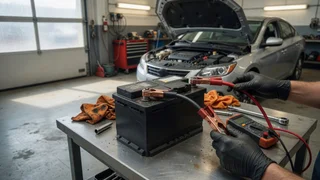
Charging output: the alternator has to restore what starting and driving use up. With the engine running, system voltage at the battery should rise noticeably above resting battery voltage. If it stays at or near resting level, or climbs too high, the alternator or voltage regulation may be faulty. Parasitic draw: some current drain with the key off is normal for clocks, memory and security systems. An excessive draw from a stuck relay, a glovebox or trunk light that stays on, or an aftermarket accessory can flatten a healthy battery overnight or over a few days. Battery terminals and cables: corrosion, loose clamps or damaged cables add resistance. That can mimic a weak battery, with slow cranking and flickering lights, even when the battery is fine. Voltage drop: measuring the voltage lost across a cable or connection while it carries current shows hidden resistance that a resting-voltage check misses. Fuses and wiring: a blown fuse in the charging circuit, or a fuse with the wrong fuse rating installed earlier, can stop charging or cause intermittent faults. The vehicle's wiring diagram identifies the circuits and the correct fuse values.
Many parts stores and repair shops can test the battery, starter and charging system together. Doing this before or at the time of replacement is a practical way to tell a worn-out battery from a symptom of something else, especially if a battery warning light has come on while driving.
Installation Points to Keep in Mind
Disconnect the negative terminal first and reconnect it last. This reduces the risk of a short if a tool touches the body while you work on the positive side. Clean corroded terminals and clamps before fitting the new battery, and make sure the clamps seat firmly. Secure the hold-down. A loose battery can vibrate, which damages the case and internal plates and strains the terminals. Expect some settings, such as radio presets, the clock or idle learning, to reset after the battery is disconnected. A memory saver can preserve them on some vehicles. Some newer vehicles need the new battery registered with the vehicle's computer so charging is adjusted correctly. Check whether yours does before replacing it yourself. Return the old battery for recycling. Many retailers charge a core fee that is refunded when you bring the old one back.
Quick Buying Checklist
Group 151R confirmed for your exact year, market, trim and engine; Reversed (R) terminal layout matches your cable routing; CCA at or above the manufacturer's minimum; Battery type matches or upgrades the original (flooded, EFB or AGM); Recent manufacture date code; Warranty terms compared by free-replacement period; Charging system and parasitic draw checked if the old battery failed early