Weak car battery symptoms
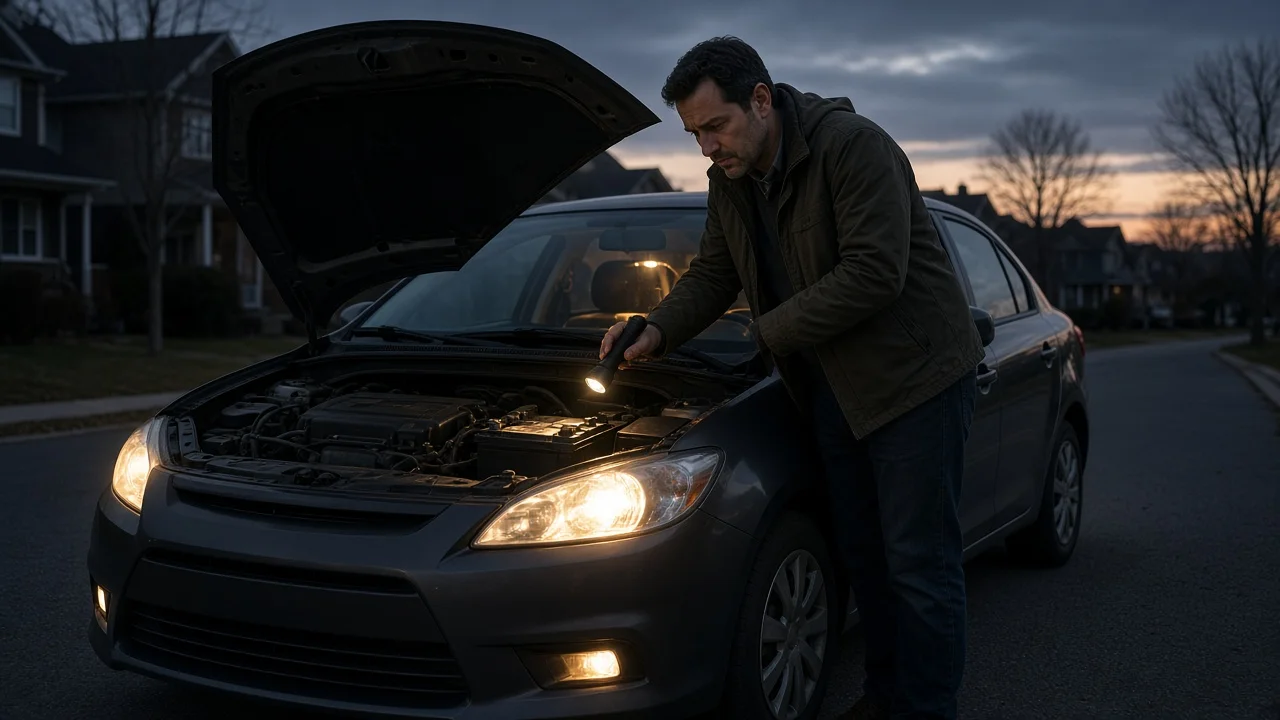
A weak car battery can change how a vehicle behaves long before it refuses to start. Drivers often notice slower cranking, dimmer lights, or electrical accessories that respond strangely. These weak car battery effects tend to appear gradually as available capacity and system voltage fall. Recognizing the early warning signs helps separate a discharged battery from a failing charging output, poor battery terminals, or an unwanted parasitic draw. The following guidance explains which observations are useful, what they can indicate, and how to think about tests without assuming a single component has already failed.
Direct answer
Weak car battery symptoms commonly include an engine that cranks slowly, headlights or interior lamps that dim noticeably during starting or at idle, and accessories such as power windows or the blower fan operating sluggishly. The vehicle may still start when temperatures are mild, but cold mornings or short trips expose the reduced reserve capacity. Clicking or rapid chattering from the starter area can also occur when system voltage is low enough to engage the solenoid without enough current to rotate the engine.
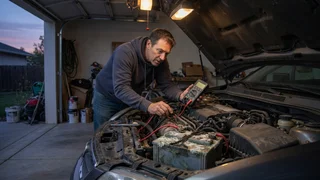
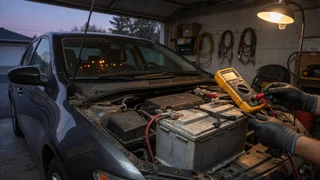
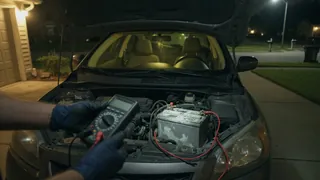
These observations are useful evidence, not a complete diagnosis. A discharged battery can produce the same symptoms as a battery that is nearing the end of its service life, and loose or corroded battery terminals can restrict current even when the battery itself is healthy. The practical first step is to inspect the connections and then measure resting system voltage before and after a charging period, because the reading helps separate a battery that is simply depleted from one that cannot hold usable capacity.
Interpreting symptoms and test results
Voltage readings change meaning depending on when they are taken. A battery that has just been driven or charged may show elevated surface voltage, while a reading taken after the vehicle has sat for several hours is more representative of its resting state. A normal resting measurement does not prove the battery can deliver adequate current under load, and a lower measurement after sitting may point to excessive parasitic draw rather than an internal battery defect.
When dimming or slow cranking continues after the battery has been recharged, the next useful distinction is between energy supply and replenishment. A charging output test shows whether the alternator is supporting the electrical load while the engine is running, while a voltage drop test across battery terminals and main cables can reveal resistance at connections. No single code or voltage number proves a part has failed; the pattern should be interpreted case by case.