Group 78 Car Battery: What the Size Means and How to Confirm It Fits
The short answer
A Group 78 battery is a standard battery size defined by the Battery Council International (BCI). The group number sets the case dimensions, the terminal type and position, and the polarity layout. It does not set the battery's power rating. Group 78 batteries use side terminals, where the cables bolt into threaded ports on the front face of the case instead of clamping onto posts on top. The size is most often associated with General Motors cars, trucks and SUVs, and some other makes also use it.
If your vehicle's owner's manual, its current battery label or a reliable fitment lookup lists Group 78, a Group 78 replacement will physically fit and connect. Three conditions can change that answer: your vehicle needs a specific battery technology such as AGM, it needs a minimum cold cranking amp rating, or a previous owner installed a different group size from the one the vehicle originally used.
What the group number does and does not tell you
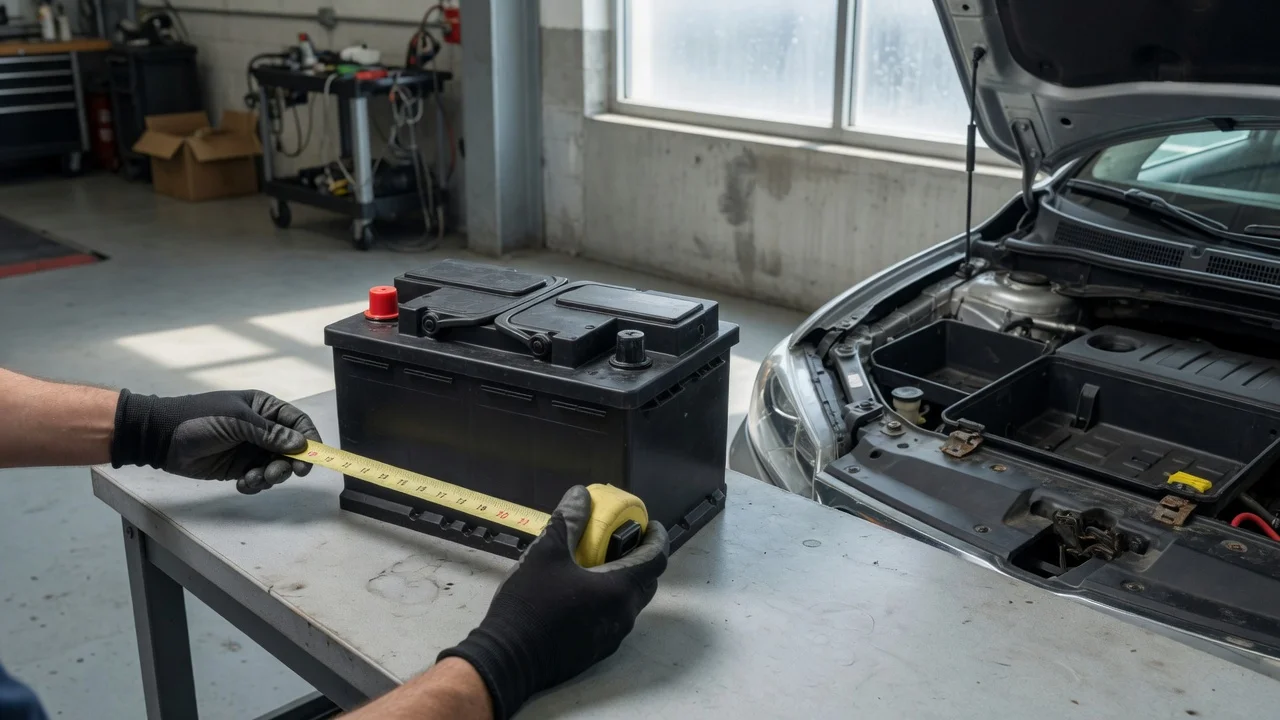
The nominal BCI dimensions for Group 78 are about 10.25 inches long, 7.06 inches wide and 7.69 inches tall (roughly 260 × 179 × 196 mm). Individual brands can differ slightly from these figures, so compare them with the space in your battery tray and the hold-down hardware, especially if the tray or clamp is not original.
Two Group 78 batteries can have very different performance. Before buying, compare these specifications on the label or product listing:
Cold cranking amps (CCA): the current the battery can deliver at 0°F (−18°C) for 30 seconds while staying above a set voltage. It is the main measure of cold-weather starting ability. Choose a rating that meets or exceeds your vehicle's specification. Reserve capacity (RC): how many minutes the battery can supply a steady load if the charging system fails. A higher figure gives more margin for vehicles with heavy electrical demands. Battery technology: conventional flooded lead-acid, enhanced flooded (EFB), or absorbent glass mat (AGM). If the vehicle came with an AGM battery, which is common with start-stop systems, replace it with an AGM. Warranty terms and manufacture date: a fresher battery with a longer free-replacement period is usually the better buy when other specifications are equal.
Side-terminal and dual-terminal versions
A standard Group 78 has side terminals only. Some batteries are sold as dual-terminal versions, often labeled 78DT or similar. These have both side ports and top posts, so one battery can serve vehicles wired for either style. A dual-terminal battery can replace a side-terminal Group 78 as long as the unused posts are covered and cannot touch the hood or nearby metal.
Side terminals use bolts rather than clamps. Reuse the correct bolts, or use bolts of the same length, and tighten them to the specified torque. A bolt that is too long can damage the battery case, and a loose bolt can cause starting or charging faults.
How to confirm Group 78 is right for your vehicle
Check the owner's manual or the label on the installed battery for the group size and CCA rating. Use a fitment lookup that asks for model year, make, model, engine and trim. Battery requirements can change between engines and option packages within the same model. Account for regional differences. Vehicles built for colder markets or fitted with cold-weather packages may specify higher CCA. Check terminal orientation. Confirm the positive and negative terminals line up with your cables without stretching them. If the installed battery is not a Group 78 but a lookup says it should be, find out why before buying. A previous owner may have changed the size, or the lookup may cover a different trim.
Information not covered here
This guide does not list specific model years or vehicles that use Group 78, required CCA figures for particular vehicles, prices, or product availability, because no source data for those details was supplied. Get them from your owner's manual, a dealer parts department or a retailer's fitment tool for your exact vehicle.