Walmart Group 78 Battery: What to Check Before You Buy
The Short Answer
Walmart generally stocks group 78 batteries under its house brand, EverStart, usually in more than one tier, and often in both conventional flooded and AGM versions. A group 78 battery is a reasonable choice if your vehicle actually calls for that group size and the battery meets or exceeds your vehicle's cold cranking amp requirement. Two things change the answer: if your vehicle originally came with an AGM battery, for example on many start-stop models, you should stay with AGM; and if your old battery died early or repeatedly, the charging system may be the real problem, so a new battery alone may not fix it.
What "Group 78" Means
Battery group sizes are an industry standard set by the Battery Council International (BCI). A group number defines the case dimensions, terminal type and terminal placement, so that a battery fits the tray, hold-down and cables in a given vehicle. It does not define power output, chemistry or quality. Two group 78 batteries can differ a lot in cranking power, reserve capacity and expected lifespan.
Group 78 batteries use side-post terminals: threaded connection points on the side of the case, rather than round posts on top. This layout is common in many General Motors cars, trucks and SUVs, and appears in some other makes as well. Because side terminals bolt directly to the cable ends, a top-post battery of similar size is not a drop-in substitute.
Group 78 vs. 78DT
You may also see a 78DT label. The DT stands for dual terminal, meaning the battery has both side terminals and top posts. A dual-terminal battery can fit vehicles that use either style, which is convenient for some trucks, boats or accessory setups. For a standard passenger vehicle that uses side terminals, a plain group 78 works. A 78DT is also fine if it fits the space, but the unused top posts should be capped so they cannot short against the hood or nearby metal.
Confirm That Group 78 Fits Your Vehicle
Do not assume the group size from the make alone. The correct battery can vary by model year, engine, trim and factory options, and the same model may use different batteries in different markets. Use at least two of these checks before buying:
Read the label on your current battery, which usually shows the group number, CCA rating and whether it is AGM. Check the owner's manual specifications section for the required group size and minimum CCA. Use Walmart's online or in-store battery fitment lookup with your exact year, make, model and engine. Look at the terminal style under the hood: side bolts point to group 78 or a similar side-terminal size, while top posts point to a different group. Note whether a previous owner installed a non-original battery, since the battery currently in the car may not be the factory size.
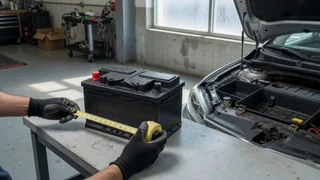
If the label, the manual and the fitment lookup disagree, follow the owner's manual or the dealer's parts department for your vehicle identification number (VIN). A battery that is slightly too tall can contact the hood, and one that is too small may not seat securely under the hold-down.
Specifications That Matter When Comparing Options
Once you know group 78 fits, compare the batteries on the shelf by their ratings and terms rather than by price alone. The table below explains what each label item means and how to use it.
Specification | What it means | How to use it; Cold cranking amps (CCA) | Current the battery can deliver at 0°F for 30 seconds while holding a usable voltage | Meet or exceed your vehicle's requirement; more matters most in cold climates; Reserve capacity (RC) | Minutes the battery can supply a steady load if the alternator stops charging | Higher is helpful for vehicles with heavy electrical loads or frequent short trips; Battery type (flooded or AGM) | Construction: conventional liquid electrolyte or absorbed glass mat | Replace AGM with AGM; flooded is acceptable only where the vehicle was designed for it; Date code | When the battery was manufactured | Choose the freshest stock available, since batteries slowly self-discharge on the shelf; Warranty terms | Free-replacement period and any prorated period afterward | Compare the free-replacement length, not just the total warranty length; Core charge | Refundable deposit added until you return an old battery | Bring the old battery or return it later to recover the charge
Flooded vs. AGM
A conventional flooded battery is usually the less expensive option and works well in vehicles designed for it. An AGM battery holds its electrolyte in glass mats, which makes it more resistant to vibration and better suited to repeated deep discharges and the frequent restarts of start-stop systems. Many newer vehicles with start-stop or heavy electrical demand require AGM. Putting a flooded battery in one of these vehicles can shorten battery life and may cause electrical warnings. Upgrading a flooded-battery vehicle to AGM is generally acceptable, but it costs more and is not always necessary.
Choosing a Tier
Walmart's battery lineup is typically split into tiers that differ in ratings and warranty coverage. A higher tier usually offers higher CCA or reserve capacity and a longer free-replacement period. If you plan to keep the vehicle for several years, live in a cold climate, or run accessories, the higher-tier or AGM option is often the better long-term value. If you are selling the vehicle soon or it sees light use in a mild climate, a lower tier that still meets the CCA requirement may be enough. Check the label and warranty card on the specific battery you are buying, since ratings and terms can change over time.
Buying and Installation Considerations
Availability: Stock varies by store, so check availability online or by phone before making a trip, especially for AGM versions. Installation: Many Walmart Auto Care Centers install batteries. Confirm whether your location offers the service and whether your vehicle's battery location, such as under a seat or in the trunk, is something they handle. DIY replacement: Side-terminal batteries use bolts that should be snug but not overtightened, since the threads can strip. Disconnect the negative cable first and reconnect it last. Memory and resets: Some vehicles lose radio presets, window auto-up settings or idle learning when the battery is disconnected. A memory saver can help, and some vehicles need a relearn procedure afterward. Battery registration: Certain newer vehicles must be told that a new battery was installed so the charging system adjusts correctly. Check your owner's manual or a dealer if your vehicle has a battery management system. Receipt and warranty: Keep your receipt, since it is usually needed for a warranty claim.
Make Sure the Battery Is Actually the Problem
A new battery will not fix a weak alternator, a corroded cable or a parasitic drain, which is an electrical component that keeps drawing power after the vehicle is off. If you replace the battery without checking these, the new one can go flat or wear out early. Signs that point beyond the battery include:
A battery or charging warning light on the dash while driving. Headlights or interior lights that dim and brighten with engine speed. A battery that tests good but keeps going dead overnight or after a few days of sitting. Repeated battery failures well before the expected lifespan. White or green corrosion on terminals, or loose and damaged cable ends.
Many auto parts stores and service centers can test the battery, alternator output and starter draw. Having this done before buying, or right after installing a new battery, tells you whether the charging system is keeping the battery properly charged.
Quick Pre-Purchase Checklist
Group 78 confirmed for your exact year, model and engine. Side-terminal layout matches your cables, or a capped 78DT if needed. CCA meets or exceeds the owner's manual requirement. AGM chosen if the vehicle came with AGM or has start-stop. Fresh date code on the battery. Free-replacement warranty period understood. Old battery ready to return for the core refund. Charging system checked if the old battery failed early.