Group 51R Car Battery
The short answer
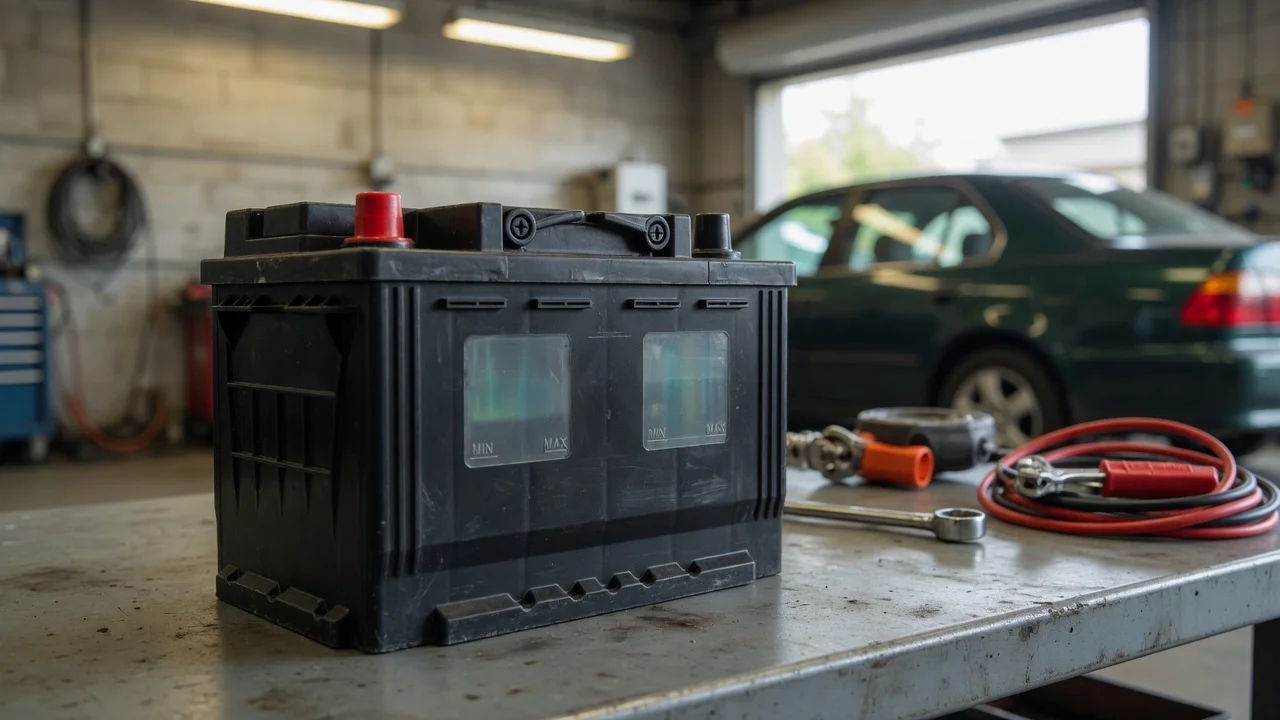
Group 51R is a battery size standard set by the Battery Council International (BCI). The group number defines the battery's case dimensions, terminal type and terminal placement. The R means the terminal positions are reversed compared with a standard Group 51 battery. If your vehicle's owner's manual, or the label on the battery it came with, calls for Group 51R, a 51R battery from any brand should fit the tray and reach the cables. Several conditions can change that answer, and they are covered below.
Why the R matters
A Group 51 and a Group 51R battery share the same case size, but their positive and negative terminals sit on opposite sides. Your car's battery cables are cut to reach the terminals in one specific layout. If you fit the wrong one, the cables may not reach, may be stretched or may sit too close to metal parts. Treat 51 and 51R as different parts, even though they look almost the same on the shelf.
Conditions that change the answer
Model year, trim and powertrain: the same model can use different battery groups across years, engines or markets. Confirm the group for your exact vehicle rather than relying on the model name alone. Start-stop and other electrical systems: vehicles with automatic engine start-stop often need an AGM (absorbent glass mat) or EFB (enhanced flooded battery) type. A conventional flooded battery of the same group size may not suit them, even though it fits physically. Check the original battery's type as well as its size. Cold cranking amps (CCA): CCA measures how much current a battery can deliver for starting in cold weather. Two 51R batteries can have different CCA ratings. Choose one that meets or exceeds the figure in your owner's manual, especially in a cold climate. Previous replacements: if a past owner fitted a different group, the battery now in the car may not match the factory specification. The owner's manual is the more reliable reference.
How to confirm the fit before buying
Check the battery section of your owner's manual for the specified group size, type and minimum CCA. Read the label on your current battery for its group number, type (flooded, EFB or AGM) and CCA rating. If the two disagree, go with the manual, or ask a dealer service department to confirm using your VIN. When shopping, compare the replacement's group number, terminal layout, type and CCA with your requirements. Do not choose by appearance.
Buying a 51R from an auto parts retailer
Chains such as AutoZone typically let you look up batteries by year, make and model, which narrows the choice to batteries listed for your vehicle. Treat that result as a starting point. Check it against your owner's manual, particularly for start-stop vehicles or cars with more than one engine option. No pricing, stock or warranty details were available for this article, so confirm those directly with the retailer. Ask too whether they take back your old battery, since lead-acid batteries need proper recycling.
What this article does not cover
No source material was supplied with exact Group 51R dimensions, a list of compatible vehicles, CCA ranges, prices or retailer availability, so none are given here. For exact measurements, use the BCI group size chart or the manufacturer's spec sheet for the battery you are considering. For compatibility, rely on your owner's manual or a VIN-based lookup.