Group 51R Car Battery: What It Means and What to Check Before You Buy
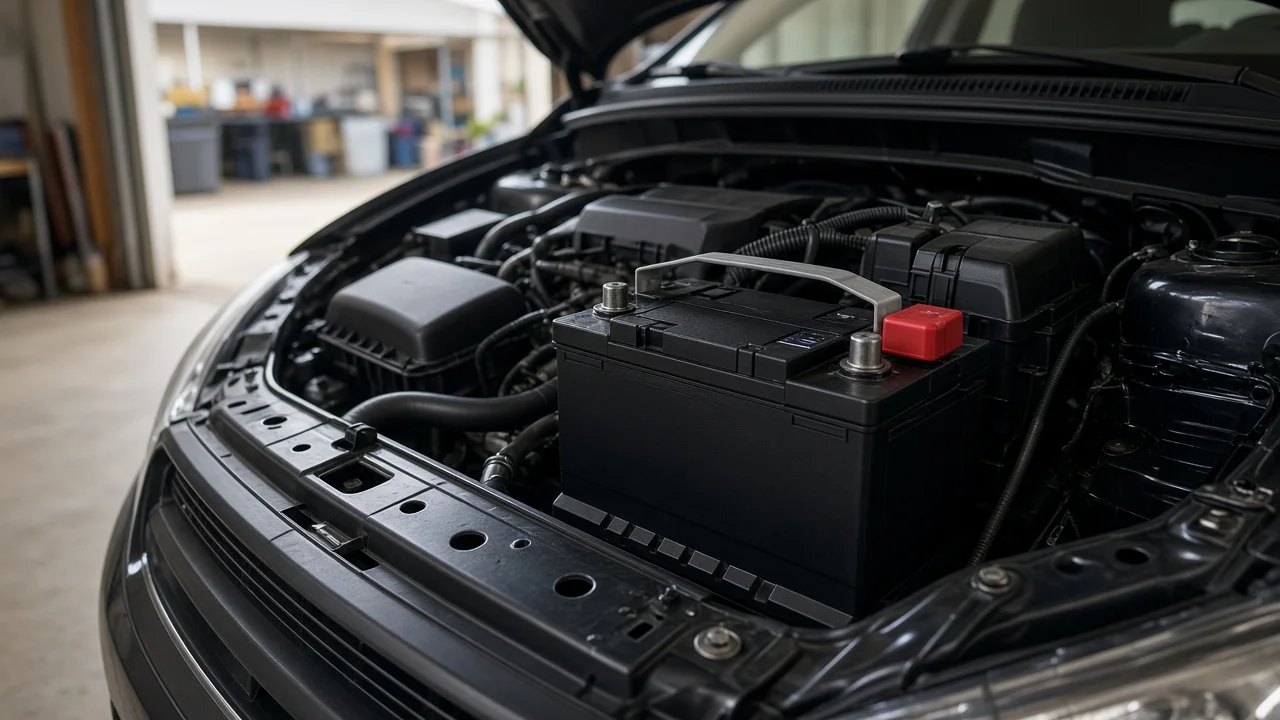
A Group 51R battery is a compact automotive battery built to a standard case size set by the Battery Council International (BCI). The "R" means the terminals are reversed compared with a standard Group 51, so the positive and negative posts sit on opposite sides. If your owner's manual, the label on your current battery, or a reliable fitment lookup for your exact vehicle calls for 51R, buy a 51R. A Group 51 has the same case but will not connect correctly in a vehicle designed for 51R. The one condition that changes this answer is a vehicle with start-stop or a factory AGM battery. In that case you also need a 51R of the correct type, not just the correct size.
What the Group 51R Designation Tells You
BCI group numbers describe a battery's physical package. That covers its outer dimensions, terminal placement and terminal polarity layout. The group number does not tell you how powerful the battery is, how long it will last, or what internal technology it uses. Two 51R batteries can look the same on the outside and still differ a lot in cold-cranking amps, reserve capacity and warranty.
Group 51R is a small, narrow case compared with many common sizes. It is commonly specified for compact and midsize vehicles whose battery trays have little spare room. Because the tray, hold-down bracket and cable lengths are all designed around that footprint, a bigger battery usually won't fit, even if it seems like an upgrade.
Group 51 vs. Group 51R
Feature | Group 51 | Group 51R; Case size | Same footprint and height | Same footprint and height; Terminal layout | Standard orientation | Positive and negative posts swapped; Interchangeable? | Only in vehicles specified for 51 | Only in vehicles specified for 51R
Installing the wrong one usually shows up right away. The cables may not reach their posts, or they may need to be stretched across the battery. That is a real hazard: a positive cable routed the wrong way can touch the hood, the hold-down or other metal and cause a short. Do not turn the battery around in the tray to make it fit. That changes how it sits against the hold-down and the vent, and it rarely puts the cables where they belong.
Which Vehicles Use a 51R Battery
Group 51R is often specified for many compact Honda and Acura models, and it also appears in some Mazda, Nissan and other vehicles. Fitment is not consistent across a whole brand or even a whole model line. It can change with model year, engine, trim, market, and whether the vehicle has start-stop. A car that used 51R in one generation may use a different group size in the next.
Confirm the size for your specific vehicle in one or more of these ways:
Check the battery section of the owner's manual. Read the group number printed on the label of the battery currently installed, if it is the original or a known-correct replacement. Use a retailer's or battery maker's fitment lookup, and enter the exact year, make, model, engine and trim. If these sources disagree, go by the manual or ask a dealer parts counter using your vehicle's VIN.
Specifications to Compare Between 51R Batteries
After you've confirmed 51R is the right size, the remaining choices are about performance, technology and value. These are the figures and details worth comparing:
Specification | What it means | How to use it; Cold-cranking amps (CCA) | Current the battery can deliver for engine starting at a cold test temperature | Meet or exceed your vehicle's requirement; extra margin helps most in cold climates; Reserve capacity (RC) | How long the battery can power essential loads if the charging system stops working | Higher is better for vehicles with many electronics or frequent short trips; Amp-hours (Ah) | Total stored energy over a rated discharge period | Useful for comparing AGM and start-stop batteries, where it is often listed; Battery type | Flooded, enhanced flooded (EFB) or absorbent glass mat (AGM) | Match the factory type at minimum; do not downgrade from AGM; Terminal style | Shape and size of the posts | Make sure the posts fit your vehicle's cable clamps; Manufacture date | When the battery was built, usually shown as a date code | Choose a recently made battery; older stock may have self-discharged; Warranty | Free-replacement period and any prorated period after it | Compare the free-replacement period, not just the total length
Cold-Cranking Amps
CCA is the number most shoppers focus on. Your vehicle has a minimum requirement, and a battery that meets or exceeds it will start the engine in the conditions it was designed for. Going higher does not hurt the vehicle. It gives you more margin in harsh winters or as the battery ages. In a mild climate, paying extra for the highest-CCA 51R often brings little practical benefit.
Flooded, EFB or AGM
Flooded batteries are the traditional, lower-cost option and suit many older or simpler vehicles. EFB batteries are a sturdier flooded design meant for some entry-level start-stop systems. AGM batteries hold their electrolyte in glass mats. They handle repeated deep cycling better, resist vibration and are spill-resistant. They usually cost more.
If your vehicle came with an AGM or EFB battery, replace it with the same type or better. A standard flooded battery in a start-stop vehicle tends to wear out early and can cause the start-stop feature to switch itself off. If your vehicle came with a flooded battery, an AGM 51R is an optional upgrade, not a requirement. It can make sense if you make many short trips, run aftermarket electronics, or plan to keep the car a long time.
Freshness and Warranty
Batteries slowly lose charge on the shelf, so a recently made unit is a better starting point. The date code is usually on a sticker or stamped into the case. Formats differ by manufacturer, so ask the seller to decode it if it's unclear. For warranties, the free-replacement period matters more than the headline total. A prorated period only gives you partial credit toward a new battery.
Buying a 51R Battery at AutoZone or Another Parts Store
Large auto parts chains such as AutoZone typically stock 51R batteries in more than one product tier, often with different CCA ratings, technologies and warranty lengths. Their vehicle lookup tools can confirm fitment, but enter your exact engine and trim, and check the result against your current battery label or manual.
A few practical points apply at most parts stores:
Many stores offer free battery and charging-system testing. Getting a test before you buy can confirm whether the battery is actually the problem. A core charge is commonly added to the price and refunded when you return the old battery. Bringing the old battery with you, or returning it soon after, avoids paying extra. Some stores will install the battery for free on vehicles where it's easy to reach. Policies vary by location and vehicle. Compare tiers by CCA, type and free-replacement warranty instead of by product name. Keep your receipt or make sure the purchase is recorded to your account, since warranty claims usually require proof of purchase.
Make Sure the Battery Is Really the Problem
Slow cranking, a no-start or a battery warning light does not always mean the battery has failed. A weak alternator can leave a good battery undercharged. A parasitic draw, meaning something that keeps drawing power after the car is off, can drain a healthy battery overnight. Loose or corroded terminals can mimic a dead battery. If you replace the battery without checking these first, the new one may fail the same way.
Common signs that point beyond the battery:
A battery or charging warning light that stays on while driving. Headlights or dash lights that dim and brighten with engine speed. A new or recently tested battery that keeps going flat. Visible corrosion, loose clamps or damaged cables at the terminals.
A charging-system test checks the battery, alternator output and starter draw together. That is the most direct way to decide whether you need a battery, an alternator, or an electrical diagnosis.
Installation Notes
Swapping a 51R battery is usually straightforward, but a few steps matter. Disconnect the negative cable first and the positive cable second. Reconnect in the opposite order: positive first, then negative. Clean any corrosion from the cable clamps, seat the battery fully in the tray, and tighten the hold-down so the battery cannot move. A loose battery can be damaged by vibration or shift into contact with metal.
Disconnecting the battery can reset radio presets, the clock and learned idle or transmission settings. Some older vehicles, including certain Honda models, have anti-theft radios that need a code after power is restored, so find that code before you start. A memory-saver device can keep these settings during the swap. Some newer vehicles also need the new battery registered with the vehicle's computer. Check your manual or ask the installer if your vehicle has start-stop or an advanced battery management system.
Quick Checklist Before You Buy
Confirm that Group 51R, not Group 51, is correct for your exact year, make, model, engine and trim. Meet or exceed your vehicle's CCA requirement, with extra margin if you live somewhere cold. Match the factory battery type, and use AGM or EFB where the vehicle requires it. Check the date code and choose a recently made battery. Compare the free-replacement warranty period, not just the total coverage. Plan to return your old battery for the core refund. If the old battery failed early, have the charging system tested so the new battery doesn't fail the same way.