AGM battery venting

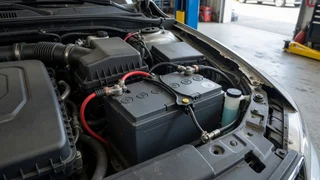
AGM battery venting raises an important question for anyone using an absorbent glass mat battery under the hood, in a trunk, or inside a passenger cabin. These valve-regulated lead-acid batteries are designed to recombine gases internally during normal charging, but they still include a pressure-release path for unusual conditions. Understanding when and why an AGM battery vents helps owners place the battery safely, inspect charging-system health, and recognize the difference between expected sealed operation and a warning sign such as overheating, overcharging, or a failed voltage regulator.
Essential answer
An AGM battery is a valve-regulated lead-acid design that normally keeps its electrolyte absorbed in fiberglass mats between the plates. Under ordinary operation, oxygen and hydrogen produced during charging are recombined inside the case instead of escaping. Because the chemistry is sealed in routine use, the battery does not require a traditional open vent or regular watering. The key qualifier is that a pressure-relief valve still exists, and it opens only if internal pressure rises beyond the designed limit.
For practical vehicle use, the battery should be treated as sealed but not completely gas-tight in every failure condition. The venting path is small and is intended for abnormal pressure, so it may release a limited amount of gas if the charging output is too high, the battery is overheated, or the case is damaged. That distinction matters when owners choose a mounting location or inspect battery terminals, wiring, and charging voltage after noticing a sharp or sulfur-like odor near the case.
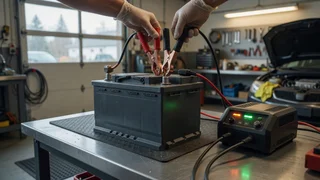
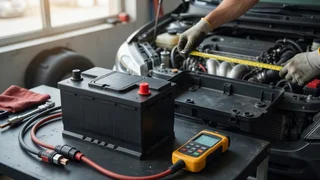
A measured approach starts with confirming whether the battery actually vented or the smell came from another part of the electrical system. Owners can check the case for dust, moisture, or staining around the pressure-relief area and inspect the battery terminals for heat damage or corrosion. A voltage check at the posts can help identify a charging output that is pushing system voltage too high, while a voltage-drop test or a look at the wiring diagram may reveal resistance that confuses the regulator.
Because manufacturer-dependent behavior can vary, a venting event is best treated as evidence to interpret rather than proof that one component has failed. The alternator, voltage regulator, temperature conditions, parasitic draw, and fuse rating of linked circuits can all influence how hard the battery works. If the case is swollen, hot, or repeatedly releasing gas, the next step is to verify vehicle-specific charging parameters before relying on the battery or placing it in an enclosed area.