Gas With or Without Ethanol: Choosing Compatible Fuel for Your Car
Most drivers in the United States fill up with ethanol-blended gasoline without realizing it, because blends containing up to 10 percent ethanol are the standard fuel at most stations. Whether to choose gas with ethanol or go out of your way to find ethanol-free fuel depends mainly on what you are fueling, how long the fuel will sit, and what the manufacturer specifies. This guide explains the main fuel types, how they differ, and how to pick the right one for your vehicle.
The Short Answer
For most modern cars and light trucks, ordinary gasoline with up to 10 percent ethanol (E10) is fully compatible and is what the vehicle was designed to run on. Ethanol-free gas is not required for these vehicles and usually costs more, though it can deliver slightly better fuel economy. Ethanol-free fuel is most worth considering for older classic cars, small engines, boats and equipment that is stored for long periods. Higher blends such as E15 and E85 are only appropriate for vehicles approved to use them.
The one qualification that changes the answer for any individual vehicle is the manufacturer's fuel recommendation. The owner's manual, and often a label inside the fuel door, states the maximum ethanol content and the minimum octane rating the engine expects. That guidance takes priority over general advice.
What Ethanol Blends Are Sold at the Pump
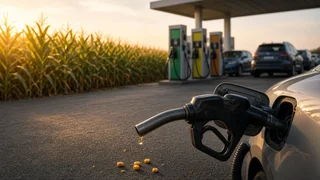
Ethanol is an alcohol, typically made from corn in the United States, that is blended into gasoline. The number after the letter E indicates the maximum percentage of ethanol in the blend. Pump labeling is the most reliable way to know what you are buying, since the fuel grade name alone does not always reveal ethanol content.
E0 (ethanol-free): pure gasoline with no added ethanol. Often sold at a limited number of stations, marinas or as a separate pump, sometimes labeled as recreational fuel. E10: up to 10 percent ethanol. The most common gasoline in the US and approved for virtually all gasoline cars on the road today. E15: up to 15 percent ethanol. Approved by federal regulators for model year 2001 and newer light-duty cars, light trucks and SUVs, as well as flex-fuel vehicles. Pumps typically carry a distinctive warning label, and it is not permitted in motorcycles, boats, small engines or older vehicles. E85 (flex fuel): a high-ethanol blend whose ethanol content varies by season and region, generally ranging from about half to well over three-quarters ethanol. Only flex-fuel vehicles designed for it should use it.
How Ethanol Affects Octane, Mileage and Engine Parts
Octane
Octane rating measures a fuel's resistance to knock, the uncontrolled ignition that can occur under high compression. Ethanol has a high octane value, so refiners often blend it in to help gasoline reach its posted octane number. A gallon of 87 octane E10 and a gallon of 87 octane ethanol-free fuel are both rated to provide the same knock resistance. What matters for your engine is meeting the octane rating the manufacturer recommends; ethanol content and octane are related but separate choices.
Fuel Economy
Ethanol contains less energy per gallon than gasoline. As a result, a vehicle running on E10 generally travels slightly fewer miles per gallon than it would on ethanol-free gas, and the difference grows with higher blends. For E10 the reduction is small and may be hard to notice in everyday driving. With E85, the drop in mileage is much more noticeable, which is why its price per gallon needs to be meaningfully lower to break even on cost per mile.
Materials and Storage
Ethanol attracts and absorbs water and can act as a solvent. In vehicles built to handle it, fuel lines, seals, pumps and tank materials are designed with this in mind. In older vehicles, some rubber, cork, plastic and metal fuel-system components may degrade, swell or corrode over time when exposed to ethanol. Fuel that sits unused for months can also absorb enough moisture for water and ethanol to separate from the gasoline, a process called phase separation, which can cause hard starting and rough running.
Comparing Gas With and Without Ethanol
Criterion | Ethanol-blended gas (E10) | Ethanol-free gas (E0); Compatibility with modern cars | Designed for and approved by manufacturers | Compatible, but not required; Availability | Sold at nearly all US stations | Limited; varies by region; Typical price | Usually the lower-cost option | Usually priced higher; Fuel economy | Slightly lower | Slightly higher; Long-term storage | More prone to moisture absorption and phase separation | More stable when stored; Older and classic vehicles | May affect older fuel-system materials | Often preferred; Small engines and boats | Generally permitted up to E10, but more sensitive to storage issues | Often preferred, especially for seasonal use
When Each Option Makes Sense
Choose Regular Ethanol-Blended Gas If
You drive a modern car or light truck that is used regularly. Your owner's manual permits E10, or E15 for compatible model years. You want the lowest price per gallon and the widest availability. The fuel will be used within a normal period rather than stored for months.
Consider Ethanol-Free Gas If
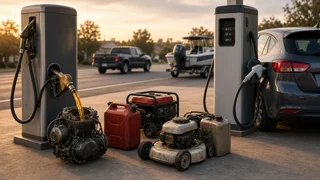
You own a classic or vintage vehicle whose original fuel system was not designed for ethanol. The vehicle, motorcycle, boat or equipment will sit unused for extended periods, such as over winter. You are fueling small engines like lawn mowers, chainsaws, generators or outboard motors, where manufacturers often favor ethanol-free fuel. You want slightly better mileage and are willing to pay the price difference.
Use E15 or E85 Only If
Your vehicle is approved for it. E15 is suitable for 2001 and newer light-duty vehicles, though some manufacturers' manuals for certain model years may specify a lower limit, so the manual remains the deciding reference. E85 should be used only in flex-fuel vehicles, which are typically identified by a badge on the vehicle, a yellow fuel cap or ring, or a note in the owner's manual. Putting E85 in a non-flex-fuel vehicle can cause drivability problems and may damage fuel-system components.
How to Confirm the Right Fuel for Your Vehicle
Check the owner's manual for the maximum ethanol content and minimum octane rating. Look inside the fuel door or at the fuel cap for a fuel label or flex-fuel marking. Read the pump labels, which state the ethanol content and octane before you fill. For older vehicles or equipment, follow any guidance from the manufacturer or a qualified specialist about fuel-system compatibility. If fuel will be stored, consider ethanol-free gas or a fuel stabilizer as recommended for the equipment.
Bottom Line
For the vast majority of everyday drivers, gas with up to 10 percent ethanol is the right, compatible and economical choice. Ethanol-free fuel earns its higher price mainly in classic cars, small engines, marine use and anything that sits for long stretches. Higher ethanol blends are a valid option only when your vehicle is specifically approved for them. When in doubt, the manufacturer's stated fuel requirements are the final word.