Fuel Injector Replacement Cost: What Determines the Price
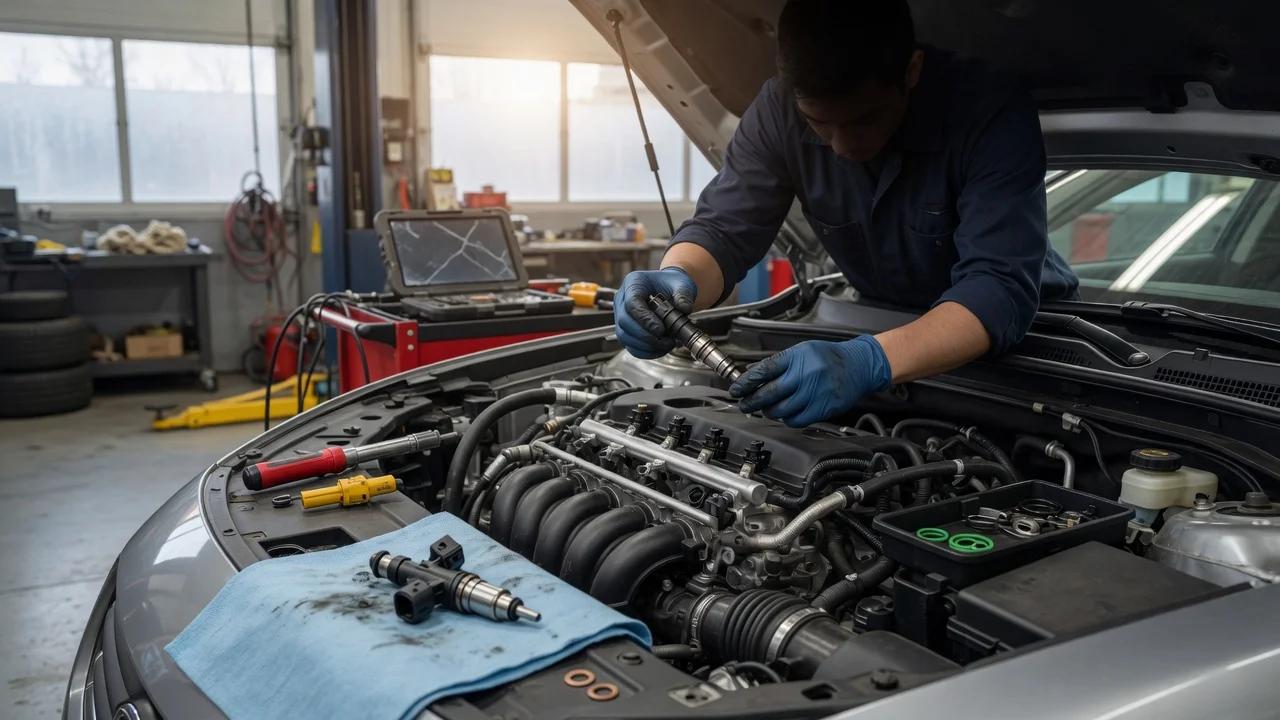
What fuel injector replacement typically costs
There is no single price for fuel injector replacement. The bill is set by how many injectors you replace, whether the engine uses port injection, gasoline direct injection, or diesel injection, how hard the injectors are to reach, and whether the shop is quoting parts only or a complete repair. This article does not quote a current market figure, currency, or completed-transaction average, because those numbers depend on the vehicle, the local labor market, and the date of the quote. Treat any advertised parts price as incomplete until labor, related seals, and diagnostic time are included.
A fuel injector meters fuel into the engine as a spray. On most modern cars it is an electrically controlled valve on the fuel rail or in the cylinder head. Replacement cost rises when the injector itself is a high-pressure, precision part, when several cylinders share the same wear, or when the shop must remove the intake manifold, fuel rail, or other components to reach it.
What actually determines the price
Parts and labor move independently. The injector (or set of injectors) is one line item. Diagnosis, removal, installation, new seals or O-rings, and a post-repair check are another. A cheap injector on a hard-to-reach engine can still produce a large invoice. An expensive injector on an engine with easy rail access can do the same for the opposite reason.
How many injectors you replace
One failed injector is not always a one-injector job. Shops often recommend replacing injectors as a set when mileage is high, when remaining injectors are the same age and design, or when the manufacturer treats them as a matched group. Replacing only the failed unit can be the lower immediate cost. Replacing the set can be the lower risk of a second labor bill if another injector fails soon after. Ask the quote to show both options: one injector versus the full set, with labor listed once rather than assumed twice.
Engine and injection type
Port-injected gasoline engines generally use lower-pressure injectors that sit in the intake tract. Gasoline direct-injection engines use higher-pressure injectors that spray into the combustion chamber and often cost more to buy and to install. Diesel injectors operate at still higher pressure and are commonly the most expensive of the three to replace, especially when coding, calibration, or a high-pressure pump inspection is part of the job. Hybrid and turbocharged layouts can add access time even when the injector itself is a common part.
Vehicle make, model year, trim, and exact engine code, because injector part numbers are not interchangeable across powertrains. Port injection versus gasoline direct injection versus diesel common-rail, which changes both part price and labor. Whether the injector is a dealer genuine part, a branded aftermarket unit, or a remanufactured core, each of which can carry different warranties and flow-matching claims. Cylinder count, because a V6 or V8 multiplies parts even when labor is not fully proportional. Access: some engines require intake-manifold or fuel-rail removal; others allow rail work with less disassembly.
Labor, location, and who does the work
Labor is billed by time and shop rate. Time depends on access, seized fasteners, broken clips, and whether the shop must replace intake gaskets, fuel-rail seals, or a high-pressure line that was disturbed. Independent shops, specialist fuel-injection shops, and franchised dealers often quote different hourly rates and different parts sources for the same vehicle. Geographic market also matters: the same job in a high-cost urban area will usually price higher than in a lower-cost region, even when the parts are identical. A quote that lists hours and the hourly rate is easier to compare than a single lump sum.
Work that often rides along on the invoice
Injector replacement frequently includes items that are not the injector. New O-rings and seals are normal. Intake-manifold gaskets, fuel-rail bolts, and high-pressure line seals may be required if those joints were opened. Some gasoline direct-injection and diesel jobs include injector coding to the engine control unit. Shops may also quote a fuel-system clean, a new fuel filter, or a pressure-pump check when contamination is suspected. Those add-ons can be justified; they can also inflate a quote. Ask each extra line to be labeled as required for the repair, recommended because of condition found, or optional.
What to check before you approve the job
Confirm that the injector is the part that needs replacing, not only that a misfire, rough idle, poor fuel economy, or a fuel-trim code is present. A diagnostic trouble code can point at a cylinder or at a fuel-delivery problem without proving the injector is failed. Ask what tests were run: injector contribution or balance, fuel-rail pressure, leak-down, electrical resistance or driver circuit checks, and whether a scan showed a specific cylinder misfire that followed the injector rather than a coil, plug, compression issue, or vacuum leak.
Match the part to the vehicle
Injector compatibility is specific. The correct part depends on model year, market, trim, and engine, and sometimes on mid-year running changes. A visually similar injector from another engine can have a different flow rate, connector, spray pattern, or high-pressure seal. Before you buy a part yourself or approve a shop’s part number, match it to the vehicle identification number or to the engine code on the quote. If a listing does not state the applicable years, engines, and injection type, treat it as unverified.
Read the quote as a total ownership cost
Compare quotes on the same scope. One shop may price a single injector and reuse old seals. Another may price a full set, new seals, coding, and a road test. The lower number is not automatically the better value. Ask whether tax, diagnostic time already spent, programming, and a follow-up check are included. Ask whether a core charge applies on remanufactured injectors and whether that charge is refunded when the old unit is returned. Ask how long the parts and labor warranty lasts and whether it covers a repeat leak or a coding failure.
Written diagnosis that names the failed injector or injectors and the tests that support that conclusion. Part brand, new versus remanufactured, and the exact part number tied to your engine. Labor hours, shop rate, and whether intake, rail, or coding time is included. Related parts: seals, gaskets, clips, fuel filter, and any pump or rail work. Warranty length for parts and for labor, including conditions that void it. Whether continued driving is advised only to the shop, or whether the vehicle should be towed if it is leaking fuel, stalling, or misfiring badly.
When a lower-cost path is still reasonable
Cleaning or servicing injectors is sometimes offered as an alternative to replacement. It can help when deposits are the problem and the injector still meters correctly. It does not restore a cracked body, a failed electrical coil, a damaged nozzle, or an internal leak. If the shop cannot show that the injector failed a functional test, a clean-and-retest step may be cheaper than replacement. If the injector has already failed electrically or is leaking fuel externally, replacement is the repair, and further cleaning delays the cost rather than reducing it.
Gaps in the figures you may see elsewhere
National “average cost” ranges circulating in buyer guides are often advertised or estimated shop prices, not completed invoices, and they rarely state the market, currency, date, engine type, or whether one injector or a full set is included. Without those details, a range cannot be checked against your vehicle. The reliable next step is a written quote for your specific make, model year, engine, and injection type, with diagnosis attached, so you can decide between replacing one injector, replacing the set, or paying for more testing before any parts are ordered.