Bad fuel injector symptoms

A car with bad fuel injectors rarely fails silently. The first clues often appear as a rough idle, a stumble under acceleration, or a check engine light that suggests the air-fuel mixture has drifted outside expected limits. Fuel injectors are precision valves that spray pressurized fuel into the intake stream or combustion chamber, and even a small restriction, leak, or electrical fault changes how much fuel reaches each cylinder. Those delivery errors force the engine computer to adjust fuel trim, and the corrections show up as driveability problems before a complete no-start occurs.
Direct answer
A car with bad fuel injectors typically shows uneven combustion because one or more cylinders receive too much or too little fuel. Drivers may notice a misfire, rough idle, hesitation when accelerating, reduced fuel economy, or a fuel odor from unburned gasoline. The problem can be mechanical, such as a clogged nozzle or leaking pintle, or electrical, including high resistance or an open coil inside the injector. Because several fuel system components produce overlapping signs, the injectors should not be condemned until basic fuel pressure, filter condition, and ignition health have been considered.
The scope also depends on engine configuration. A single weak injector may cause one cylinder to misfire, while several restricted injectors can make the whole engine feel sluggish. Port injection and direct injection engines expose the injector to different heat, pressure, and deposit conditions, so the most likely failure mode varies. A fuel pressure drop under load can imitate a restricted injector, and a dirty fuel filter can starve the injector rail. Identifying the injector as the true cause requires matching a specific cylinder symptom or electrical reading to an injector, not to the shared fuel supply.
Interpreting symptoms and test results
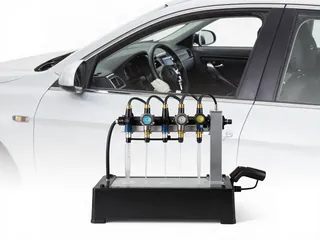
A misfire code for one cylinder is useful but not proof of a dead injector. The same code can appear with a fouled spark plug, a weak ignition coil, low compression, or a vacuum leak near that intake runner. The discriminating step is to compare cylinder behavior after swapping components, or to measure injector resistance and listen for a sharp clicking during operation. A silent injector may still have a good coil, so the wiring and driver signal should also be confirmed. A leak check can reveal whether fuel is dripping when the injector should be closed, which produces a rich mixture and possible long cranking after a hot soak.
Fuel trim readings help separate an injector problem from a supply problem. If the engine computer is adding fuel across both banks, the likely cause may be low fuel pressure from a weak fuel pump or a restricted fuel filter. If fuel trim is abnormal mainly on one bank or one cylinder, attention shifts to that injector or an intake leak around that cylinder. A leak check of the rail and injector seats can identify external fuel smells, while a running balance test that briefly disables individual injectors can expose a cylinder that barely changes speed because the injector was already contributing little fuel.