Fix a Hydrolocked Engine: What to Check and When to Stop
The short answer
A hydrolocked engine can sometimes be recovered, but only if the engine stopped before liquid in a cylinder caused internal damage. Hydrolock (hydrostatic lock) happens when liquid such as water, coolant or fuel fills enough of a cylinder that the piston cannot complete its compression stroke. Unlike air, liquid does not compress, so the engine either stops abruptly or refuses to turn over.
The general fix is to stop trying to start the engine, remove the liquid from the cylinders, find and correct the source, replace contaminated oil and intake parts, and then test the engine's mechanical condition before relying on it. Whether that is enough depends on what happened when the engine locked. If it was running at speed, components such as connecting rods may already be bent or broken, and draining the cylinders will not repair that.
Exact procedures vary by engine design, fuel type and vehicle. Access to spark plugs, glow plugs or injectors, the correct direction and method for turning the crankshaft, and fluid capacities should be taken from the service information for the specific model year and engine.
What not to do first
Do not keep cranking the engine. Repeated attempts to start a hydrolocked engine use the starter motor's force against an incompressible liquid, which can bend connecting rods or damage other parts that may have survived the initial event. If the engine stalled in water, do not restart it to see whether it runs.
If the vehicle has been partly submerged, treat electrical systems with caution as well. This applies especially to hybrids and electric drive components, where water exposure creates hazards beyond the engine itself. In that situation professional inspection is the safer route.
Recognising the symptoms
Common signs that point toward hydrolock include:
The engine stalled suddenly while driving through deep water or heavy standing water. The starter makes a single clunk or turns very briefly and then stops, rather than spinning the engine normally. The engine will not rotate, or rotates only partway, when turned by hand with the spark plugs still installed. Water is visible in the air filter housing or intake ducting. White smoke, a sweet smell or falling coolant level preceded the problem, which can suggest coolant entering a cylinder.
None of these signs alone proves hydrolock. A seized engine from oil starvation, a failed starter or a flat battery can also prevent cranking. The checks below help separate these possibilities.
Likely causes and how to tell them apart
Identifying which liquid got in, and how, matters because the source has to be fixed or the problem will return.
Cause | Typical circumstances | What you may observe; Water through the air intake | Driving through floodwater or deep puddles, especially with a low-mounted intake | Wet air filter, water in the airbox or intake tract, clear water expelled from cylinders; Coolant entering a cylinder | Head gasket failure, cracked cylinder head or block, or certain intake manifold gasket failures depending on engine design | Coolant loss, sweet-smelling liquid from cylinders, possible milky residue in oil, white exhaust smoke before the event; Fuel flooding | A leaking or stuck-open injector, or flooding on older carburetted engines | Strong fuel smell from the cylinder, fuel-diluted engine oil; Water from other paths | Water ingress through a damaged intake snorkel or seal, or condensation build-up in some setups | Water in intake components without obvious deep-water driving
Diesel engines operate at high compression, so liquid in a cylinder can be particularly damaging. Many off-road vehicles use raised air intakes to reduce the risk of water ingestion, but a raised intake does not make a vehicle immune if seals or ducting leak.
Step-by-step recovery checks
The sequence below describes the general approach. It assumes basic mechanical competence and the correct service information for the engine. If any step reveals the warning signs listed later, stop and seek professional diagnosis.
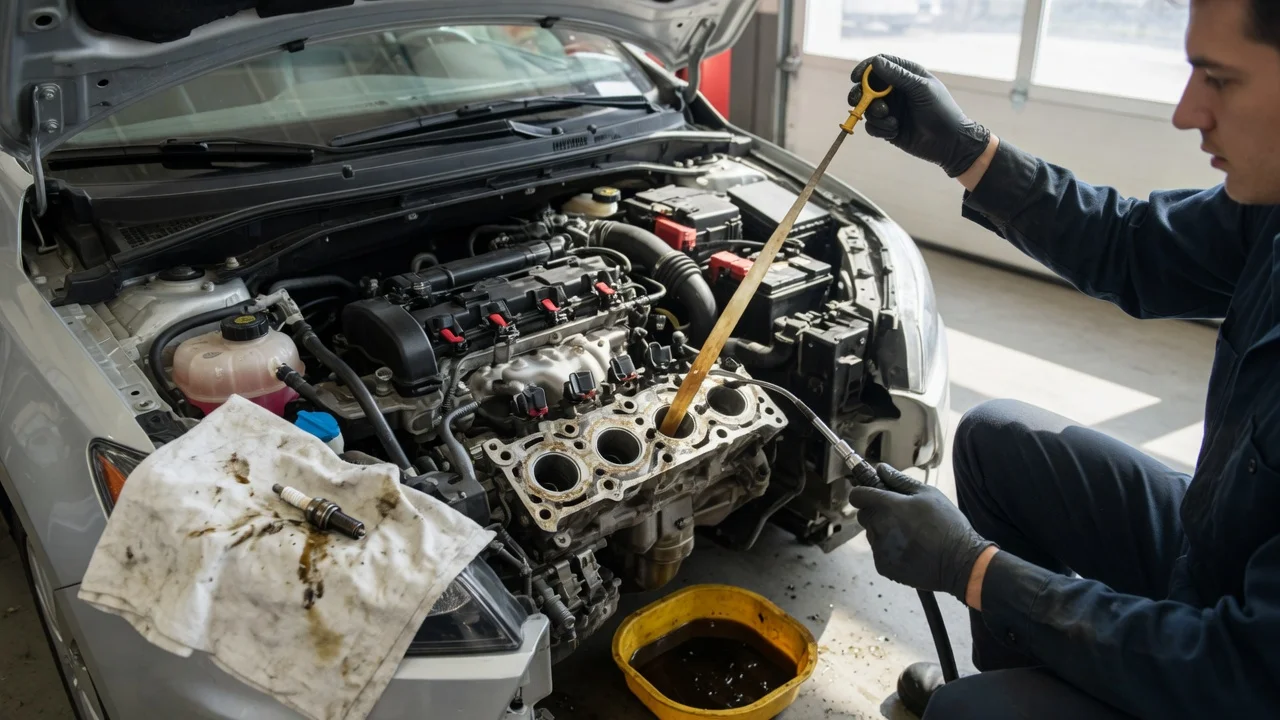
1) Disconnect the battery so the engine cannot be cranked accidentally. 2) Inspect the air filter, airbox and intake ducting. A soaked filter or standing water confirms the intake as the likely path. Note the level of water in the airbox if present. 3) Check the engine oil. A milky or creamy appearance, or an oil level noticeably higher than normal, suggests water or coolant has reached the crankcase. A strong fuel smell suggests fuel dilution. 4) Remove the spark plugs on a petrol engine, or the glow plugs or injectors on a diesel as specified for that engine. Look for wet or contaminated plugs and note which cylinders are affected. 5) With the plugs removed, turn the crankshaft slowly by hand using a wrench or breaker bar on the crankshaft pulley bolt, in the direction specified for the engine. Liquid should be pushed out of the plug holes. Cover the openings with a rag to catch spray. 6) Identify the liquid that comes out: clear water, coolant or fuel. This points to the cause. 7) Note how the engine feels as it turns. It should rotate through full revolutions with the plugs out. Binding, sudden resistance or uneven feel is a warning sign. 8) Dry the cylinders as thoroughly as practical and dry or replace intake components. Replace a wet air filter rather than reusing it. 9) Change the engine oil and filter if any contamination was found. Some owners and technicians change it more than once after significant water ingress; follow professional advice for the specific case. 10) Fix the source before restarting: repair intake leaks, or diagnose the cooling system or fuel injection fault if coolant or fuel was the liquid involved. 11) Reinstall the plugs, reconnect the battery and start the engine only once the above is complete. Listen for knocking, rough running or unusual noises, and shut it down promptly if any appear.
Testing for internal damage
An engine that starts after hydrolock is not necessarily undamaged. A compression test, and ideally a leak-down test, helps confirm whether each cylinder is sealing and whether pistons are reaching their normal position. Compare results across cylinders and against the manufacturer's specification for that engine; no single universal figure applies.
A cylinder that reads noticeably lower than the others after a hydrolock event can indicate a bent connecting rod, which reduces the piston's travel, or damage to valves, rings or the head gasket. A technician may also use a borescope to inspect the cylinder and piston crown.
Fault codes after a restart, such as misfire codes for a particular cylinder, are useful clues but not proof that a specific part has failed. A misfire could come from a wet ignition component, a fouled plug, residual moisture or genuine mechanical damage. Treat codes as a pointer to which cylinder to investigate further.
When to stop and get professional help
Stop using the engine and arrange professional diagnosis if any of the following apply:
The engine will not rotate freely by hand even with all spark plugs, glow plugs or injectors removed. The engine locked while the vehicle was moving at speed rather than at idle or very low speed. You hear knocking, tapping or metallic noises after restarting. Compression or leak-down results are low or uneven across cylinders. Coolant was the liquid involved, which indicates an internal leak that needs diagnosis. The vehicle was submerged deeply enough to reach electrical components, the cabin, or hybrid and electric drive systems. You do not have the tools or service information to carry out the checks safely.
In severe cases the outcome may be an engine rebuild or replacement. If water damage resulted from flooding, insurance coverage may be relevant, so it is worth contacting the insurer before authorising major work, as some policies have conditions about how a flooded vehicle is handled.
Other systems to check after water exposure
If the hydrolock came from driving through water, the engine may not be the only affected system. Transmissions, differentials and transfer cases have breather vents that can draw in water, contaminating their fluid. Electrical connectors, sensors and the starter motor may also have been exposed. Inspecting these fluids and components is a sensible part of the recovery, though the specifics depend on the vehicle's drivetrain.
What this guide cannot tell you
No model-specific data was available for this guide, so it does not give torque values, fluid capacities, compression specifications or exact procedures for removing plugs and injectors. These vary by engine and should come from the manufacturer's service information. It also cannot predict whether a particular engine will survive; that depends on how much liquid entered, the engine speed at the time, the engine design and how many attempts were made to restart it, which only a physical inspection can establish.
Avoiding a repeat
The most reliable prevention is avoiding water deep enough to reach the air intake, since depth is hard to judge and moving water adds risk. Keeping intake seals and ducting in good condition matters on vehicles with raised intakes. For coolant- or fuel-related hydrolock, prompt attention to coolant loss, white exhaust smoke or a persistent fuel smell can catch the underlying fault before liquid builds up in a cylinder.