Diagnose Diesel Engine Hydrolock
The short answer
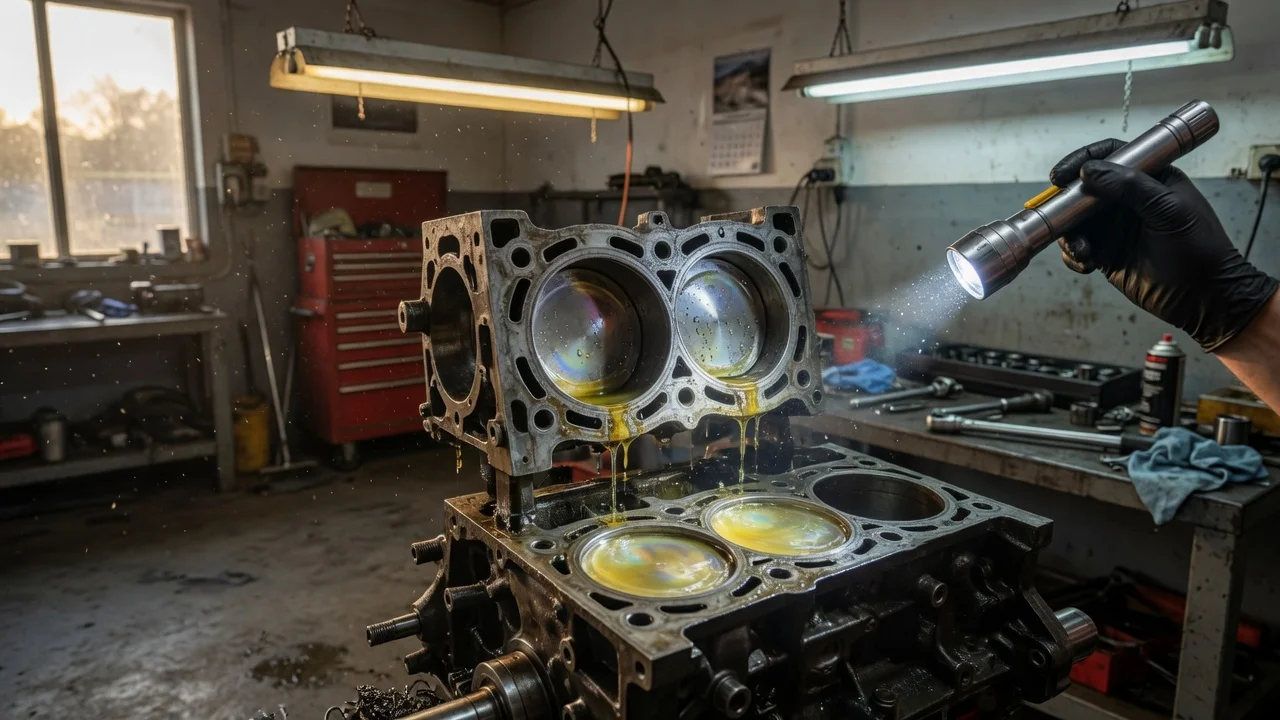
Hydrolock, also called hydrostatic lock, happens when a cylinder holds more liquid than the space left above the piston at the top of its stroke. Liquids do not compress, so the piston cannot finish the compression stroke. The engine then stops suddenly or refuses to turn. The liquid can be water, coolant, diesel fuel or engine oil.
Suspect hydrolock if any of these apply:
The engine stalled abruptly while driving through water. The starter clunks once and stops instead of spinning the engine. The engine turns briefly and then halts with a hard stop.
The usual way to confirm it is to remove the injectors or glow plugs and turn the engine slowly by hand. Liquid forced out of one or more openings confirms the diagnosis.
The most important point is to stop trying to start the engine. Each attempt pushes the starter's force against a column of liquid. That can bend a connecting rod or cause further internal damage that a careful drain-out might have avoided.
Diesels are generally considered more vulnerable to serious hydrolock damage than petrol engines. They run high compression ratios, which leaves very little clearance volume at top dead centre, so a smaller amount of liquid can lock a cylinder.
The exact clearance volume, compression ratio and safe procedure all depend on the specific engine. Check the service information for your model and engine code.
Rule out look-alike faults first
Several other faults can look like hydrolock when the engine will not crank. Separating them early avoids unnecessary dismantling.
Observation | More likely explanation | What it suggests; Rapid clicking, dim lights, weak or no cranking | Low battery or poor connection | Test battery condition and terminals before suspecting the engine; Single click, engine does not move, electrics strong | Starter, solenoid or wiring fault, or a locked engine | Try turning the crankshaft by hand to separate the two; Engine turns a short distance by hand, then stops firmly, and does so repeatedly at the same point | Liquid in a cylinder, or a mechanical seizure | Remove injectors or glow plugs and recheck rotation; Engine will not move at all by hand | Seizure, severe internal damage or full hydrolock | Professional diagnosis advised; Engine turns freely by hand but cranks slowly on the starter | Electrical supply or starter problem | Hydrolock unlikely
When turning the engine by hand, use a socket on the crankshaft pulley bolt and turn it in the engine's normal direction of rotation. Turning the wrong way, or using excessive force, can loosen the bolt or damage the timing drive. Stop as soon as resistance builds sharply rather than forcing past it.
Confirming hydrolock safely
Disconnect the battery so the engine cannot be cranked by accident. On common-rail engines, allow fuel pressure to drop before opening any fuel line or removing injectors. High-pressure diesel fuel can cause injury. Remove the injectors or glow plugs to give liquid an escape path. Place rags or a tray around the openings, then turn the crankshaft slowly by hand through several full revolutions. Note which cylinders expel liquid and what the liquid looks and smells like. This is the best clue to where it came from.
Injectors or glow plugs? On many engines, glow plugs are the more accessible route. However, glow plugs that have seized in the head can snap during removal on some engines, which turns a simple job into a much larger one. Injector removal on common-rail engines typically needs new sealing washers and model-specific torque values when refitting. If you are unsure, this is a reasonable point to hand the job to a workshop.
Identifying the liquid and its source
Liquid found | Typical appearance or smell | Common sources to investigate; Water | Clear or dirty, no strong smell, often with debris | Driving through deep or flooded water; a low-mounted or damaged air intake; water in the airbox or intake pipework; Coolant | Coloured and often sweet-smelling | Head gasket failure; cracked cylinder head; leaking EGR cooler on engines that have one; Diesel fuel | Distinct diesel smell, thin and oily | Leaking or stuck-open injector; fuel dripping into a cylinder over time; Engine oil | Dark and slippery | Oil carried into the intake, for example from turbocharger seal problems; oil pooled in the intercooler
Use the table as a starting point, then cross-check with the following:
Water ingestion: look for water or wet debris in the airbox, a soaked air filter, and water in the intercooler hoses or intercooler. These signs, combined with a recent water crossing, make external water the likeliest cause. Coolant: look for unexplained coolant loss, bubbles in the expansion tank, white exhaust smoke with a sweet smell before the failure, or milky deposits on the oil filler cap or dipstick. These point toward an internal coolant leak. Fuel: an oil level that has risen above normal, or oil that smells of diesel, suggests fuel dilution. A faulty injector is a common suspect. Oil: oil standing in the intercooler or intake pipework suggests oil carry-over. This also relates to the risk of diesel runaway, a separate fault in which the engine runs uncontrollably on its own oil. It needs professional attention.
Liquid in only one cylinder points toward a local source, such as a single injector or a breach near that cylinder. Liquid in several cylinders is more consistent with water entering through the intake. This is a general pattern, not a rule, so confirm the source before deciding on repairs.
Fault codes
A diagnostic scan after a hydrolock event may show codes such as misfire, crankshaft or camshaft position correlation, or sensor faults caused by water in connectors. Treat these codes as clues to investigate. They do not prove hydrolock on their own, and they do not prove that a particular part has failed. Some will clear once the engine and wiring are dry and running normally, while others may reflect real damage.
Checks before attempting a restart
Clearing the liquid does not prove the engine is undamaged. Before running it again, work through these checks:
Clean and dry the intake tract, airbox and intercooler pipework, and replace a wet air filter. Change the engine oil and filter if water, coolant or fuel has reached the sump. Fix the source of the liquid first: intake routing, head gasket, EGR cooler, injector or turbo seals. Run a compression test or a leak-down test across all cylinders. A cylinder reading noticeably lower than the others can indicate a bent connecting rod, damaged piston or valve damage. Correct readings vary by engine, so compare against the manufacturer's figures where available. Where possible, inspect cylinders with a borescope through the injector or glow plug holes for scoring or piston damage. When first restarted, listen for knocking and watch for smoke, unusual vibration or poor running. Any of these is a reason to shut the engine down.
When to stop and get professional diagnosis
The engine hydrolocked while running at road speed or under load, rather than while cranking. Internal damage is more likely in this case. The engine will not turn by hand even with injectors or glow plugs removed. Compression or leak-down results are uneven, or the engine knocks after restarting. Coolant is the liquid involved, which suggests a head gasket, cylinder head or cooler failure that needs proper diagnosis. Glow plugs or injectors are seized, or removing them needs special tools you do not have. The vehicle was submerged. Water may have reached the transmission, wiring, electronic modules and fuel system as well as the engine. If an insurance claim is likely, document the condition before any repair work.
What this guide cannot tell you
Several details depend on the specific engine and were not available here:
Compression specifications; Injector and glow plug removal procedures; Torque values; Whether an engine has an EGR cooler or a particular intake layout; How susceptible a given engine is to hydrolock damage
Use the service information for your engine code and model year. No test results or repair-cost figures are offered here. The extent of damage, and whether repair or engine replacement makes sense, can only be judged after inspection.