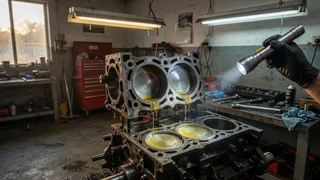
Diagnose diesel engine hydrolock
A diesel engine that suddenly stops after water entry or a severe fuel disturbance may have experienced hydrolock, also called hydrostatic lock. Because a diesel compresses only air during normal cranking, any substantial incompressible liquid inside a cylinder can halt piston travel and bend internal parts. Recognizing the early signs of diesel engine hydrolock matters because continued cranking can turn a recoverable fluid-ingestion event into major mechanical damage. This guide explains how the condition develops, which sounds and cranking behaviors suggest it, and how diagnosis differs from an ordinary no-start or fuel-system complaint.
Essential answer
The essential answer is that diesel engine hydrolock occurs when enough liquid fills a combustion chamber to prevent the piston from reaching top dead center. Water drawn through an intake is the classic cause, but fuel can also create a hydrostatic lock diesel engine condition if an injector leaks heavily or fuel pressure control fails while the engine is off. Because the cylinder volume is small at the top of the stroke, even a modest amount of trapped fluid can fill the clearance space and stop rotation abruptly.
The scope is not limited to a failed starter or weak battery. In a diesel, high compression means the starter normally works hard, yet a hydrolocked cylinder creates a distinct solid refusal rather than a slow roll. Oil, coolant, or water can produce the same mechanical blockage depending on the failure path. Diagnosis therefore starts by separating a true liquid-filled cylinder from ignition, fueling, or electrical faults that also prevent cranking but do not lock the rotating assembly.
Diagnosing a problem
When a hydrostatic lock diesel engine is suspected, first avoid repeated cranking. Listen for a heavy click from the starter engaging against a stationary flywheel, and compare whether the crankshaft moves slightly before stopping. If the engine rolled over easily before a water crossing or fueling repair, the change in cranking behavior is meaningful. A diagnostic scan may show no code at all, because the mechanical stall can occur before the control module identifies a plausible injector or sensor fault.
Plausible causes include water ingestion through an open intake, coolant entry from a failed head gasket or EGR cooler, and fuel flooding from a leaking injector. A fuel-related lock can be investigated through fuel pressure behavior, injector sealing, or fuel filter inspection, but a fault code alone should not condemn an injector. Remove glow plugs or injectors only as part of an appropriate service procedure, since cranking with a sealed liquid-filled cylinder risks bending a connecting rod.