Engine hydrolocked with oil
The short answer
Yes, an engine can hydrolock with oil. Hydrolock, short for hydraulic lock, happens when a cylinder holds more liquid than the space left at the top of the piston's stroke. Liquids barely compress, so the piston cannot complete its upward travel. The engine will either refuse to turn over or stop abruptly. Water is the cause most people associate with hydrolock, but motor oil, fuel or coolant can do the same thing if enough of it collects in a cylinder.
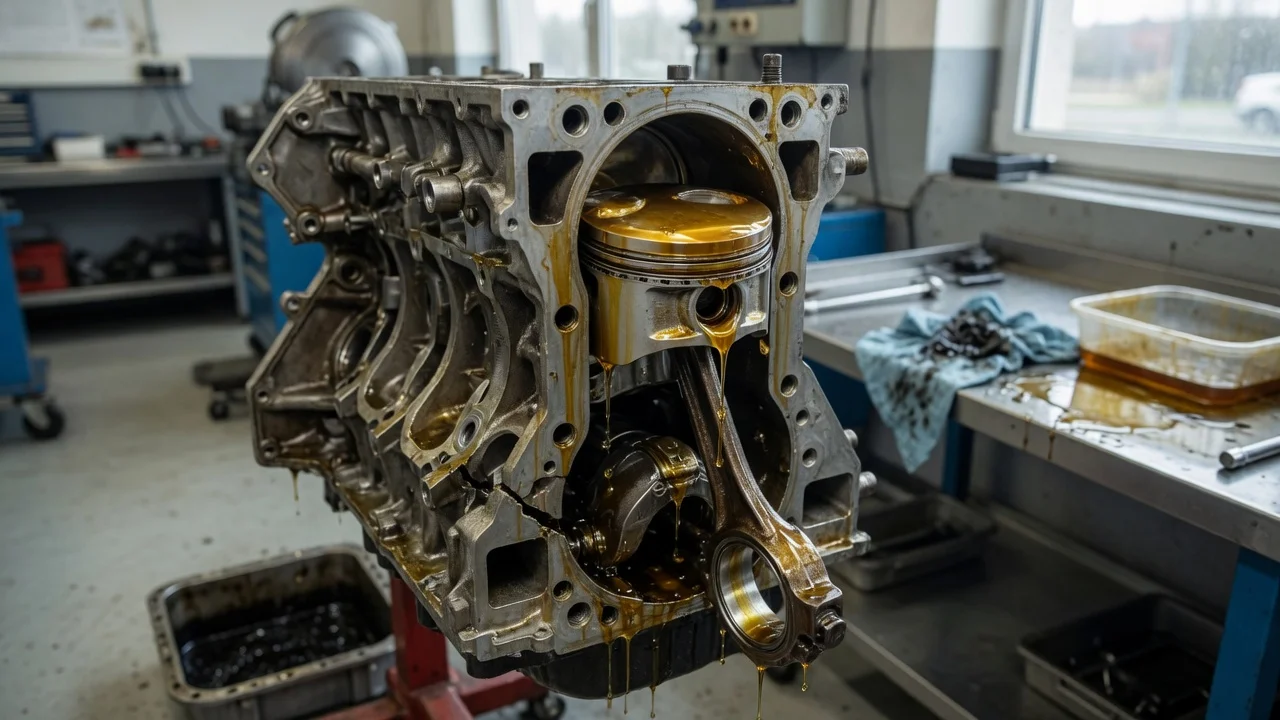
Whether the engine is damaged depends mostly on how it locked. If the engine was off and simply will not crank, the oil can often be cleared without lasting harm. If it locked while running, or was cranked hard against the trapped oil, internal parts such as connecting rods may be bent. That needs inspection before the engine goes back into normal use.
How oil ends up in a cylinder
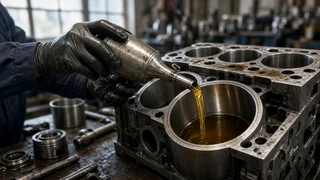
Oil normally stays in the crankcase and lubrication passages. Piston rings, valve stem seals and, on turbocharged engines, turbo shaft seals keep it out of the combustion chamber. Oil hydrolock means one of those barriers has been bypassed or overwhelmed. The usual routes are:
Engine stored or transported on its side or upside down: Oil can drain past the rings or valves into a cylinder. This is a common explanation for small engines, such as mowers, generators and outboards, that have been tipped over. The same applies to car engines removed from a vehicle and stored at an angle. Severe crankcase overfill: Too much oil can be churned by the crankshaft and pushed through the crankcase ventilation (PCV) system into the intake. From there it can enter the cylinders. A slight overfill is unlikely to cause hydrolock. A large one carries more risk. Turbocharger seal failure: A failed turbo seal can push oil into the intake tract or intercooler. Oil that pools there may be drawn into the cylinders in a slug. Oil-bath air cleaners: Some older and small engines use an oil-bath air filter. If it is overfilled or tipped, oil can be pulled into the intake.
On diesel engines, oil entering the intake while the engine runs can cause a different problem: diesel runaway. In a runaway, the engine burns its own oil as fuel and cannot be shut off normally. That is a separate failure from hydrolock, though both can begin with the same leaking seal.
Signs that point to oil rather than another liquid
The starter clicks or strains, but the crankshaft will not complete a full rotation. Oil comes out of a spark plug hole (gasoline) or a glow plug or injector bore (diesel) when the plug or injector is removed. The spark plugs are wet with oil rather than with fuel or coolant. The dipstick reads well above the full mark, or the engine was recently stored or moved at an angle. On a turbocharged engine, there is oil in the intake piping or intercooler.
Check whether the dipstick oil looks milky or foamy. That usually suggests coolant contamination, such as from a head gasket or cooler failure. In that case the root problem is coolant entering the oil, not oil alone.
What to do next
The general approach is to relieve the trapped liquid before trying to turn the engine with the starter. Exact procedures, torque values and access steps vary by engine. Consult the service manual for the specific model year and powertrain.
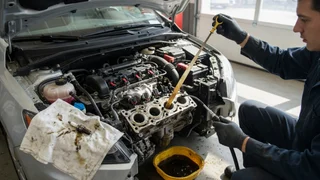
1) Stop cranking. Repeated attempts against a locked cylinder are the main way a no-damage situation becomes a bent rod. 2) Disconnect the battery to prevent accidental starter engagement. 3) Remove all spark plugs on a gasoline engine. On a diesel, remove the glow plugs or injectors as the manual directs. This gives the oil an exit. 4) Turn the crankshaft slowly by hand with a wrench on the crank pulley bolt, in the engine's normal direction of rotation. Oil should be pushed out of the open plug holes. Cover the openings with a rag, because oil can spray. 5) Find and fix the cause. That might mean correcting an overfill, replacing a failed turbo seal and cleaning the intake and intercooler, or simply draining an engine that was stored on its side. 6) Change the oil and set it to the correct level. Clean or replace oil-fouled spark plugs and any oil-soaked air filter. 7) Before relying on the engine, run a compression test or leak-down test. These check whether the cylinders still seal properly.
When damage is more likely
The risk of mechanical damage rises sharply if the engine locked while running at speed, or if it was cranked repeatedly while locked. The parts most often discussed in this context are connecting rods, which can bend, along with pistons and bearings. A slightly bent rod may not show up clearly in a compression test. If the circumstances suggest a forceful lock, a teardown or professional inspection gives a more reliable answer than a quick test. Knocking noises, low compression in one cylinder or blue exhaust smoke after restarting are all reasons to stop and investigate further.
Limits of this guidance
This guide describes the general mechanics of oil hydrolock. It is not a procedure for any particular vehicle. No model-specific data, test measurements or failure-rate figures were available for this article. How much oil causes a lock, how vulnerable a given engine is, and whether a given lock caused damage all depend on the engine's design and the circumstances. Treat the steps above as an outline, and use the manufacturer's service information or a qualified technician for the specific engine involved.