How to Fix a Hydrolocked Engine: What to Check and When It Needs a Teardown

A hydrolocked engine is one that has drawn liquid, usually water, into one or more cylinders. Liquid does not compress the way air does, so when a piston rises on its compression stroke and meets a cylinder full of water, the engine either stops abruptly or forces something to give. Whether a hydrolocked engine can be fixed depends almost entirely on one question: did the engine stall gently with no internal damage, or did the piston keep pushing until a connecting rod, piston or valve was damaged?
The Short Answer
If the engine stalled at low speed and has not been repeatedly cranked since, it can often be recovered by removing the spark plugs (or glow plugs or injectors on a diesel), turning the engine by hand to expel the liquid, drying the intake and replacing contaminated fluids. If the engine stalled at speed, made a loud bang or knock, was cranked hard afterward, or will not turn freely by hand, there is a real chance of internal damage. That usually means a compression check, a borescope inspection or a partial teardown before anyone tries to run it again.
The most important rule is the same in every case: do not keep trying to start the engine. Each attempt to crank a cylinder full of water risks turning a recoverable situation into a bent connecting rod.
How an Engine Becomes Hydrolocked
Knowing where the liquid came from helps decide what to check and what to repair, because the source affects both the damage and the fix.
Driving through deep water: the most common cause. Water enters through the air intake, especially on vehicles with low-mounted intakes or aftermarket cold-air intakes that relocate the filter. Flooding while parked: rising water can enter the intake or exhaust of a vehicle that is not running. The engine may lock when someone later tries to start it. Internal coolant leak: a failed head gasket, cracked cylinder head or cracked block can let coolant seep into a cylinder, often while the vehicle sits overnight. Fuel flooding: a leaking injector or stuck-open fuel system component can fill a cylinder with fuel. This is less common and varies by engine design and fuel system. Intake or intercooler contamination: on some turbocharged engines, condensation, oil or water collecting in the intercooler or intake tract can be ingested in a large slug.
Symptoms That Point to Hydrolock
The symptom conditions matter. A hydrolock event usually looks different from an ordinary no-start caused by a dead battery or a fuel or ignition problem.
The engine stalled suddenly while driving through water. The starter clicks or strains but the engine will not rotate, or rotates partway and stops hard. The engine turns over unevenly, with a hesitation at the same point in each rotation. Water is visible in the air filter housing, intake tube or throttle body. The engine oil looks milky, foamy or higher than normal on the dipstick. After a restart, the engine knocks, smokes heavily, misfires or runs roughly.
A starter that will not turn the engine can also be caused by a weak battery, a failed starter or a seized engine from oil starvation. If there was no water exposure and no sign of coolant loss, investigate those causes before assuming hydrolock.
What to Do Immediately
Stop cranking the engine. Leave the ignition off. If the vehicle is still in water, move it out only by towing or pushing, not under its own power. Disconnect the battery if the vehicle has been submerged, to reduce the risk of electrical damage or shorts. Note how the engine stopped: gently at low speed, or abruptly with a bang. This information helps you or a technician judge the likelihood of damage. Note how many times, if any, someone tried to restart it after it stalled.
Step-by-Step: Clearing a Hydrolocked Engine
The following is the general process for a gasoline or diesel engine with a conventional layout. Exact access, part locations and torque values vary by engine configuration, so follow the manufacturer specifications for your specific engine when removing and reinstalling components.
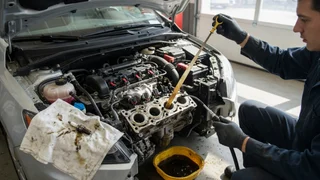
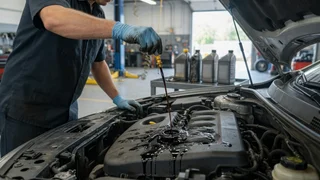
1) Inspect the air intake. Remove the air filter and check the housing and intake tube for water. A soaked filter confirms the intake route and must be replaced. 2) Remove all spark plugs. On a diesel, remove the glow plugs or injectors as the service procedure allows. This opens each cylinder so liquid has somewhere to go. 3) Inspect the plugs. Wet, rusty or coolant-stained plugs show which cylinders took in liquid. Coolant residue suggests an internal leak rather than outside water. 4) Rotate the engine by hand. Use a socket and breaker bar on the crankshaft pulley bolt, turning in the engine's normal direction of rotation. Go slowly. Liquid will be pushed out through the plug holes. Cover the holes loosely with a rag to catch the spray. 5) Feel for resistance. The engine should turn with even effort through full rotations. A hard stop, binding or a gritty, uneven feel is a warning sign; stop and do not force it. 6) Crank briefly with the plugs out. Once the engine turns freely by hand, a short burst on the starter with the plugs removed can expel remaining liquid. Disable fuel and ignition first according to the service procedure. 7) Dry the cylinders. Let them air out, and consider a small amount of light oil in each cylinder afterward to protect the cylinder walls from rust if the engine will sit. 8) Change the engine oil and filter. Water in the oil destroys its lubricating ability. If the oil was milky, an additional oil change after a short run is a common precaution. 9) Dry or replace intake components. Clear water from the intake tract, throttle body and, on turbocharged engines, the intercooler and its piping. 10) Reinstall the plugs and attempt a start. Listen carefully for knocking, misfires or unusual vibration, and watch for heavy smoke.
Checks That Reveal Hidden Damage
An engine that starts after being cleared is not necessarily undamaged. A connecting rod can bend slightly without breaking, and the engine may run for a while before the weakened rod fails. These inspections help confirm whether the engine is sound.
Check | What it involves | What a bad result suggests; Compression test | Measures the pressure each cylinder builds while cranking | A cylinder noticeably lower than the others may indicate a bent rod, damaged valve or ring problem; Leak-down test | Pressurizes each cylinder and measures where air escapes | Air escaping into the intake, exhaust or crankcase points to valve, head or ring damage; Borescope inspection | A small camera inserted through the plug hole | Visible piston damage, an unusual piston height at top dead center or scoring on the cylinder wall; Oil analysis or visual check | Inspecting oil after the first run | Persistent milkiness can point to an ongoing coolant leak rather than one-time water ingestion; Cooling system pressure test | Pressurizes the cooling system to find leaks | Pressure loss with no external leak suggests a head gasket or cracked head as the liquid source
Diagnostic codes can add useful information after a restart. A misfire code for a specific cylinder, for example, tells you where to focus, but it does not prove a bent rod. It could also come from a wet spark plug, a damaged ignition coil or water in a connector. Treat any code as a lead to investigate rather than a final diagnosis.
When to Stop and Get Professional Help
The engine will not rotate by hand, or binds partway through a rotation. The engine stalled abruptly at speed or made a loud bang. Someone cranked the engine repeatedly after it stalled. After clearing, the engine knocks, vibrates badly or runs on fewer cylinders. Compression or leak-down results are uneven between cylinders. The liquid in the cylinders was coolant, pointing to a head gasket or cracked component. The vehicle was submerged deeply enough to reach the cabin, transmission or major electronics.
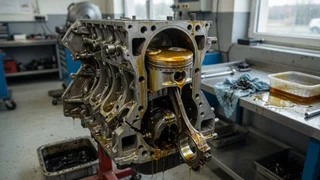
In these cases, continued running can lead to catastrophic failure, such as a connecting rod breaking through the block. A shop may recommend removing the cylinder head or oil pan to inspect the rods directly. Depending on what is found, the outcome can range from replacing a single rod to a full engine rebuild or a replacement engine.
Engine Type Makes a Difference
Diesel engines generally run much higher compression ratios than gasoline engines, which leaves even less room for liquid in the cylinder. As a result, diesels tend to be more vulnerable to damage from a hydrolock event. Turbocharged engines add an intercooler and longer intake piping where water can collect, so those parts need to be checked and drained as well.
Hybrid and electric vehicles raise separate concerns after flooding. A hybrid's gasoline engine can hydrolock like any other, but water exposure to high-voltage batteries, wiring and power electronics is a safety hazard. If a hybrid or electric vehicle has been in deep water, have it inspected by a technician trained on high-voltage systems before attempting any repair or start.
Don't Forget the Rest of the Drivetrain
If water was deep enough to enter the engine intake, it may also have reached the transmission, transfer case and differentials through their vents. Water-contaminated gear oil or transmission fluid often looks milky or cloudy. Checking and replacing these fluids is part of a complete recovery, along with inspecting the starter, alternator, wiring connectors and any electronic modules that sat low in the vehicle.
Repair, Insurance and Ownership Considerations
Cost depends heavily on how far the damage goes. Clearing a lightly hydrolocked engine is mainly labor plus spark plugs, an air filter and an oil change. Internal damage moves the repair into a very different price range, and on older or lower-value vehicles a damaged engine may lead to a decision about whether the vehicle is worth repairing at all.
In the US, flood and water damage is typically handled under the comprehensive portion of an auto policy rather than collision, but coverage, exclusions and claim handling vary by insurer and policy. Contact your insurer before starting major repairs if you plan to file a claim, and keep photos and records of the water exposure and any work done.
If you are shopping for a used vehicle, a past hydrolock or flood event matters. Ask about the service history, look for receipts covering engine or fluid work after water exposure, and have a pre-purchase inspection that includes a compression test if anything seems off. Signs such as silt under carpets, corrosion in unusual places or a musty cabin odor can point to flood exposure.
Preventing Hydrolock
Avoid driving through standing water when you cannot judge its depth. If you must cross shallow water, drive slowly to avoid creating a bow wave that pushes water toward the intake. Know where your vehicle's air intake is located, especially if it has an aftermarket intake that sits lower than the original. Do not try to restart a vehicle that stalled in water. Investigate unexplained coolant loss promptly, since an internal leak can eventually fill a cylinder.
Bottom Line
Fixing a hydrolocked engine starts with not making it worse. Remove the plugs, turn the engine by hand, clear the liquid and replace contaminated oil and filters. If the engine turns freely and passes compression testing, it has a good chance of recovery. If it binds, knocks or shows uneven compression, stop and have it inspected internally, because a bent rod that is ignored can turn a repair into an engine replacement.