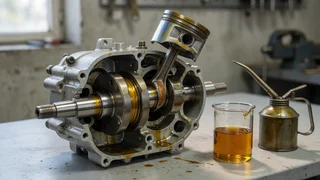
Engine Flooded with Oil: What It Means and What to Do Next
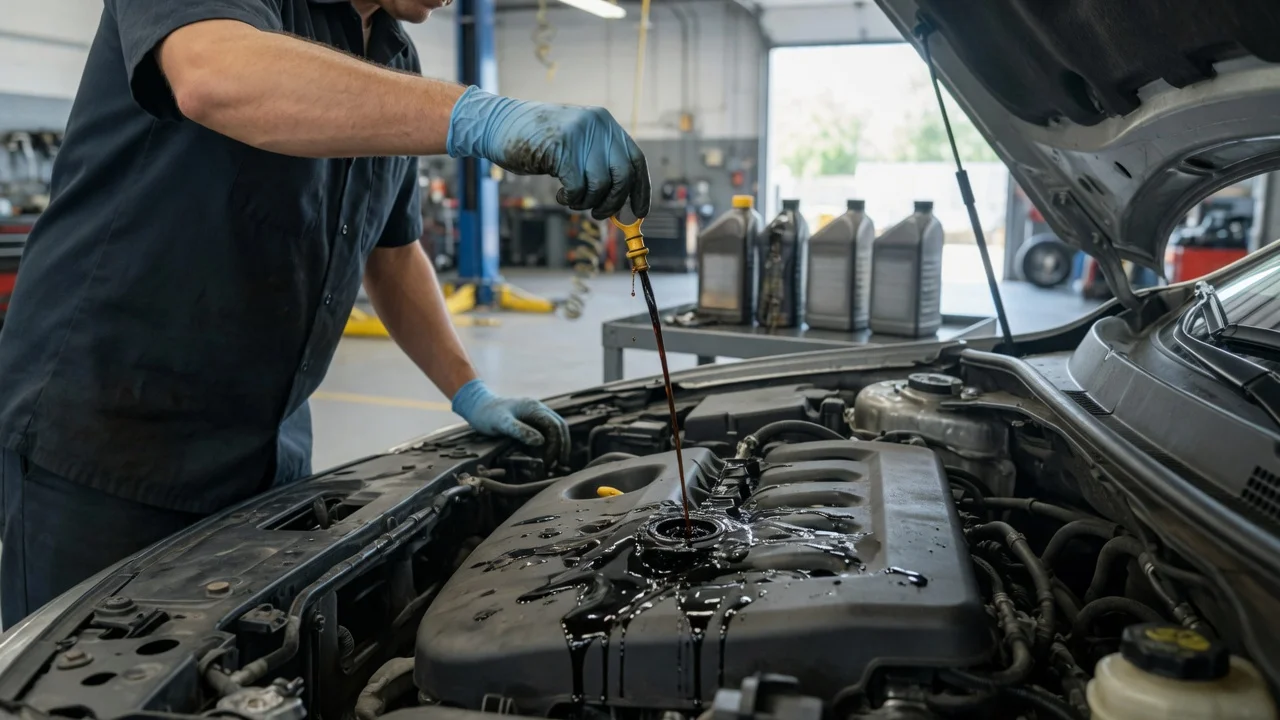
The short answer
When people say an engine is flooded with oil, they usually mean one of two things. The first is that the crankcase holds more oil than the engine is designed for, most often after an oil change or top-up. The second is that oil has collected where it does not belong, such as in the cylinders or the intake. The first is common and usually fixed by draining the excess. The second can be serious, because cranking an engine with liquid in its cylinders can damage internal parts. In either case, find out which situation you have before driving or repeatedly trying to start the engine.
Note that "flooded" more often describes too much fuel in the cylinders, which stops an engine from starting. Oil flooding is a different problem with different causes, so advice for a fuel-flooded engine does not transfer directly.
Which situation do you have?
Overfilled crankcase: the dipstick or electronic oil-level reading is above the maximum mark, usually after a recent oil service or top-up. Oil in the cylinders or intake: the engine cranks slowly, locks up or will not turn over, or there is heavy smoke or oil-fouled spark plugs. This is more likely after a vehicle or small engine has been tipped or stored at an angle, or when internal seals have failed. Oil level rising on its own: the level climbs between changes even though no oil was added. This points to contamination by fuel or coolant rather than true overfilling.
Overfilled crankcase: risks and fixes
The crankcase is the lower part of the engine that holds the oil supply. When the level is too high, the spinning crankshaft can churn the oil and whip air into it, a process called aeration. Aerated, foamy oil does not lubricate or hold pressure as well as liquid oil. Excess oil can also raise pressure inside the crankcase, which stresses seals and gaskets. It can be pushed through the positive crankcase ventilation (PCV) system, which routes crankcase gases back into the intake. Once oil is burned in the combustion chamber, it can foul spark plugs and, over time, harm the catalytic converter.
Common signs include a dipstick reading above the maximum mark, blue-gray exhaust smoke, a burning-oil smell, oil leaks that were not there before, or an oil-pressure or oil-level warning. A slight overfill may cause no noticeable symptoms, but that is no reason to leave it.
Park on level ground and let the oil drain back into the pan before checking, as the owner's manual directs. If the level is clearly above the maximum mark, avoid driving the vehicle until the excess is removed. Remove oil by loosening the drain plug briefly or by extracting it through the dipstick tube with a fluid extractor. Recheck repeatedly until the level sits within the marked range. If the engine was run while badly overfilled and you now see smoke, leaks or warning lights, have it inspected.
How much overfill an engine tolerates varies by design, and the supplied material gives no figures for specific engines. Treat the dipstick range or the manufacturer's stated capacity as the limit for your model year and powertrain. Some newer vehicles have no dipstick and report oil level electronically. In that case, follow the manual's procedure for checking.
Oil in the cylinders: stop cranking
Liquids do not compress. If enough oil collects above a piston, the engine may lock up when it tries to complete a compression stroke. This is called hydrolock. Forcing the engine over, whether with the starter or by repeatedly trying to start it, can bend connecting rods or cause other internal damage. Oil can reach the cylinders when an engine is laid on its side, as happens with motorcycles, lawn equipment and other small engines. It can also enter through worn piston rings or valve seals, a failing turbocharger seal or a severely overfilled crankcase.
If you suspect this, stop trying to start the engine. Removing the spark plugs (or glow plugs or injectors on a diesel) lets trapped oil escape when the engine is turned slowly by hand. Whether this is practical depends on the engine and your tools. If the engine has already locked up while running or cranking, a professional inspection is the safer route, because you cannot rule out internal damage without one.
Oil level rising without adding oil
If the level climbs on its own, another fluid is probably mixing with the oil. A fuel smell on the dipstick suggests fuel dilution. Milky, light-brown or foamy residue on the dipstick or filler cap can indicate coolant contamination, possibly from a failed head gasket, though short trips in cold, damp weather can also leave condensation residue under the cap. Draining the oil does not fix either problem, and a contaminated engine should be diagnosed before further use. An oil analysis or a cooling-system pressure test can help confirm the source.
Bottom line
For most readers, an engine flooded with oil turns out to be a simple overfill. Removing oil until the level is within the marked range usually resolves it, especially if the engine was not driven hard while overfilled. Treat it as more serious if the engine will not turn over, locks up, smokes heavily or shows a rising oil level without any oil being added. Those signs point to oil in the cylinders or fluid contamination, and they call for diagnosis rather than a top-up or drain alone. Specific capacities, tolerances and checking procedures depend on the vehicle, so confirm them in the owner's manual for your model.